
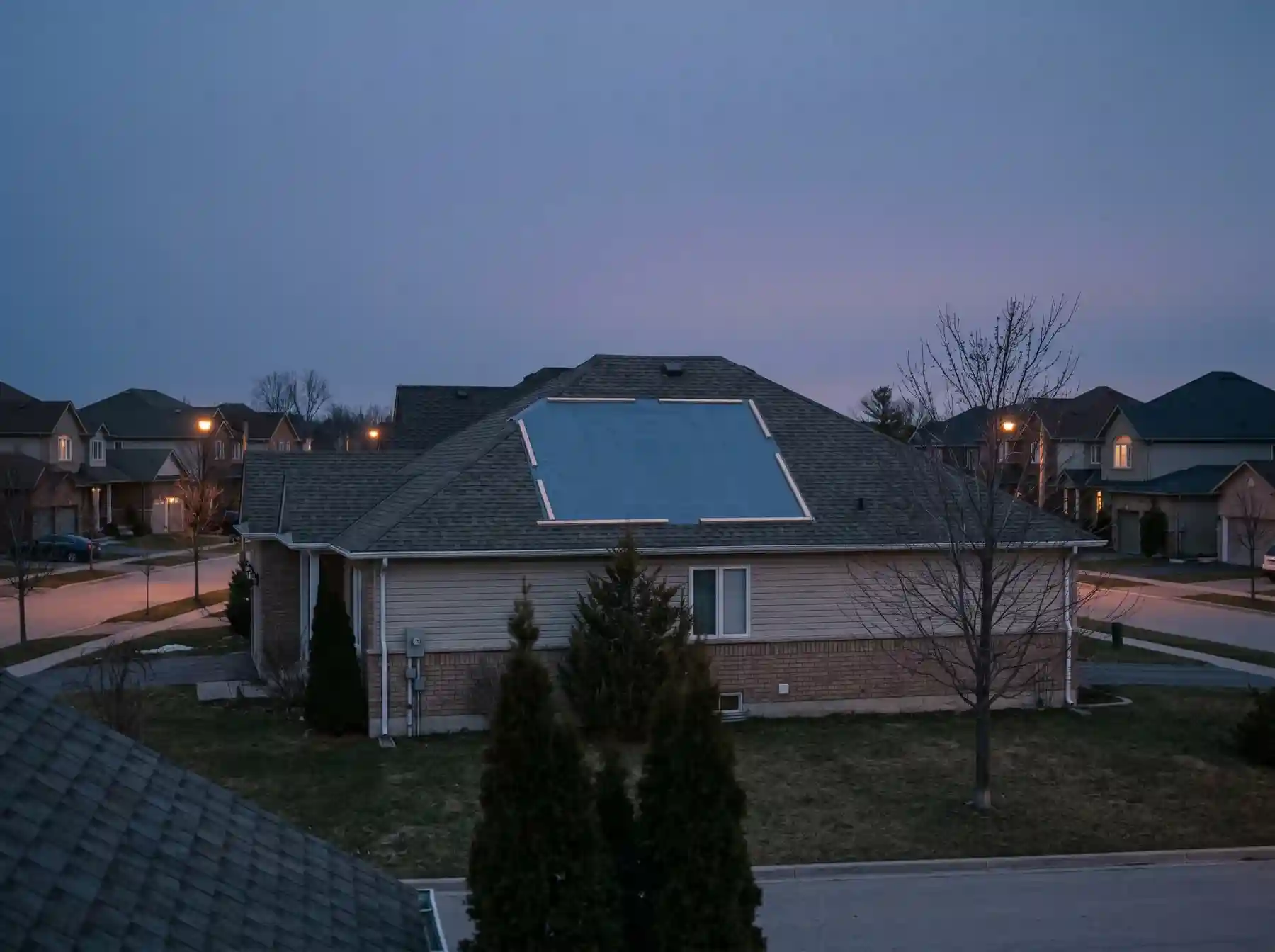
The recycling bin is halfway down the driveway. Beside it lies a strip of shingle. After a windy night in Durham, one of these problems is easy to put right.
Dave picks up the recycling bin first; that repair requires no diagnosis. The shingle needs one. Establish whether it came from your roof. Missing or lifted shingles need prompt assessment even with dry ceilings, and the useful first evidence can be gathered without climbing anything.
Get the whole slope in the picture
Wait until the wind and storm have passed. Stay clear of hanging branches, loose roof material and fallen wires. Leave roof access and temporary coverings to people equipped for that work.
From a safe position, photograph the whole roof slope, then zoom in on anything unusual. Look for gaps in the shingle pattern, raised edges, folded tabs and disturbed metal around chimneys or walls. GAF's wind-damage guide explains why these details matter.
Keep a photograph of the fallen piece along with the wide roof views. Mike needs to find the affected area, not merely admire a detailed shingle portrait. Where a piece lands can be some distance from where it started.
After tornado damage, the first question is whether the building is safe to re-enter, before anyone starts counting missing shingles.
Look beneath the shingles
What may be exposed?
The missing piece is a clue. The layers and neighbouring shingles determine the repair.
The outer covering sheds rain.
Overlapping shingles direct water down the roof. Their installation and the details around edges, walls and openings all matter.
- Visible from outside
- Missing pieces, damaged edges and changes across a roof slope.
- Worth asking
- How will the new shingles meet the flashing and neighbouring roofing?
Exploded view of a typical shingle assembly. Flashings, fasteners, ventilation and other details are omitted.
Tell the roofer whether rain is coming
Contact a roofer promptly about missing shingles, visible openings or shingles that were flapping. IKO's inspection checklist recommends replacing missing shingles as soon as possible.
Tell them whether more rain is forecast and whether water is already getting inside. Active leakage, a branch through the roof or a changed roof shape needs urgent assessment. Keep people away from sagging ceilings and water near electrical fittings; immediate danger calls for emergency services.
The gap is worrying, but it cannot tell us either how much protection remains beneath it or that the whole roof needs replacing. Position and affected layers matter. Pat wants the damaged area assessed before a small missing piece turns into an unsupported decision about the entire roof.
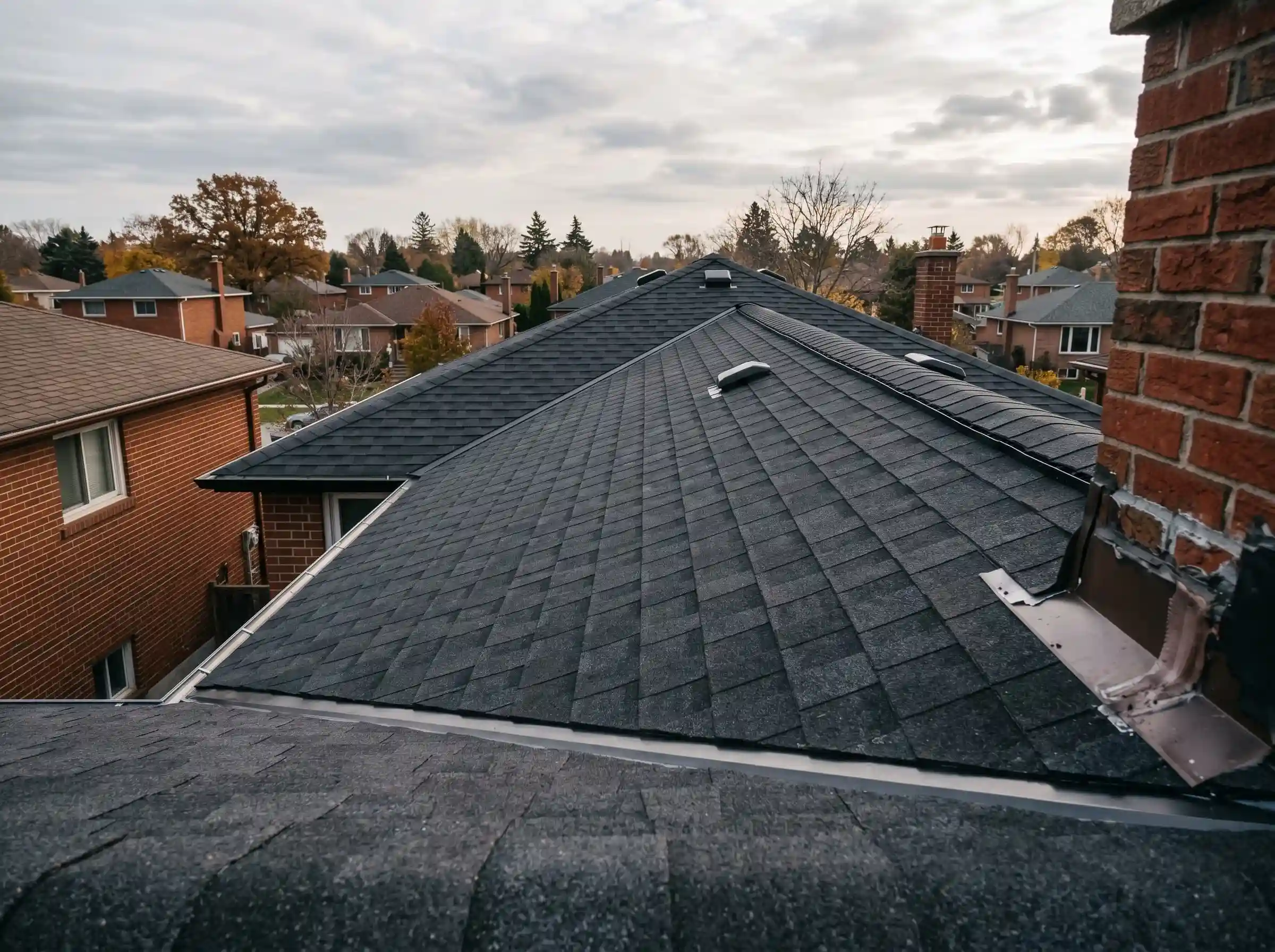
"It lay back down" does not settle it
"It was flapping last night, but it looks fine now." Keep that observation. A shingle settling back down does not confirm its seal, fasteners or material survived. Tell the roofer what you saw during the wind even if the morning photograph has become unhelpfully ordinary.
A folded tab may remain creased or cracked after settling back down. The inspection should include neighbouring shingles and their attachment, rather than stopping at the visible gap.
Fix the damage around the gap, too
Ask for the repair area and neighbouring shingles in the completion record. Which needed replacement, and could the surrounding material accept it? Dave is looking beyond the empty patch so the next gust does not simply move the same conversation one shingle over.
Do not nail a tarp through apparently sound shingles yourself. GAF notes that those nail holes create additional damage; temporary protection needs a proper plan.
Save inspection pictures and repair records. If a ceiling mark appears later, our leak-tracing article explains why the visible stain may be some distance from the roof opening.