
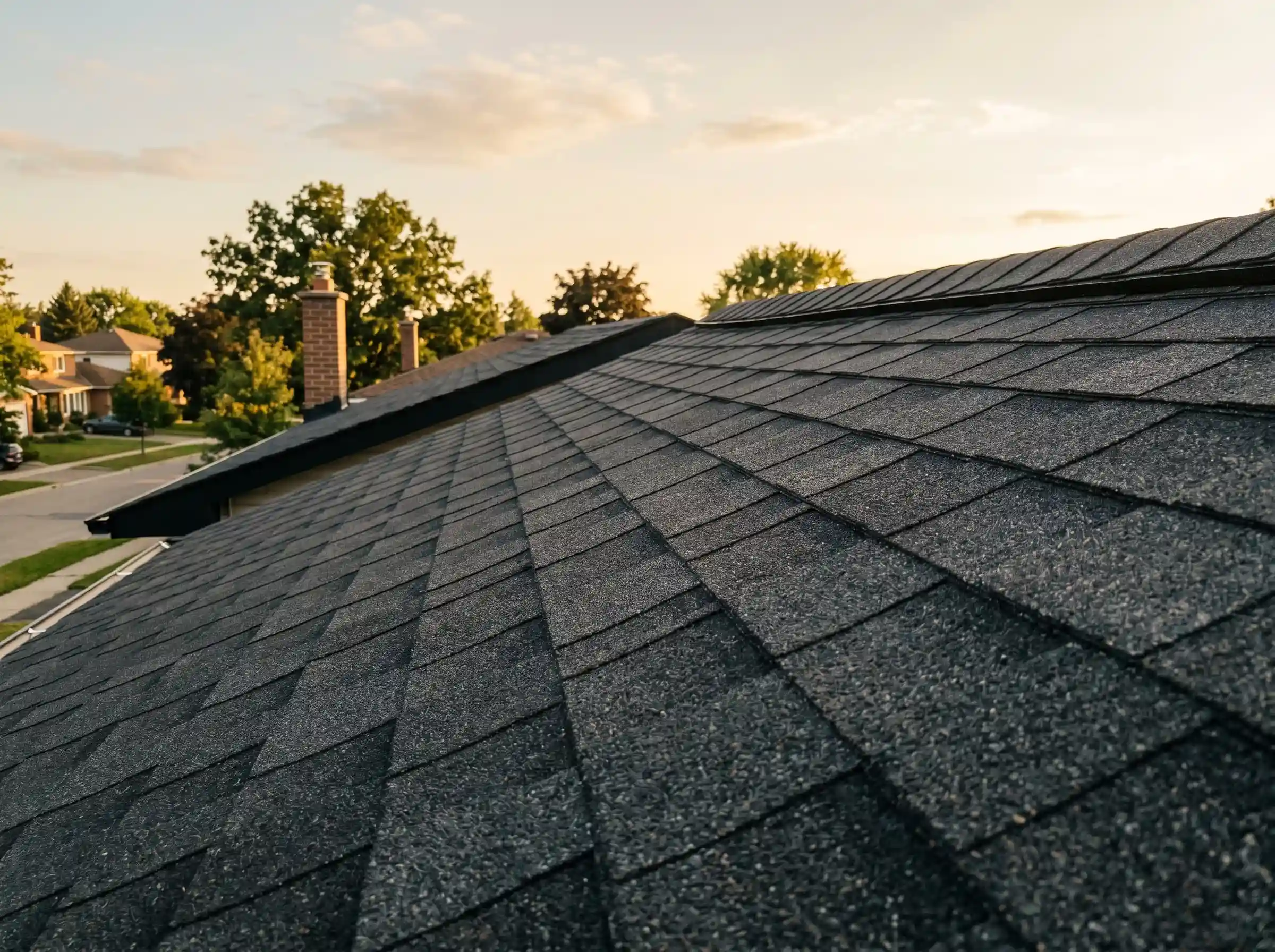
The lakeside kitchen has a splendid view and a folder of wind-repair invoices. The new quote offers a higher shingle number. Pat asks which edge details will change this time. The product may be a good choice, but the exposed side of the house needs an assembly, not just a bigger number.
A high wind number is useful only when the quoted shingles, fastening, sealing and roof edges form the specified system. On a wind-exposed lakeshore house, describe the exposure as carefully as the product before comparing proposals.
Read One Real Product Claim in Two Columns
IKO Nordic product information lists ASTM D7158 Class H and a limited high-wind warranty up to 130 mph (210 km/h), subject to terms and application requirements. The test classification and the warranty number are separate entries. Neither predicts the exact wind at which your completed house will suffer damage.
For a Canadian installation, obtain the current Canadian warranty and the application instructions supplied for the actual shingle. IKO's warranty library separates Canadian and US documents. Have the installer identify the required nail zone and fastening, starter and cap products, sealing conditions and deck requirements. Do not copy the nail count from a different IKO line simply because the brand matches.
If starter, field shingles and ridge caps come from different manufacturers, check system compatibility and warranty eligibility before treating the package as one covered assembly.
A Lakeshore House Needs an Exposure Description
At the lakeside house, the rear slope faces open water while the front faces a sheltered street. Give bidders the building height, open directions and history of missing shingles or loose edge metal. A gust reported at a distant weather station does not establish pressure at this roof, and nearby trees are not permanent wind protection.
The quote should identify who decides whether the building needs design input. Ask how the deck, perimeter starter, edge metal, flashings and caps will be assessed as well as the field shingles. Extra nails alone do not resolve wrong placement, unsound support or an unsealed edge.
Where old edge metal or flashings will remain, request the condition and compatibility reason. After a strong wind, record visible changes from the ground and read loose flashing after wind. Keep workmanship and manufacturer coverage separate in the project record.

Follow the Attachment to the Deck
Wind tries to lift exposed edges. The shingles depend on correctly positioned fasteners into suitable decking and on the intended seal between courses. The starter supports the perimeter detail. A strong-looking shingle cannot compensate for a fastener that misses sound wood or cuts through the shingle.
During tear-off, record old boards, damaged panels or unsupported areas before repairs are concealed. Correct nail count alone cannot compensate for wrong placement or unsound support.
The starter course also deserves its own line in the estimate. Its position and product compatibility are particularly relevant along exposed edges.
Connect the Wind Claim to the Roof
Separate the tested classification from limited warranty coverage. Describe open-water directions, building height and prior failures.
Product claim
Separate the tested classification from limited warranty coverage.
Attachment
Match nail zone, fasteners and sound deck to the actual product.
Perimeter and seal
Specify starter, caps, edges and required sealing.
Exposure
Describe open-water directions, building height and prior failures.
The Period Before Shingles Seal Matters
A roof installed during cool weather may need manufacturer-directed hand sealing. A sunny afternoon, a shaded north slope and a windy forecast are different circumstances. Do not accept an unconditional assurance that every roof seals overnight.
At the same time, a homeowner should not check the bond by lifting every tab. That can disturb the installation. Request a professional check and a written explanation of any required follow-up, including how the roof is protected before natural sealing occurs.
What to Keep After the Work
Save the exact shingle name, product instructions, accessory list and applicable warranty. Ask for photographs of representative fastening and edge work during installation, when those details are visible. A finished roof photograph is useful for appearance but cannot reveal every concealed attachment.
If shingles later lift or blow off, have the repair examine the surrounding attachment and sealing as well as the missing pieces. Replacing the visible rectangle without checking why it detached can leave the next one vulnerable.