The shingles are still there, but something metallic now taps above the bedroom whenever the wind gusts. Loose edge trim, flashing or a vent part can make that noise independently of the shingle field. A missing-shingle count will not find every storm repair.
If a piece is hanging or moving visibly, keep people away from the area below and arrange prompt help. Do not reach out of an upstairs window to hold it down. Sharp sheet metal in a gust is not a small household nuisance.
At night, the tapping above the bedroom sounds much larger than it does on a phone recording. Daniel sends Mike the clip anyway. "That helps," Mike says. "Tell me when it happens, rather than what you think it is." The report starts with gusts and a changed sound, not an order for new shingles.
Use the noise as a clue, not a diagnosis
A recording made from indoors can help show the timing and character of the sound. Note which room hears it most clearly and whether it occurs only with gusts from a particular direction.
Sound can travel through the structure, so the loudest room may not sit directly below the loose piece. Avoid sending a contractor a firm diagnosis based only on a rattle. "Intermittent metal tapping near the rear bedroom after Sunday's wind" is useful information without the guess.
From safe ground, look for a changed edge line, a flap of trim, an open joint or a vent cap sitting differently. You do not need to see all of them. Report the visible change and let the inspection establish the rest.
Several parts can look like the roof edge
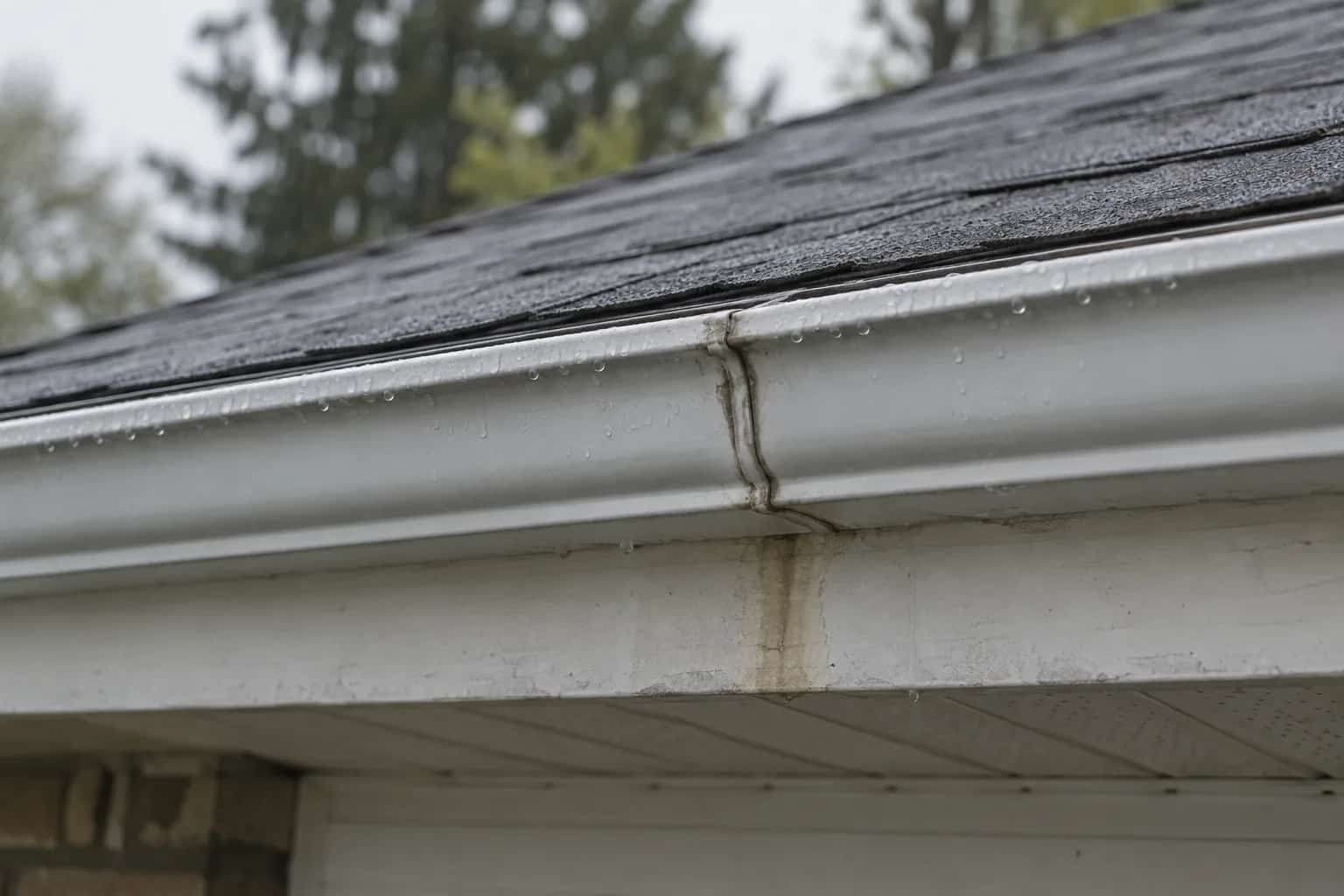
Fascia is the board at the eave edge, often covered by metal trim. Drip edge is roofing metal intended to manage water at the edge of the roof. Gutters collect runoff. Although these parts meet, they do different jobs.
Reattaching a loose cover may be straightforward if its backing is sound. If the fasteners have pulled from decayed wood, repeating the same attachment may not resolve the cause. A displaced roofing edge can also require checking adjacent shingles and underlayment.
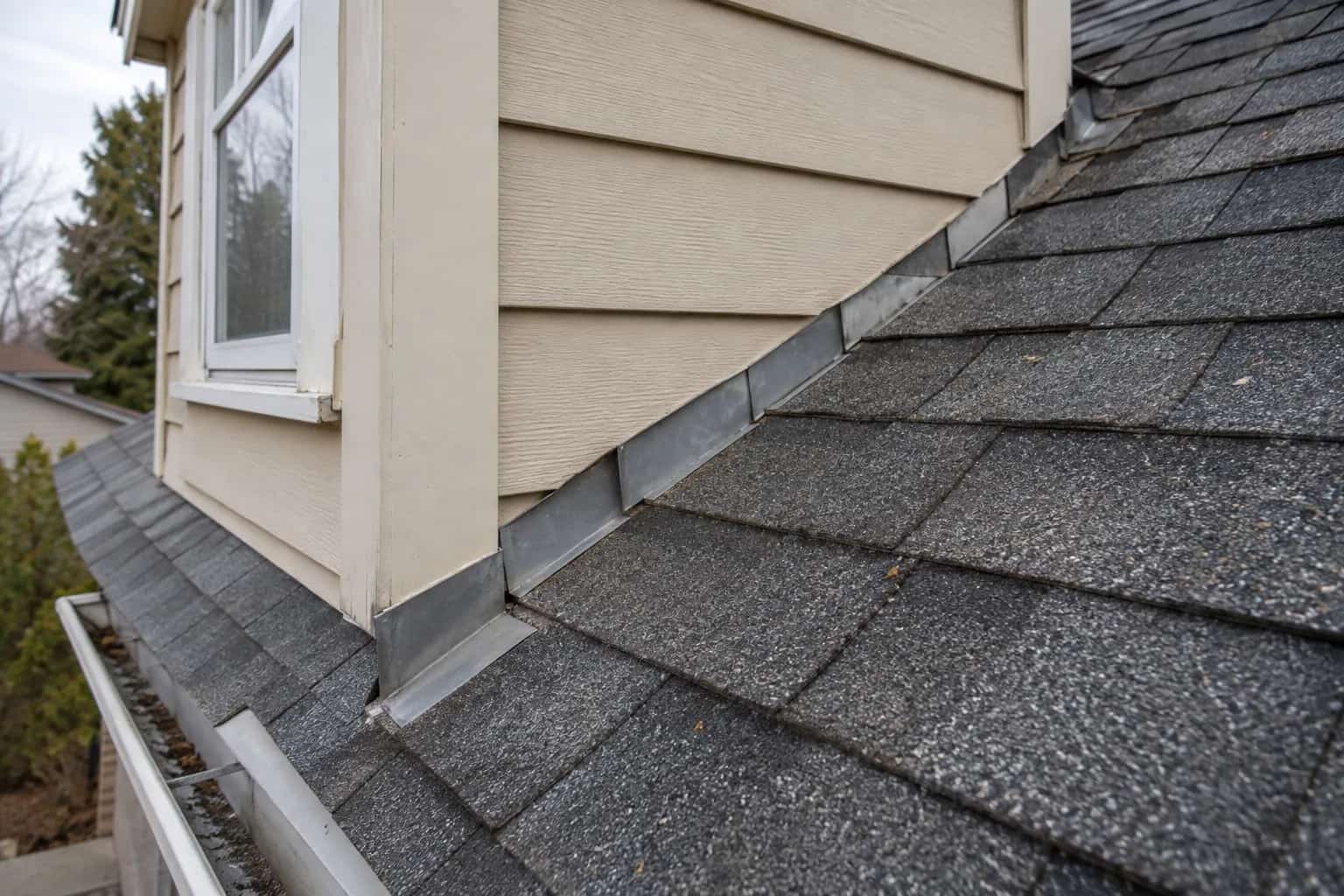
At a chimney or wall, disturbed flashing deserves attention because the joint is part of the water-control system. IKO's inspection checklist specifically calls out detached or deformed flashing around roof structures.
From safe ground, Daniel points toward the gutter. Pat separates the components in the discussion: gutter, fascia cover and roofing edge. They sit close together, but a repair to one cannot automatically fix the others. The noise has narrowed the search without finishing the diagnosis.
Identify the part before choosing the repair
Similar noises can come from components with different jobs.
Edge metal
A displaced drip edge can interrupt water delivery into the gutter.
Fascia covering
Loose trim may rattle or detach without a missing shingle.
Junction flashing
Lifted metal near a wall or chimney can expose a water-entry route.
Vent or cap
A loose roof accessory needs its attachment and surrounding detail checked.
Why did the metal come loose?
Daniel asks whether a bead of sealant would stop the noise. It might quiet something without correcting the attachment. Mike wants three findings: what moved, what supports it and whether the drainage detail survived. Decayed backing will still be decayed after the tapping stops; an open water-shedding lap may still be wrong after the flap is pinned down.
If the roof is old or several areas have loosened, request an assessment of the adjoining components. That does not automatically mean replacement of the whole roof; it means the scope should follow what the inspection finds.
Keep before-and-after photographs and note whether the noise returns in subsequent wind. A quiet day immediately after the visit is a limited test.
If shingles have also lifted or disappeared, read missing shingles after wind. For recurrent trouble on an exposed property, lakeshore roof specifications explains why a complete installation detail matters more than a wind-speed number in a brochure.
Once the loose piece is identified, Dave asks about the support behind it and the adjoining water-shedding detail. Simply stopping the tapping would be a tempting end to the visit. Daniel wants a quiet bedroom; we also want the repair to remain attached when the next gust arrives.