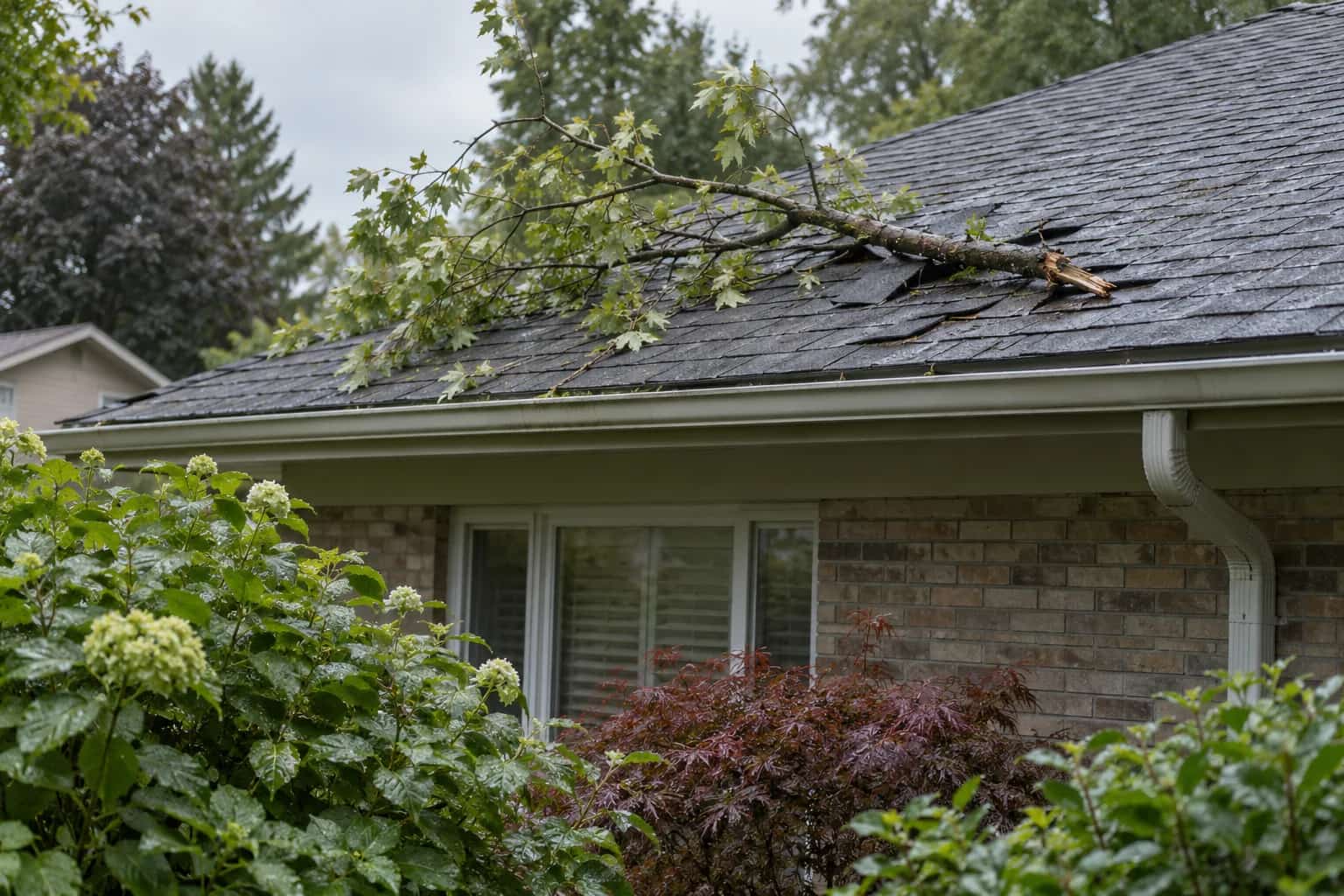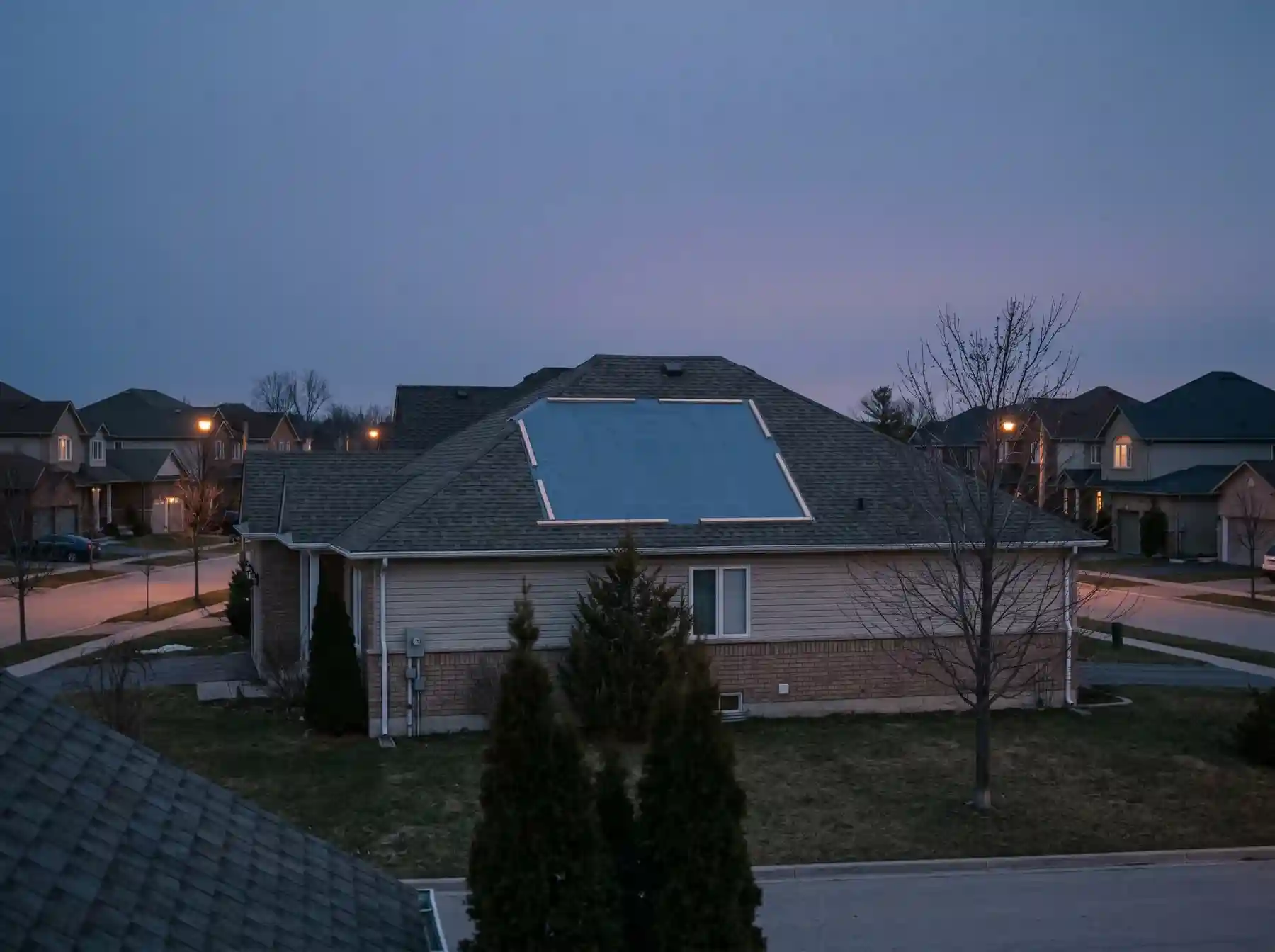
The storm has moved on and you can see daylight through part of the roof. Your first job is not to fetch a tarp. Keep clear of the damaged building and follow emergency authorities' directions about access and re-entry. Call 911 for fire, injury, suspected collapse or another immediate danger.
A familiar front door does not make the route inside safe. Loose masonry, damaged framing, hanging branches and electrical hazards may remain after the noise stops.
From the permitted waiting area, the owner keeps thinking about a family photograph in the upstairs bedroom. Mike cannot make that retrieval safe by promising to be quick. He asks the responders about access and helps list what is inside for the authorised team. The roof estimate can wait its turn.
Wait for Information, Not Just Quiet Weather
Public Safety Canada's tornado guidance places personal safety and attention to hazards ahead of cleanup. Continue following local emergency information. Roads, services and access restrictions may affect what can safely happen at the property.
Do not approach damaged utility lines or equipment. Keep other people away and report them to the utility or emergency services. Do not turn a gas, electrical or structural investigation into a homeowner check before responders arrive.
If someone is inside a dangerous area, tell emergency services where they are. Do not enter a visibly unstable building to retrieve possessions or obtain better photographs. A phone full of evidence is useful later; it is not worth adding another rescue.
Access Comes Before Repair
Weather protection does not establish safe occupancy.
Immediate hazard
Call emergency services and keep clear of damaged areas.
Access decision
Follow local restrictions and the responsible assessors.
Temporary protection
Arrange weather work only within the safe-access plan.
Return and restoration
Confirm occupancy, services, drying and permanent repairs separately.
A Roof Patch Answers Only One Question
Picture a contractor able to install temporary weather protection from an approved access arrangement. That can reduce new rain entry. It does not establish that a damaged wall is stable, wiring is safe or the rooms below are fit to occupy.
Ask who is assessing each part of the incident:
- Emergency authorities address immediate hazards and any access restrictions.
- The utility and appropriate electrical professionals address damaged services and equipment.
- A qualified structural professional assesses uncertain or damaged load-bearing construction.
- The roofer addresses weatherproofing within the access and repair plan.
The exact people involved depend on what happened. One person's work should not be mistaken for an all-clear covering everyone else's responsibility. The National Weather Service's aftermath guidance likewise warns about damaged buildings and post-storm hazards; local Canadian responders' directions control your actual access.
Later, a temporary-covering proposal arrives before the structural findings. Dave puts both documents on the same timeline. The covering can prevent another problem without resolving the first one. He wants the access conditions written beside the proposed work, not passed along as a hopeful message.
Document From Where You Are Allowed to Be
Once the location is safe and access is permitted, photograph the affected side of the house before zooming in. Record the time, visible changes and any emergency work. Tell the insurer promptly and follow its instructions for reporting, mitigation and records without delaying emergency help.
Keep statements factual. Roof covering missing above the rear bedroom is useful. Tornado destroyed all framing is a conclusion that needs assessment. The cause of loss and the repair extent may require separate evidence.
Our storm-photo guide gives a compact wide-to-detail sequence. Save original files, invoices and the names of contractors who attend. If damaged material may be needed for inspection, coordinate its handling before disposal where that can be done without delaying necessary hazard removal.
Plan the Nights Before the Permanent Repair
Ask explicitly whether occupancy is permitted and whether there are conditions on access to particular rooms or services. If the answer is unclear, resolve it with the responsible authority or assessor; a verbal promise that the tarp should hold is not an occupancy decision.
Make a written handoff for temporary protection. Identify who checks it, what weather changes require contact and who is arranging the permanent scope. A temporary covering can be damaged by later weather, and someone needs to own the follow-up.
Wet finishes and insulation also need assessment. Stopping new rain does not dry the building or remove damaged material. Keep electrical concerns and sagging ceilings out of ordinary cleanup tasks.
The house may look much better once the roof is covered. Keep the completion records organised by what was actually assessed and restored. The question is not whether the damage looks smaller from the street; it is whether the people responsible for structure, services and weather protection have completed their parts.
When the house begins to look familiar again, the owner asks whether everyone is finished. Pat reads the outstanding items aloud: services, wet materials, permanent weatherproofing. The shorter list is encouraging. It still needs completing before the family can treat an improved view as an all-clear.