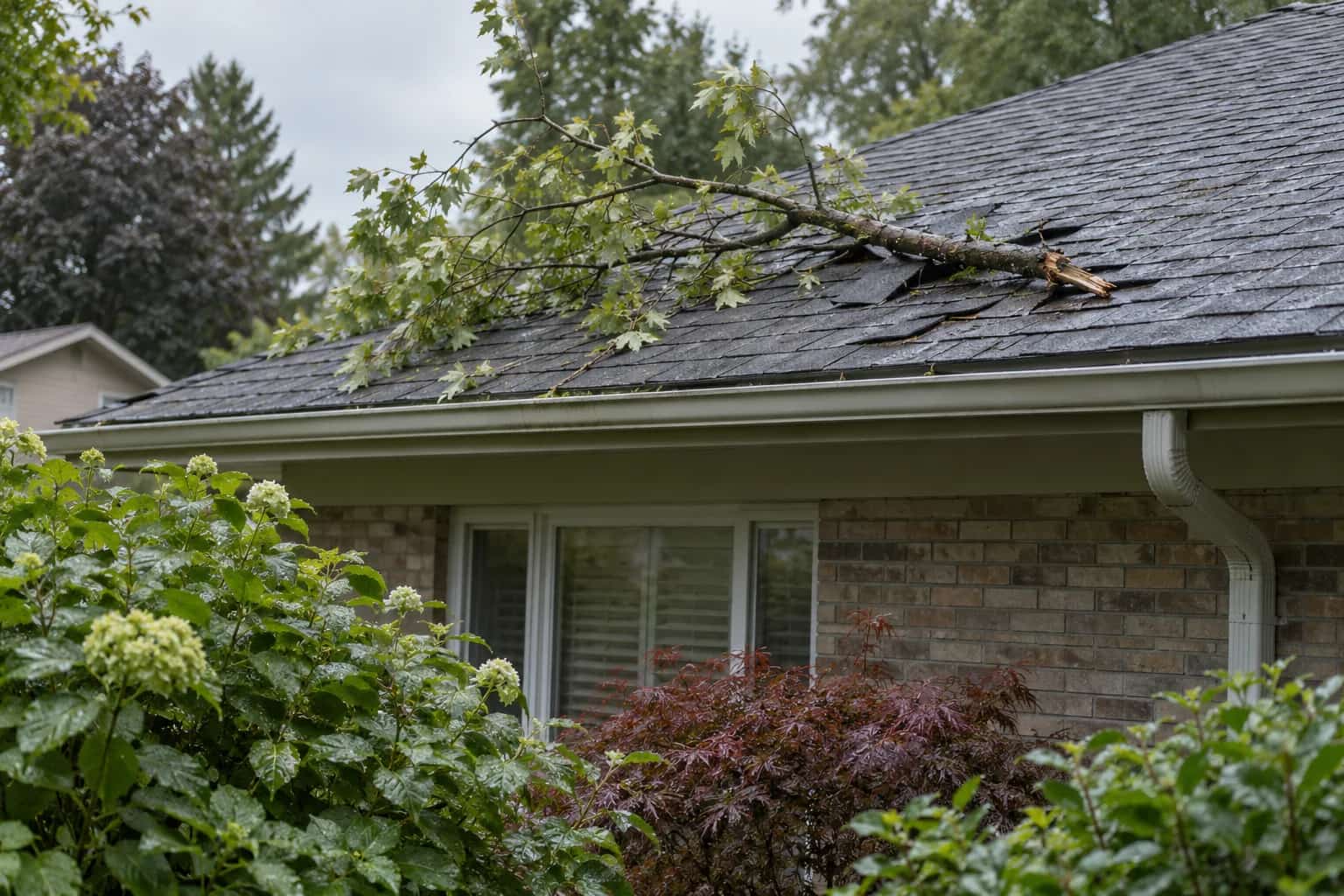
The branch has left one obvious mark on the shingles, and the owner's photograph is tightly cropped around it. Mike asks for a safe wider view. The limb may have struck, rolled and disturbed another area before coming to rest. An impact inspection needs to follow that path, including the deck and surrounding details where affected. The most visible scuff may not tell the whole story.
If the branch is still on the roof, keep clear of the area below and the rooms beneath any visible distortion. Do not tug it away with a rope or try to cut the end from a ladder. A supported limb can move unexpectedly when part of it is removed.
Start with the hazards around the branch
Look from a safe distance for damaged overhead electrical lines or service equipment. A branch touching a wire needs utility involvement. Do not assume that a dry-looking limb is safe to touch. Follow ESA's storm-damage precautions, including staying at least 10 metres from downed lines.
For a heavy impact, new structural movement, or a tree that has entered the building, call emergency services and follow their access advice. Do not enter the attic to see whether a rafter has cracked.
The next calls may include an arborist, roofer and structural engineer. Each has a different part of the problem to resolve; one trade's attendance does not automatically clear all the others.
Which crew goes first?
The work sequence matters because removing the branch changes the scene. It may uncover a hole, shift a load or expose material that was partly sheltered. The tree crew and building professionals need to agree how removal and temporary weather protection fit together. Dave coordinates that sequence before either crew starts. Otherwise the tree crew can arrive ready to remove the limb while the building assessor expected to see how it was supported.
Tell the contractor whether the limb remains in place, whether water is entering and whether the roof has visibly changed shape. Share safe ground photographs. Identify the occupied rooms beneath the impact if you know them.
IKO's guidance on tree damage describes several ways trees affect roofing. An actual impact needs its own close assessment; ordinary debris cleaning is a much smaller job.
Coordinate an impact repair
Removing the obstruction and repairing the weather surface are separate decisions.
Make the area safe
Keep clear of wires, unstable limbs and damaged rooms.
Plan tree removal
An arborist assesses the supported or suspended branch and access.
Assess the building
Check the covering, deck and framing; involve an engineer when indicated.
Restore and dry
Complete roof repairs and address wet interior materials.
Inspect beyond the obvious contact point
The inspection should follow the likely path of the branch, including where it first struck and where it came to rest. Adjacent shingles, penetrations, gutters and lower roof sections may also be affected.
Where opening the roof is necessary, request photographs of the deck and any damaged framing before they are covered again. Pat separates confirmed damage from inaccessible areas in the photo record. A blank space in the report should mean "not inspected," not quietly become "nothing wrong." Structural repair decisions should be made by the appropriate qualified professional.
A temporary covering can reduce further weather entry without resolving the full scope. Keep its purpose and planned replacement date clear in the paperwork.
Finish inside as well as outside
After the roof is weather-tight, determine whether insulation, ceilings or other concealed materials became wet. Mike asks about the room below even after the outside repair looks complete. A dry-looking paint surface cannot establish that the concealed assembly is dry.
Keep the storm record, tree-removal invoice, roof findings and structural documents together. If the roofline remains uneven after the immediate work, our guide to wavy roof decks explains why surface appearance and support condition need to be separated.