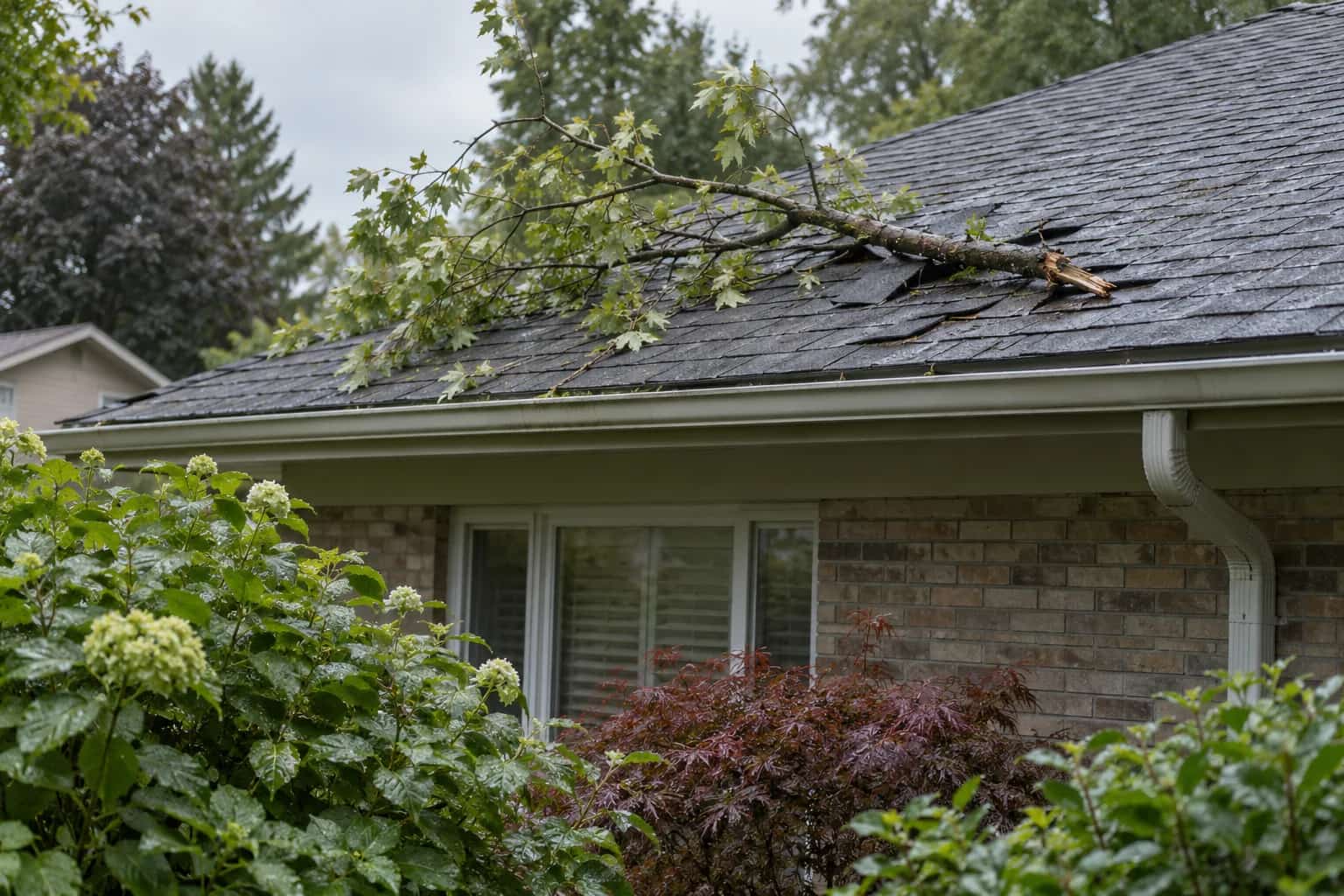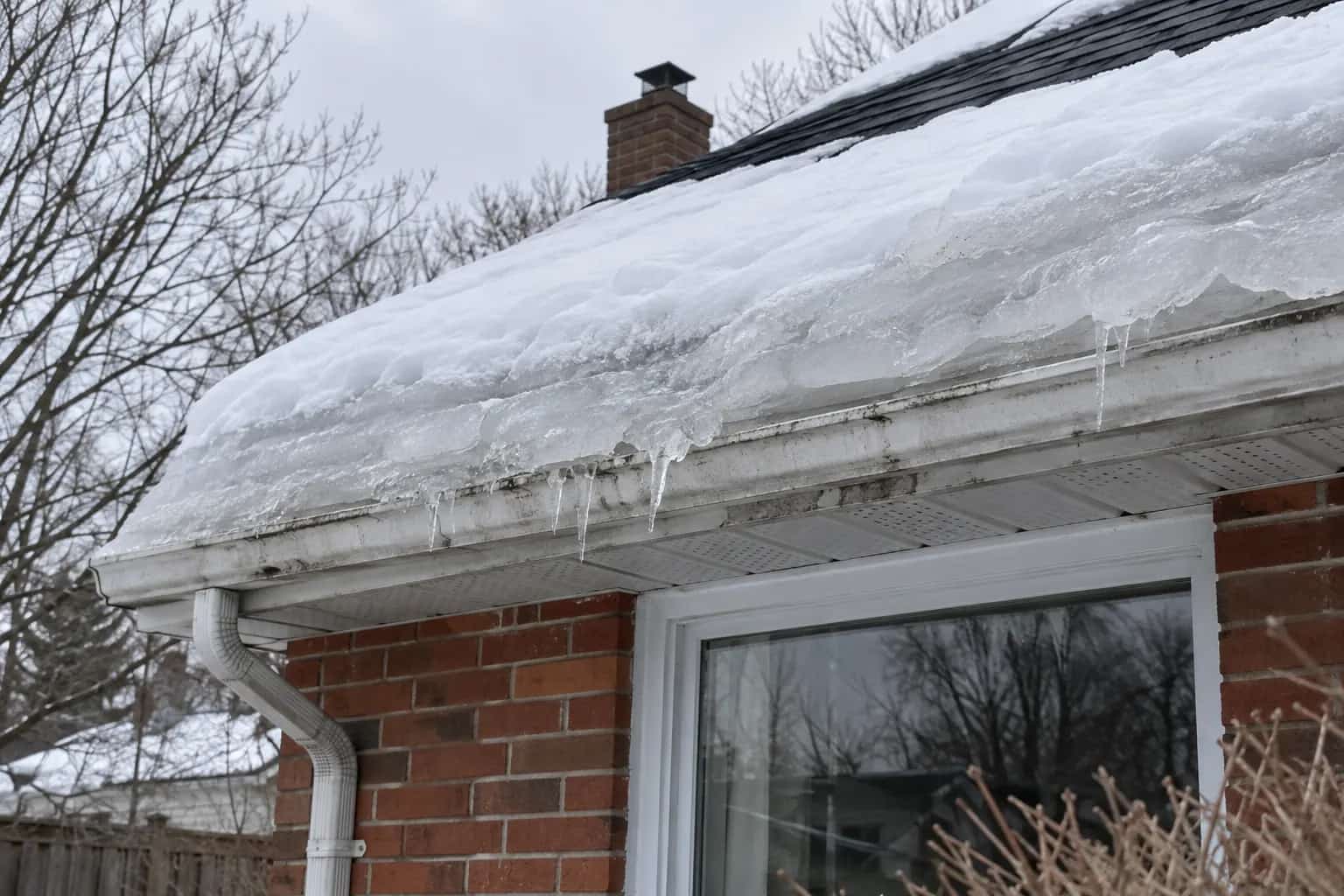
Mike is ready to talk about shingles when the owner mentions a branch beside the service wires. The call changes order immediately. After freezing rain, check the hazards around the house before trying to inspect the roof. Ice-loaded branches, damaged wires and slippery paths can make an apparently good viewing position unsafe. Wait for safe conditions and follow emergency directions.
Keep away from damaged wires and branches. If a line is down, assume it is live, stay at least 10 metres away and contact the utility or 911, as advised by Ontario's Electrical Safety Authority.
Separate electrical damage from roof damage
A pulled service mast or a damaged connection at the house is not a roof-only repair. The utility and a Licensed Electrical Contractor may need to make the situation safe before a roofer can address the surrounding weatherproofing.
Do not touch the mast, attached metal, a branch on a wire or wet material nearby. The absence of sparks tells you very little. Report what you can see from a safe position and let the utility determine the electrical hazard.
A contractor photograph taken after the area is made safe can then show whether flashing, shingles or the roof deck were disturbed. Dave keeps the electrical clearance ahead of the roof repair on the work list. A neat flashing repair would be the wrong first accomplishment if the service equipment still needs to be made safe.
An ice-storm check in safe order
Roof details wait until hazards around the building have been addressed.
Check the surroundings
Stay clear of wires, hanging branches and unstable ice.
Check occupied rooms
Note active water or new distortion without entering suspect areas.
Record exterior changes
Use safe ground views after conditions permit.
Assign the work
Utility, electrical, tree and roofing work may need a coordinated sequence.
Watch the thaw, not just the ice
There are two useful stages to the roof check. While ice remains, identify hazards and active indoor symptoms from a safe place. During the thaw, watch where water actually leaves. The first stage tells you where access is unsafe; the second can reveal a frozen outlet, overflow or a displaced component that the ice concealed. Neither requires a ladder.
When temperatures rise, Pat asks for a new set of observations from a safe position. The thaw can reveal details that the ice hid. Note where water flows. Is an eavestrough overflowing at one end? Is water emerging behind the fascia? Is a downspout still encased while an adjacent outlet is running?
Those observations help distinguish an obstruction from a displaced component, but ice can conceal both. A contractor may need a later visit when the area is visible. Our frozen-downspout guide explains what to record without trying to heat or dismantle the blockage.
A new indoor stain deserves prompt attention. Keep clear of a sagging ceiling or water near electrical equipment. Photograph safely, protect belongings only if the area is safe, and arrange help.
Record any known impact, even when the branch is already on the lawn. Include its approximate location and whether it struck the main roof or a lower porch. A roofer can then examine that area rather than treating the visit as a general shingle count.
A limb still resting on the roof needs coordinated tree and building assessment. Removing it may change forces on the roof or expose an opening. Do not pull it down from the ground.
What the first call needs
Send the time of the storm, the affected part of the house, a few wide and closer ground photographs, and any active indoor symptoms. State electrical or branch hazards prominently. Public Safety Canada's winter-storm preparation advice is also worth reviewing before the next forecast, while access and supplies are straightforward.
Mike keeps four separate completion items: electrical clearance, branch removal, weatherproofing and drainage. They can finish on different days. A cleared driveway may feel like the end of the storm, but the roof file still needs those answers.