
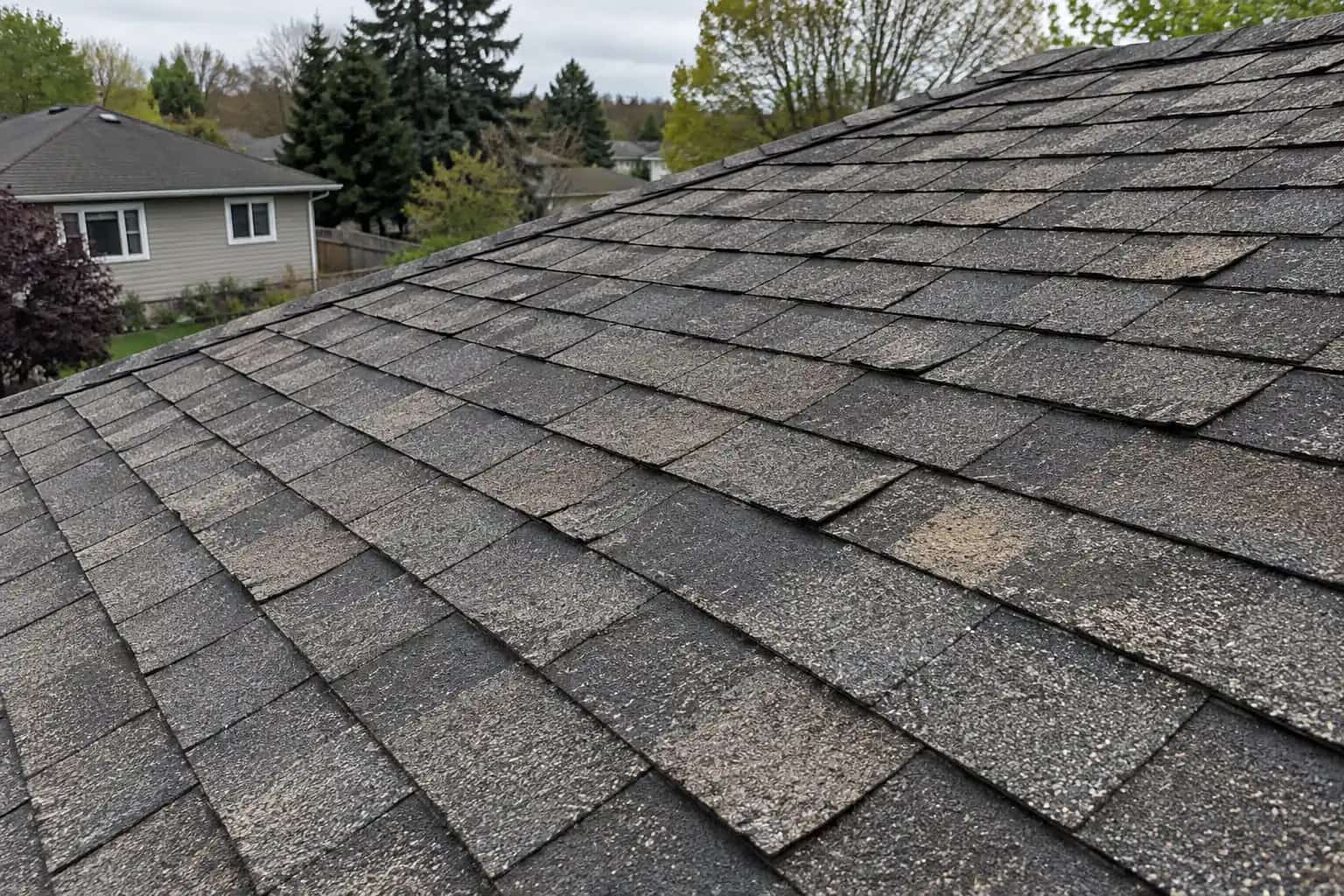
The owner sends a roof photograph at five in the afternoon and another at noon. It appears to be two different roofs. Low light has put a shadow under every raised edge. Judge the pattern and condition, not the frightening photograph alone. A few distorted shingles and a broadly brittle roof need different decisions.
Describe What You Can See
Mike asks which shapes repeat: lifted corners, raised tab centres or whole distorted rows? Then how far they extend: one patch, a slope or almost everywhere? "All of it looks terrible" is an understandable first reaction to the sunset photograph. Those smaller questions make it useful.
Take photographs from a safe ground position and repeat them under similar light. Note the season and temperature. IKO's roofing FAQ describes a cold-weather curling phenomenon that may change in warmer conditions. That is different from assuming that all distortion on an old roof will flatten in spring.
New roofing also needs separate context. Slight stiffness after installation and long-established deformation are different starting points. See new shingles that do not lie flat if the work was recent.
Assess Distortion by Shape and Extent
The repair decision follows the roof condition rather than one descriptive word.
Describe the shape
Note corners, front edges, centres or entire rows.
Compare conditions
Record whether the shape changes with season and temperature.
Assess the material
Check cracking, sealing and whether surrounding shingles can be repaired.
Set the scope
Distinguish local correction, monitoring and broader replacement.
Look Beyond the Shape
A roofer should assess surface wear, cracking, missing pieces, sealing and the condition of adjacent material. The question is whether shingles still shed water and remain securely installed, and whether a repair can be made without damaging everything around it.
The underside of the roof may provide important clues too. Moisture, deck movement or installation conditions can affect the appearance above. A roof inspection should not automatically prescribe more ventilation just because shingles curl; the proposed cause needs evidence.
If there is an active leak, treat that as a separate problem requiring timely attention. A roof can leak at flashing while its shingles look flat, and curled shingles do not identify the entry point of water by themselves.
Why Gluing Every Edge Is a Poor Starting Plan
The proposed solution is to glue every raised edge. Dave asks what that repairs underneath. Extensive roof cement can hide aging material or movement without correcting either. Use compatible products and methods, and make the expected result and duration clear. A flatter photograph is not the same as a sound repair.
Is a Small Repair Still a Small Repair?
The small patch on the estimate has tidy boundaries. The surrounding shingles may not cooperate. If they can be lifted and worked without breaking, a limited replacement may be practical; brittle neighbours can turn that neat rectangle into a larger operation. Ask what happens at that point before approving the patch.
Before approving a patch, understand what happens if surrounding shingles prove unworkable. The point is not to authorise unlimited replacement; it is to avoid discovering that the advertised small repair had no workable boundary.
For widespread distortion, compare the proposed patching effort with a planned replacement. Repeated attention to individual edges can become expensive without improving the condition of the roof as a whole.
Turn the Inspection Into a Decision
At the end of the inspection, Mike wants a different set of photographs: ones showing the affected extent and findings, with immediate work separated from monitoring. Keep the dramatic sunset view, but buy the repair based on condition and workable boundaries, not the shadows.
For extensive distortion, use the repair-or-replace decision to compare the whole roof, including whether surrounding shingles can survive a repair. A patch that cannot be installed cleanly is not a useful low-cost option.