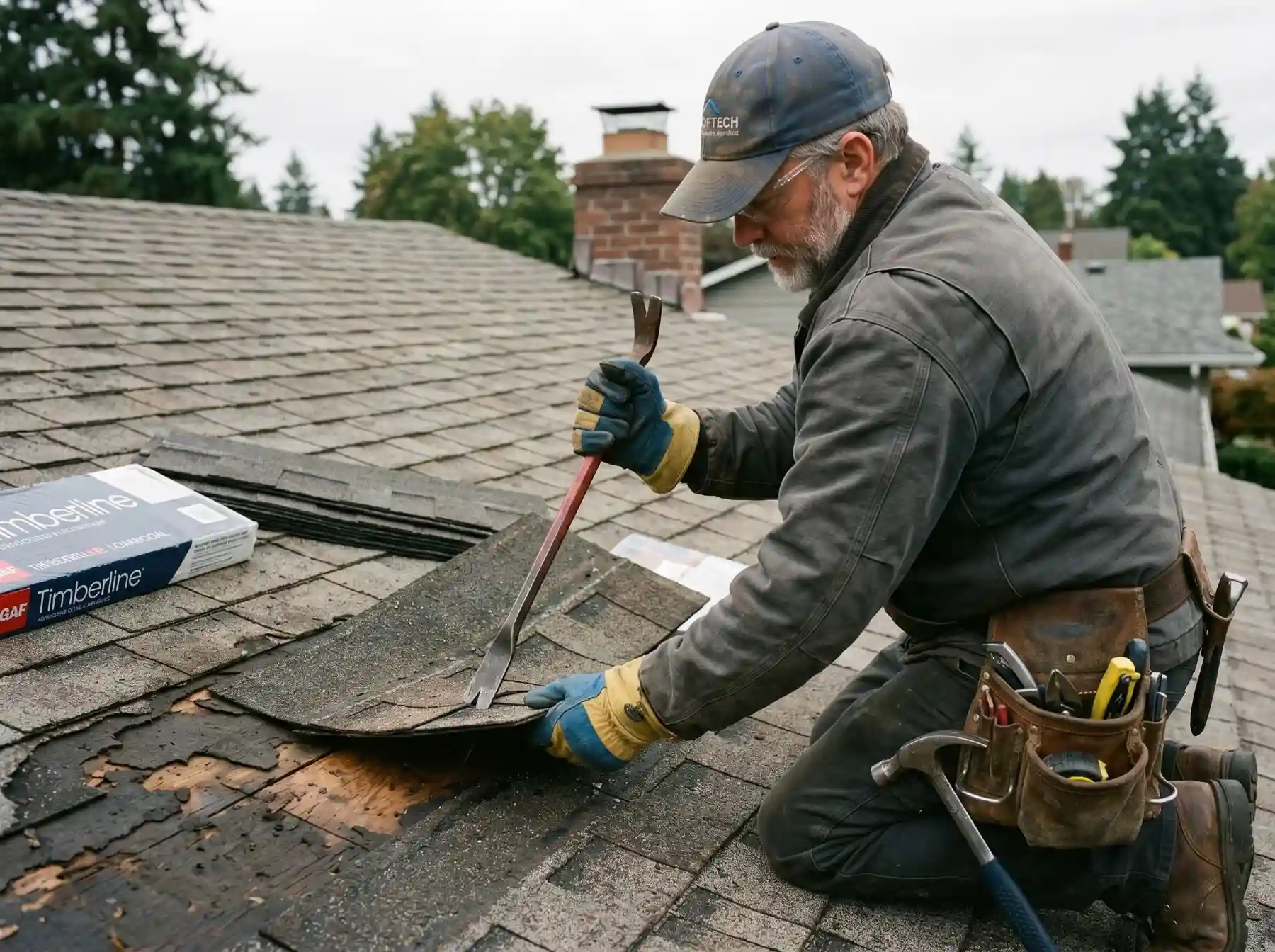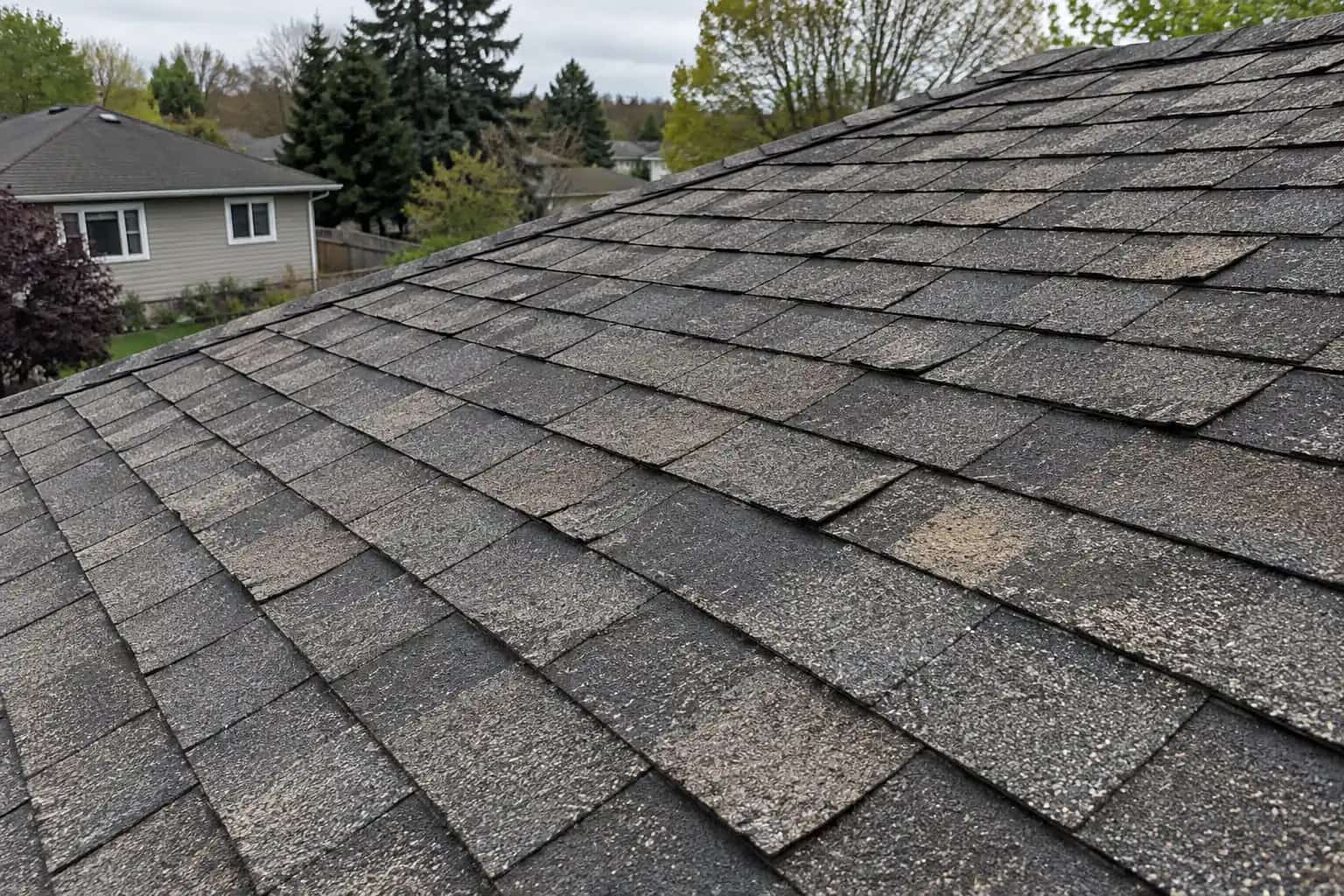
A raised line crosses several rows of shingles. A few new shingles might hide it for a while, but they can also reproduce the same line beautifully if the cause is beneath them.
Identify the layer creating the ridge before replacing the surface. Deck movement, underlayment wrinkles and support irregularities can look similar from the garden. A narrow ridge also differs from broad sagging. The repair should follow the confirmed finding, with the deck correction and restored covering explained separately.
Map the Pattern First
Photograph the full affected slope from the ground. Note whether the line runs up the roof, across it or along a known panel joint. Look for several evenly spaced ridges rather than focusing only on the highest one.
A broad dip between supports is a different observation from a narrow raised seam. If the roof appears to sag, the inspection may need to address sheathing or structural support. Our guide to a wavy roof deck covers that distinction.
Recent work also matters. Tell the roofer whether the distortion appeared immediately after replacement, after prolonged wet weather or gradually over several seasons. Dates do not prove the cause, but they make the investigation more useful.
Wood Moves With Moisture
Roof sheathing can change dimensions as its moisture content changes. APA's builder guidance explains why correct panel spacing and installation help limit buckling. Old board decks can also move in ways that affect the roofing above.
That does not mean every visible ridge proves missing panel gaps. Wrinkled underlayment, uneven support and local installation issues can produce similar appearances. A diagnosis should identify the actual layer involved.
The attic may reveal moisture staining or the panel layout, where safely accessible. Roof-side inspection may still be necessary because the underside alone cannot show every lap or surface irregularity. Avoid stepping between framing or disturbing suspect materials to investigate on your own.
The proposed repair begins with new shingles over the raised line. Dave asks what happens if the ridge comes from the deck. Pat draws the same line through the proposed new covering. "We could reproduce it very accurately."
Mike separates the inspection by layer before ordering the surface repair. Panel movement, support and underlayment are different findings, with different corrections. A present-day gap also cannot prove what spacing existed at installation. The useful record shows what was found and corrected, not just a flatter completion photograph.
Repair the Cause and the Consequence
If the deck is wet, identify why before covering it again. If panel installation is wrong, the correction needs to preserve the roof's structural support and fastening. Cutting random relief lines into a roof from above is not a homeowner remedy.
Once the supporting condition is corrected, affected underlayment and shingles can be assessed for reuse or replacement. Material that has folded, cracked or been stretched around a ridge may not recover simply because the deck is now flatter.
A surface buckle can start underneath
The roof covering follows its support. Inspection separates a shingle problem from movement in the underlayment or deck before deciding which layer needs repair.
Schematic view. Shows relationships, not installation dimensions.
Panel Gaps and Edge Support Do Different Jobs
APA's spacing guidance recommends a typical 1/8-inch gap at panel edges and ends, about 3 mm, subject to the selected product's instructions. It allows moisture-related movement; it is not a drainage opening or substitute for attic ventilation.
A panel marked sized for spacing still needs its prescribed joint arrangement. Edge clips or other support details answer a separate question about how the panel edge is supported. A correctly spaced patch with an unsupported edge is not a complete installation.
A tight joint seen today cannot reveal the original installation gap or later moisture changes. Nor does a visible ridge automatically prove structural failure. Have the inspector connect the roof pattern to the affected layer, its condition and its support. A stable assessed cosmetic irregularity may receive a different recommendation from growing distortion, cracked covering or leakage.
For a confirmed defect, compare "replace buckled shingles" with a scope that identifies the layer to open, the deck correction, support and fastening, then restoration of underlayment and covering. Agree what further findings would change that scope before work. Random relief cuts through a finished roof can affect sheathing, fasteners, roofing and concealed services; they are not a homeowner remedy.
Prevent the Next Repeat
For a reroof, request photographs of exposed decking, panel joints and repairs before underlayment covers them. Agree on how unexpected deck work will be approved and priced. These are practical records, not an invitation to supervise nail by nail.
The aim is not another flatter-looking photograph on completion day. It is a corrected cause beneath a covering that can stay serviceable, with the relevant layer recorded before it disappears.