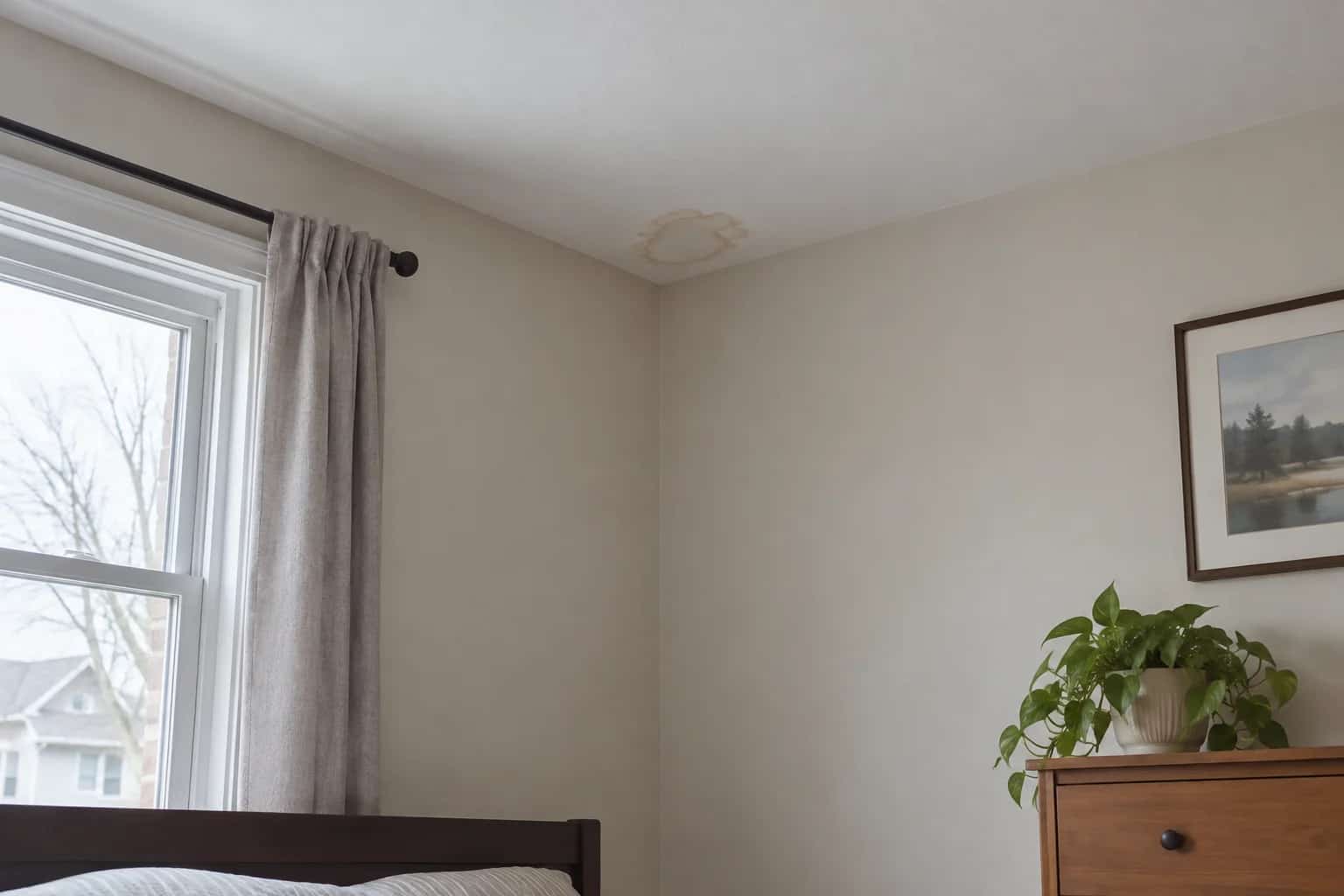
The roof invoice is in an email account nobody remembers the password for. The chimney repair is on a handwritten receipt in a kitchen drawer. Pat finds the receipt between a takeaway menu and a battery. This is why our favourite maintenance record is boring, short and findable.
A date, a location and the completed scope matter more than a large collection of files. Start with a one-page index and a folder you can find.
Start with what you actually know. An invoice dated September 2018 is evidence. A former owner's recollection that the roof was "about ten years old" is a useful lead, but it belongs under estimated history. Keep both, with their different levels of certainty clearly labelled.
Give Different Roof Areas Their Own Dates
Pat could be looking at a 2018 main roof, a 2023 porch membrane and a skylight replaced in 2025 on the same sketch. Calling all of that a "2023 roof" loses information that the next contractor needs. A simple sketch with front, rear, garage and addition labels helps more than a paragraph full of lefts and rights.
For each area, record the covering, manufacturer and product line if known, installer, installation date and scope. Note whether the work was a full tear-off, a repair or an overlay. Save the final invoice alongside the proposal so an optional item is not mistaken for work that happened.
Ontario's renovation guidance stresses written agreements. Keep changes to those agreements too: decking replacement, a different vent, or a revised flashing detail may explain what a later inspector sees.
The Four Lines You Want to Find Quickly
A useful entry can be very short:
- Where: rear slope, chimney nearest the garden.
- What: flashing repair, not chimney rebuilding or full reroofing.
- When: completion date, with invoice attached.
- What happened next: any further leak and the conditions in which it appeared.
That last line turns a receipt into a maintenance record. A completed visit and a successful repair are not automatically the same event. If the ceiling stayed dry through two later showers, say that; if a different room became wet, give it a separate entry.
A close-up of metal and shingles is not much use when nobody remembers which chimney it shows. Keep one wider orientation photograph with every detail shot. Use filenames such as "2026-10-12-rear-chimney-before" and "after", and retain the original files rather than only compressed message screenshots.
Ask the contractor for photographs of concealed work while it is accessible. You do not need to go onto the roof to collect them. Deck repairs and wall transitions become difficult to document after the covering goes back on.
Dave labels the photograph while the location is still obvious. "Rear slope beside chimney" takes a few seconds now; decoding an anonymous patch of shingles five years later takes considerably more enthusiasm.
A Repair Entry You Can Actually Use
Keep enough context to connect a future question with the work that actually happened.
Rear chimney
Give the repair a location that a future roofer can find.
Flashing repaired
Describe completed work separately from the original quotation.
Later rain
Add recurrence or a specific dry follow-up observation.
Next decision
Leave any unresolved recommendation visible in the index.
Keep Warranty Paperwork With the Roof
Save the actual warranty, registration confirmation and correspondence. GAF's claims guidance illustrates why installation and ownership documentation matters when a claim arises. A manufacturer's brochure alone does not establish which coverage was purchased or registered.
Maintain separate entries for product coverage and installer workmanship coverage. Their providers, terms and transfer procedures can differ. Our guide to transferring a roof warranty explains what to check before closing a sale.
Before sharing the file, remove unrelated personal and banking information and keep the full original privately. Put the unresolved question at the top of the index. That is the part the next person needs before they choose another repair.
Keep the folder simple enough to update after a small repair. The best record book is the one the next owner can understand without meeting the person who organised your kitchen drawer.