

During rain, the little downspout beside the basement window becomes the busiest pipe in the yard. The well fills, and the first repair suggestion is a new window. Dave starts outside instead: where does the water arrive, and where is it supposed to leave? The window is at the end of the problem, not necessarily the beginning.
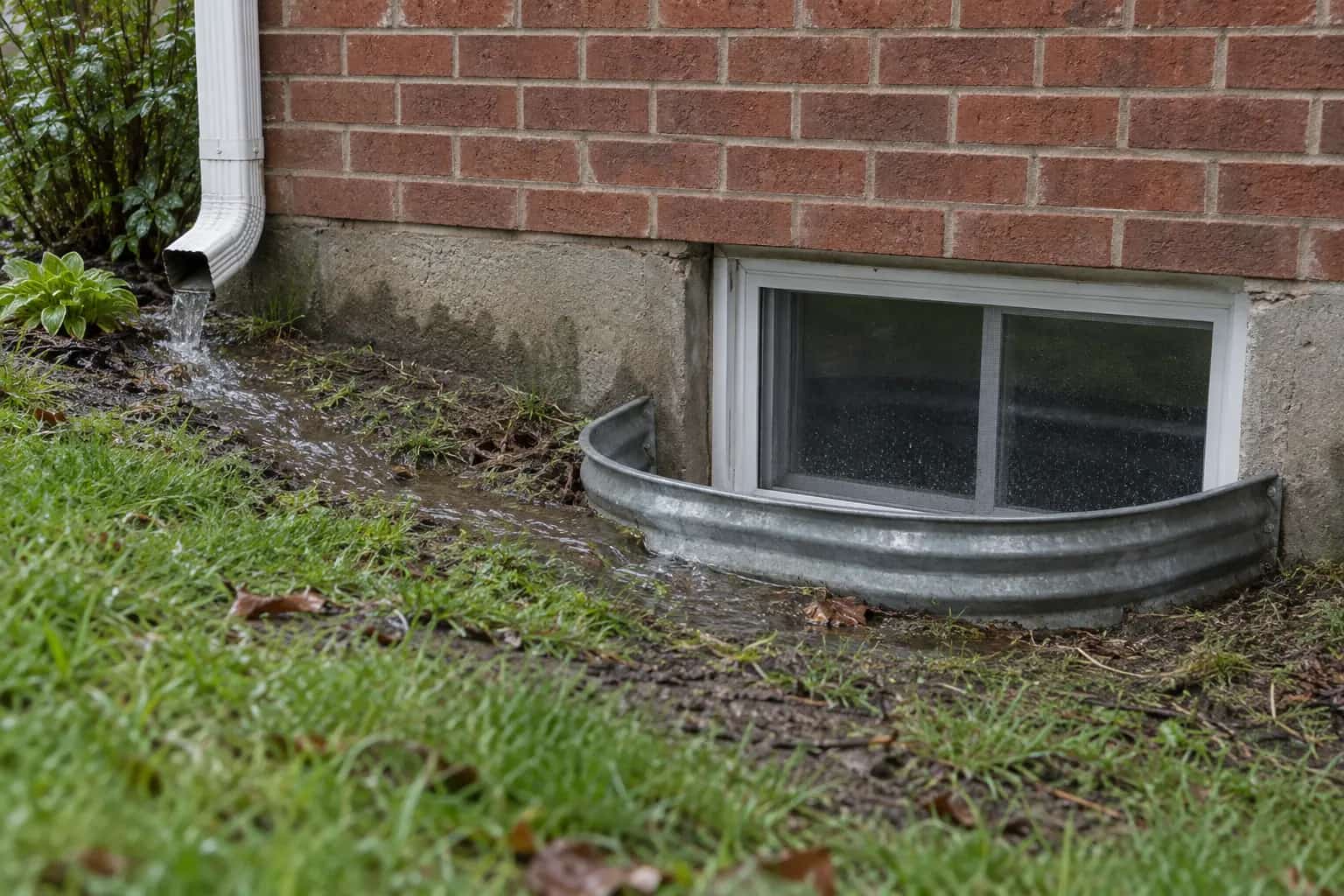
The gutter is clear and the downspout is pouring freely, yet the basement window well is filling. The downspout may be working perfectly as a pipe while discharging into the wrong place. Water can cross the ground, pass over or around the well's rim and collect against a window that was never meant to hold back a pool.
There are two questions to answer: what brings water into the well, and what allows it to leave? Fixing only one may leave the other ready for the next storm.
Picture the Well in Section
The well is an open pocket beside the basement window. Its rim helps keep surrounding surface water out; the ground outside should direct runoff away rather than feeding that pocket. Gravel at the bottom does not prove there is a working drain beneath it. Where a drain exists, its destination and condition need to be established.
Now picture a downspout ending beside a low section of the rim. During rain, water can arrive faster than the well can release it. Raising a cover over the opening may reduce direct rain, but it does not correct a concentrated stream flowing over the rim or a blocked drain below. Keep any required escape opening operable when considering a cover.
Toronto's disconnection guidance requires a suitable discharge destination rather than sending water onto a walkway or back toward the building. Ask the contractor to mark the new outlet, ground slope, well rim and any verified drain on one simple sketch. A drawing that stops at the end of the downspout misses half the question.
Find the Drain Before Assuming It Works
Have a drainage specialist establish whether the well has a drain, where it connects and whether it functions. Do not push a hose or clearing tool into an unidentified pipe. The buried-drain guide explains why a pipe disappearing below ground still needs a known destination.
Divide the work by evidence: the eavestrough contractor follows the roof discharge; the drainage or foundation specialist checks grading, the rim and the below-ground route. Dave wants their scopes to meet beside the well, not leave that junction for the homeowner to resolve.
If the Water Is Already Rising
Stay out of the well and away from wet electrical equipment. Record the visible incoming route from a safe place and arrange prompt drainage and water-entry help. If water enters the basement, address the wet interior as well as the outside route. Do not assume the window is defective simply because it is where water finally appears.
After repair, watch a substantial rain from shelter. Does water still reach the rim? Does the well empty as intended? A dry afternoon photograph cannot answer either question.
Two Routes Into One Well
Locate where the downspout water lands. Check the well and interior after rain; preserve any required escape opening.
Roof discharge
Locate where the downspout water lands.
Surface route
Look for ground that sends water over the well rim.
Well outlet
Verify whether a drain exists and where it leads.
Follow-through
Check the well and interior after rain; preserve any required escape opening.