
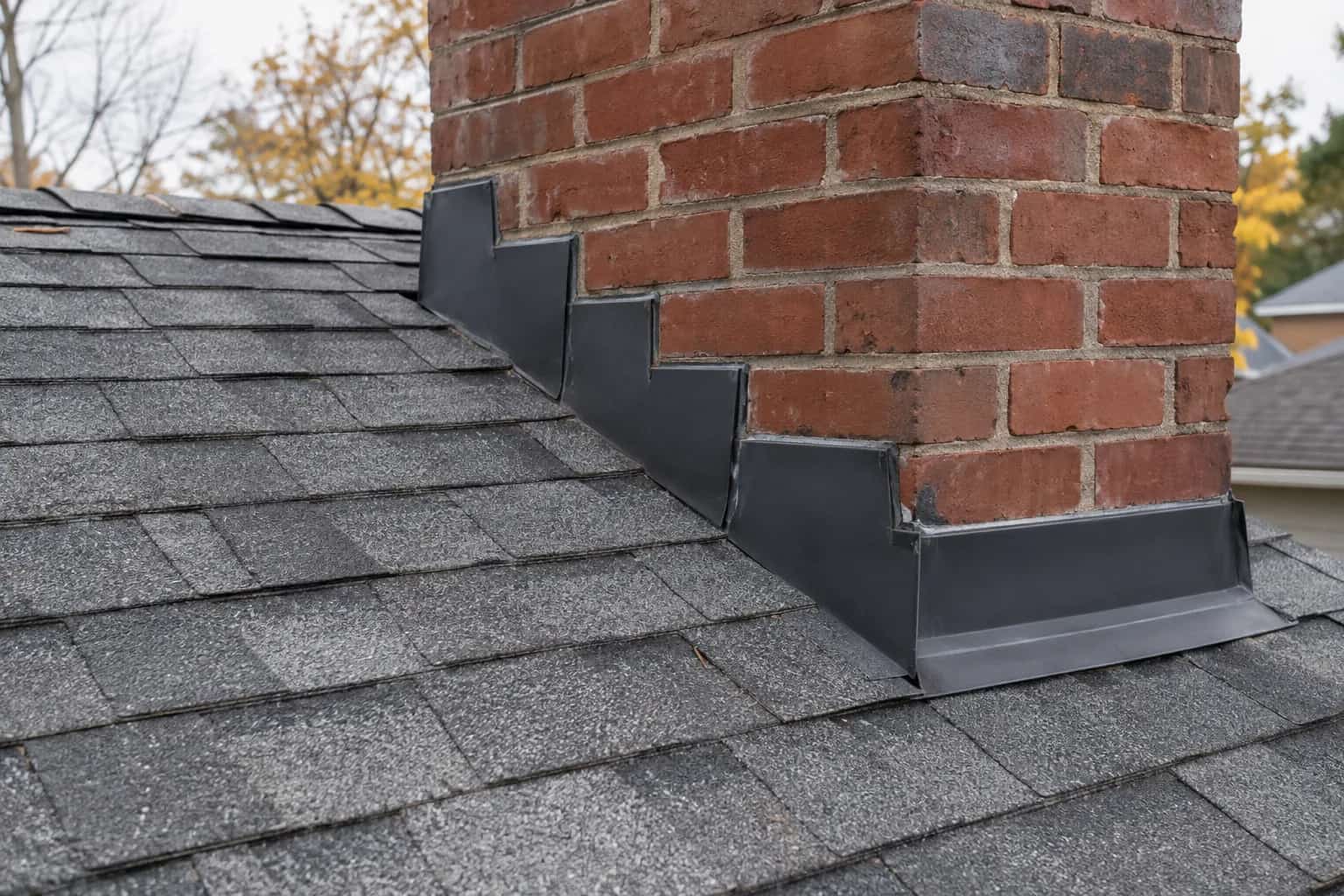
The roofer points at the chimney. The chimney contractor points at the roof. Standing between them, the homeowner has acquired two opinions and still has one stain. A chimney leak needs an identified water route: flashing, masonry and the top assembly are different possible entries. Ask each trade to show its finding.
Start with where the water appears: beside the chimney on the ceiling, down exposed indoor brick, or inside the fireplace. Then follow the exposed assembly above it. The nearest piece of metal is not automatically the culprit.
Name the Parts Before Pricing Them
The roof flashing connects the roof covering to the chimney. Counterflashing covers the upper edge of that junction. Above them are the chimney masonry, mortar joints and the top assembly.
A rain cap covers a flue; the masonry crown covers the top of the chimney around it. With both identified on the photograph, the owner can finally compare like with like. The word "cap" alone had been doing too much work.
The Chimney Safety Institute of America discusses water entry through damaged chimney components. A roofing inspection should not treat everything above the flashing as automatically watertight.
"Replace the cap," says one estimate. Dave asks the writer to mark the component on a photograph. The homeowner had pictured the metal rain cap; the estimate concerns the masonry crown. That conversation happens before the deposit, which is the cheaper time to discover that a familiar word has two meanings.
Three Chimney Water Routes
The location of an indoor stain does not choose the trade by itself.
Roof junction
A roofer examines shingles, base flashing and counterflashing integration.
Masonry body
A chimney specialist assesses brick and mortar defects above the roof.
Chimney top
The crown and flue cap need to be identified and assessed as different parts.
The Back of the Chimney Gets the Incoming Water
From the street, the downhill apron is often the easiest flashing to see. The uphill side has the harder job of receiving runoff from the roof above. A defect there can stay out of sight while the front looks immaculate.
A wide chimney may have a small diverter roof behind it, called a cricket. Its two side routes need to carry water past the obstruction; merely having a little peak is not enough if a low pocket remains. The cricket guide shows the geometry.
The roofer's inspection follows that uphill connection, side flashing and downhill discharge. IKO's flashing guidance explains how the pieces work together. A new bead on the front cannot repair an opening at the back.
What the Chimney Specialist Adds
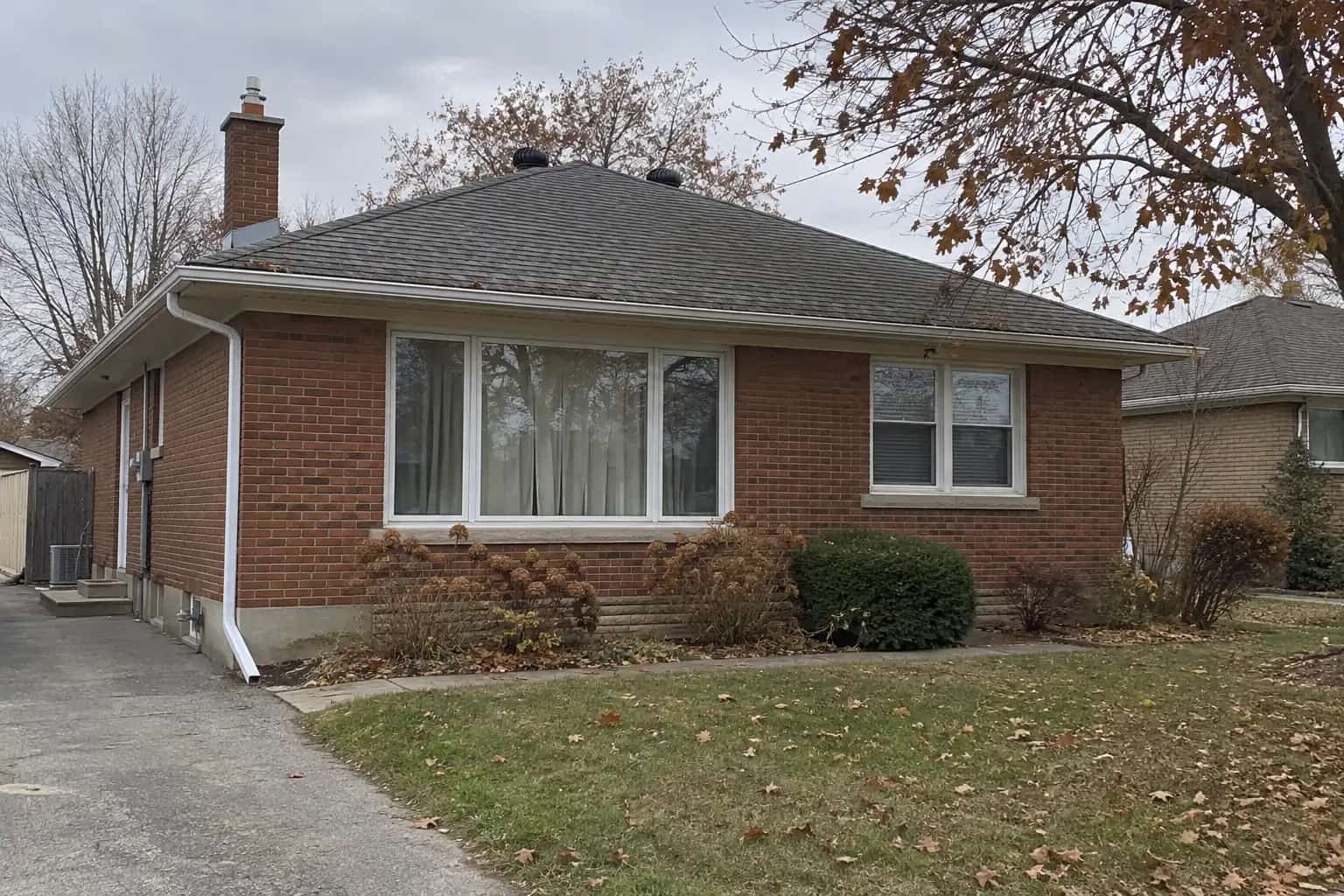
A qualified chimney specialist can assess the masonry and top components, and consider the chimney's use and internal condition. Loose bricks, falling pieces or concerns about the flue need appropriate specialist attention; they are not merely cosmetic roof-maintenance items.
Ask each contractor to separate what they observed from what they suspect. "Open mortar joint photographed above the flashing" is useful. "Probably the chimney" leaves you organising another visit without a clearer question.
The front apron looks tidy enough to feature in the listing photos. Mike asks for the uphill view. Once everyone is discussing the back, sides and top as well as the visible front, the investigation has somewhere useful to go. A neat bead of sealant downhill cannot answer an unexamined route uphill.
White deposits call for a moisture and masonry assessment; cleaning the surface alone will not explain where the salts came from.
If the chimney is no longer wanted, compare repair with a complete removal and roof-closure scope.
Fix the Parts in the Right Order
Before anyone books a return, Mike asks whether the brickwork will stay. Rebuilding it after finishing the flashing may mean taking apart a repair the owner has just paid for. If the masonry is sound and the defect is only at the roof connection, the scope can stay there. The sequence follows the finding.
A useful diagnosis can therefore lead to roofing work, chimney work or both. The costlier answer is not inherently better; the one that explains the observed water route is. Photographs of the opened junction and completed repair should make that explanation understandable without sending you onto the roof.
A recent chimney fire changes the sequence: arrange fire-related chimney, attic and roof checks before treating new marks as an ordinary rain leak.