
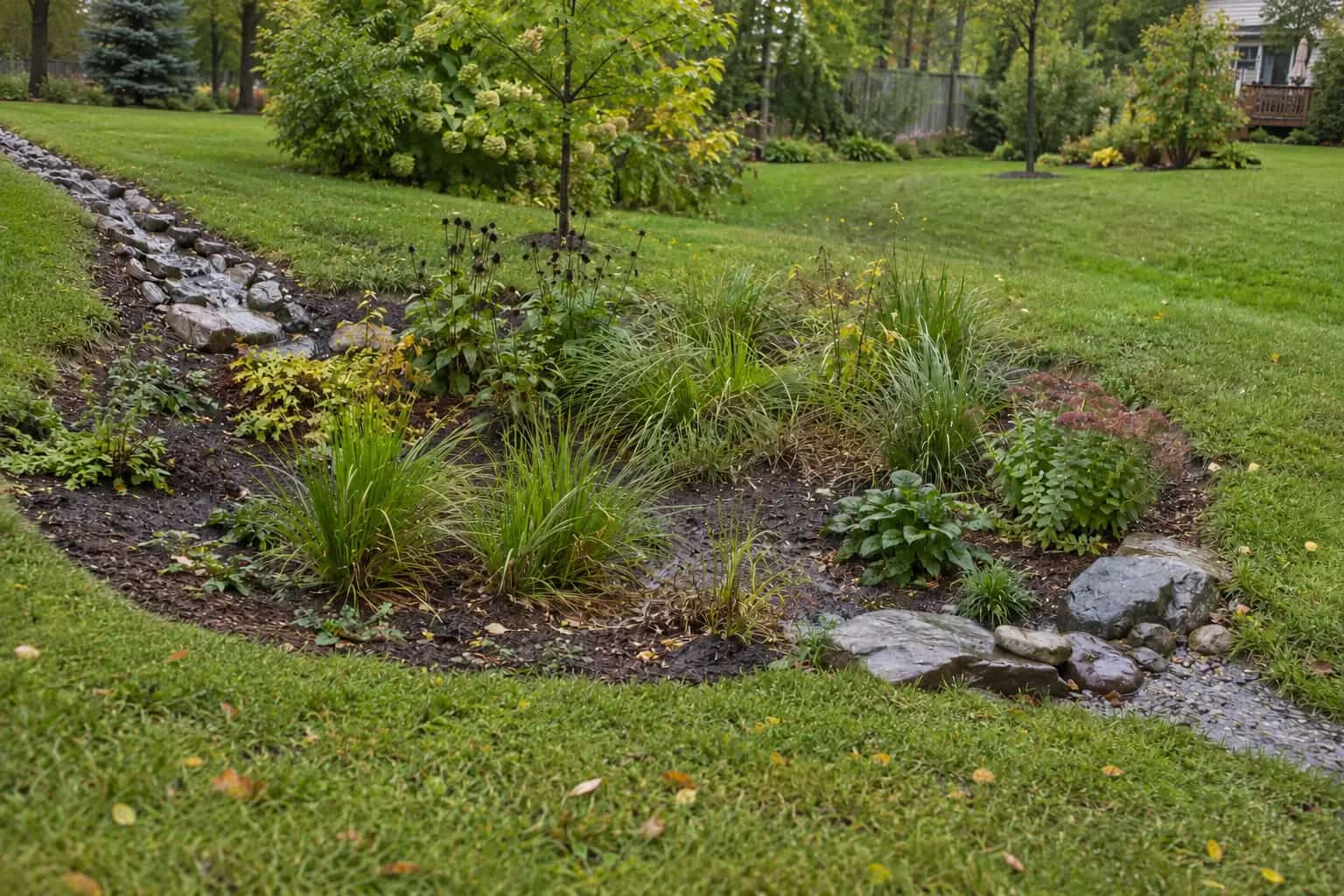
Dave found the installation receipt. Pat found the photograph of the digger. The system drawing remained missing, while a small capped pipe stood behind a hydrangea that had clearly enjoyed several good summers.
"Drainage done," Pat read from the old note.
"A confident summary."
We started by recovering the route and identifying the access point. There was no reason to turn the lawn into another excavation before finding out what could be inspected properly.
Start by recovering the system's layout and inspection access. A buried infiltration system needs evidence of how it receives and releases water. The absence of a puddle today does not show that it has room for the next storm.
Find the Record Before Opening the Ground
Look for the installation plan, photographs before covering and any municipal approval or maintenance instructions. Identify which downspouts feed the system, the storage location, inlet treatment, inspection points and overflow route.
Do not assume a small capped pipe is redundant. It may provide access or observation for the drainage system, or it may serve something else. Have it identified rather than cutting it down for the mower. Our sympathy for difficult mowing ends before unidentified pipes are shortened.
STEP's underground-infiltration maintenance guidance treats inlets, monitoring points and overflow outlets as separate inspection components. A useful contractor visit should do the same. "We looked at the lawn" is not a report on buried storage.
Three Different Reasons Water Can Back Up
First, water may struggle to enter because debris or sediment obstructs the inlet. The storage itself could have space while the approach is restricted.
Second, the storage may remain wet because infiltration is impaired or receiving conditions have changed. That requires investigation of drainage behaviour, not simply another surface sweep.
Third, the amount or timing of inflow may differ from the original design. A new roof connection, patio or revised gutter layout can add water. The system may be receiving a job it was never specified to perform.
Keep those possibilities separate. If the contractor removes leaves and declares the entire system restored, ask what evidence addresses the second and third questions. A correct small repair is welcome; an unsupported large conclusion is less useful.
Separate Entry, Storage and Exit
Different findings require different maintenance work.
Inlet condition
Debris can prevent water reaching available storage.
Stored water
Designed observation access helps assess drainage behaviour.
Overflow operation
Record when and where excess water leaves.
Changed inflow
New connections or surfaces can alter the original loading.
Make Observations Comparable
From safe ground, note when rain occurred, which inlet showed backup and whether the overflow operated. Photograph the same locations after the event. A professional may use designed monitoring access to assess stored water and drawdown against the system's specification.
Do not copy a universal number of hours from a different installation and declare yours failed. Ask what criterion applies to the actual design and what information is needed to compare it. The weather sequence matters too: another storm may arrive before the observation period is complete.
Avoid opening chambers, entering excavations or lifting heavy covers yourself. Never enter a tank or confined drainage space. Suitable inspection equipment and access arrangements exist so a person does not become the measuring device.
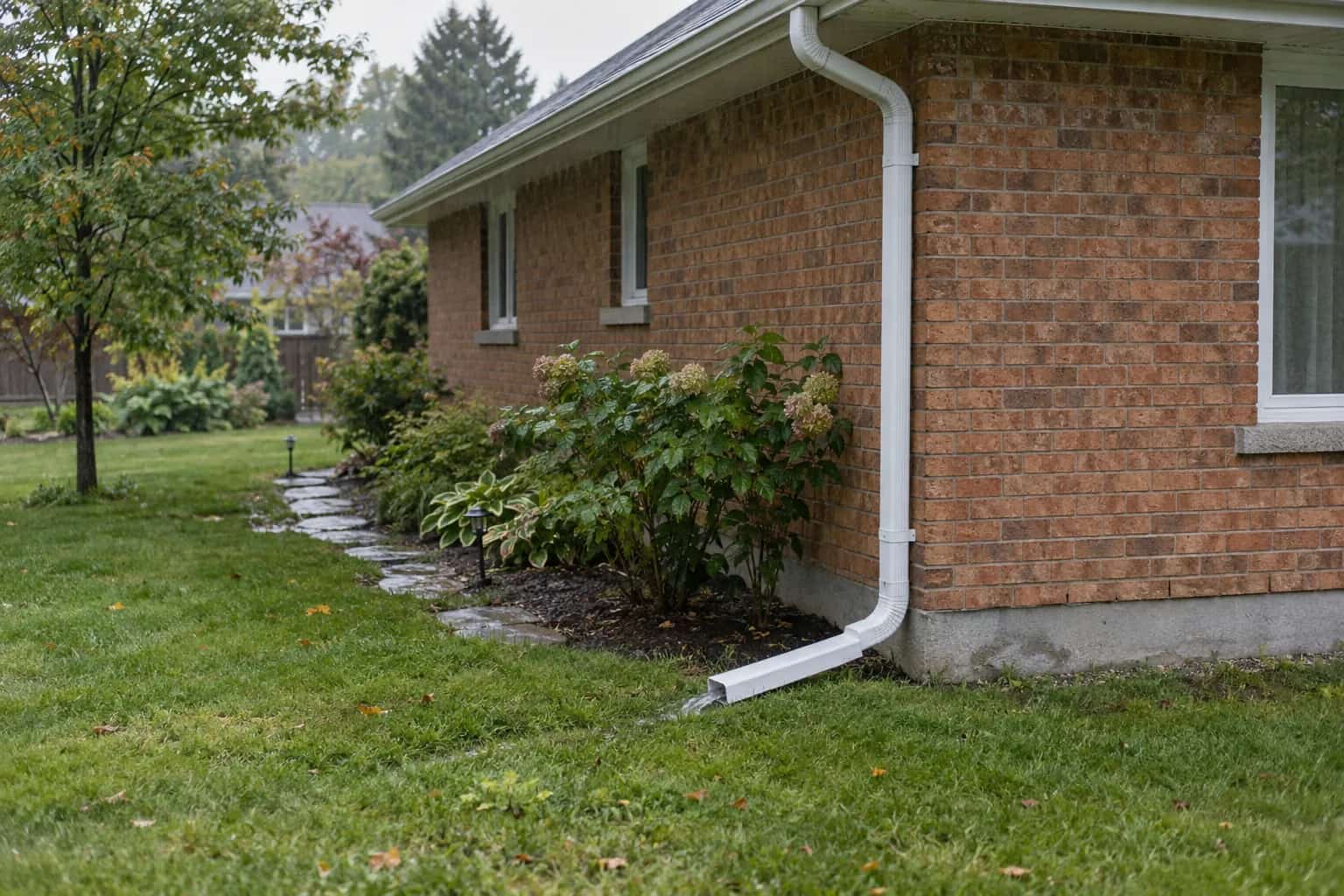
The hydrangea stayed. We wanted access around it, not revenge. The more useful gardening decision was to keep the identified inspection point visible and secure. Burying the cap under mulch would have made the bed neater and the maintenance record immediately less true.
Keep Soil Out of the Inlet
Ontario's stormwater-maintenance guidance identifies clogging as a concern for soakaways and favours relatively clean contributing water. Check changes upstream: bare soil near the inlet, mulch washed from a bed or debris left after reroofing.
If a new garden keeps delivering sediment, repeated cleaning of the buried system misses the source. Correct the exposed route as part of maintenance. Do not pressure-wash debris deeper into unknown piping in the hope that it will find somewhere agreeable to settle.
The splash-pad erosion guide helps distinguish a dirty inlet from a receiving route that is being washed away. Both can affect the system over time.
What a Useful Service Report Contains
Ask for the components inspected, material removed, observed water levels or other relevant findings, repairs made and any part not assessed. Keep the report beside the layout. A later visit should build on it, rather than repeat the discovery that the hydrangea conceals something important.
If performance remains poor, compare rehabilitation with other drainage options using the site's actual soil and constraints. A second pit beside the first is not automatically a solution. The soakaway-siting guide explains the evidence needed before adding buried capacity.
Finally, keep access points visible and secure. The lawn can remain attractive while the important parts stay identifiable. Maintenance is much easier when the next owner receives a route drawing instead of a photograph of a digger.
The next owner deserved more than the digger photograph. We put the route, access locations and service findings together so the shrub would not have to keep the secret.