
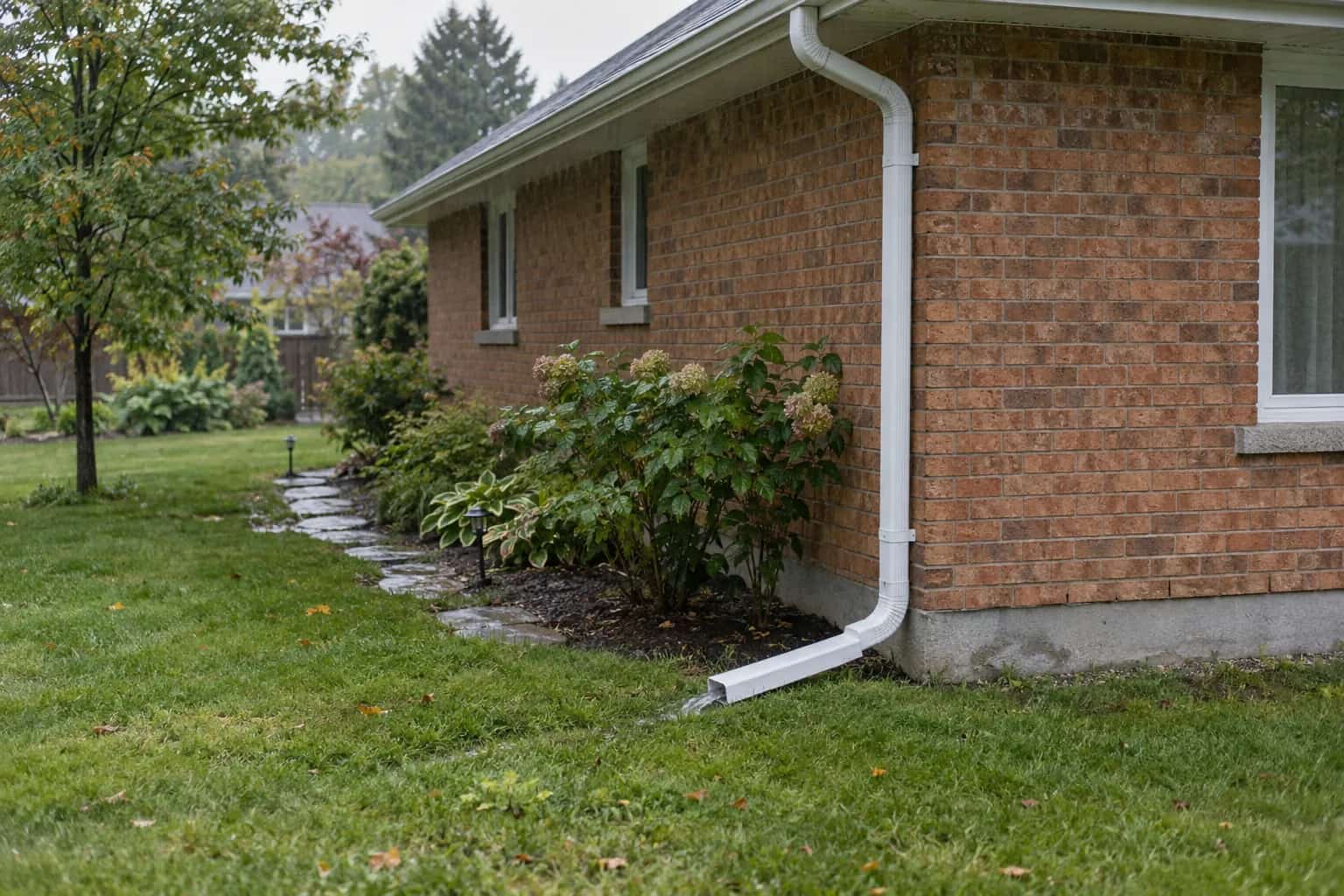
A permeable surface is the entrance to a drainage system, not the whole system. The layers below, the soil, any underdrain and the overflow route determine what happens after water passes through the top. Adding roof runoff must be part of that design.
The bucket demonstration went beautifully. Water vanished through the paving sample while Pat watched the surface. Dave was looking at the section drawing.
"You missed it," Pat said.
"I am waiting for the next bucket."
That was the useful question. A permeable finish can be impressive, but the roof will keep delivering water after the demonstration ends. We wanted the storage, receiving soil and outlet explained together.
Follow the Water Below the Pavers
Permeable interlocking paving, porous asphalt and pervious concrete use different surfaces. They also need suitable supporting assemblies. Ordinary paving stones do not become a designed infiltration system merely because there are gaps between them.
STEP's permeable-pavement guidance distinguishes the surface, aggregate storage and optional drainage components. It describes designs that infiltrate, partly infiltrate or mainly detain and release water. That range matters: not every installation sends all its water into the soil beneath it.
A driveway quote should identify which arrangement is proposed. Ask for the section showing the layers and where excess water leaves. "Permeable base included" is a material description, not an explanation of the finished water route.
The Working System Extends Below the Pavers
In this conceptual paver system, joints admit water to bedding and a stone reservoir. Depending on the site and design, water can infiltrate, leave through an underdrain, or both; some systems use a liner. The dashed drain is optional. Larger events still need a planned overflow route. Adding roof runoff requires assessment of the whole system and local requirements.
Conceptual drawing. Product details, dimensions and attachment requirements are not shown.
Count the Roof in the Design
The driveway receives rain on its own area. A downspout can add runoff collected from a separate roof area. Have the designer state which roof sections are included and where that water enters the pavement system.
For a simple arithmetic illustration, 10 mm of rain over 50 square metres represents 500 litres before losses. That is not a local design storm or a claim about how much your roof captures. It demonstrates why a downspout is more than the little patch of rain falling on the pipe mouth.
The next-bucket question is about storage and drainage, not a reason to dislike permeable paving. A convincing proposal answers it with the planned assembly and site evidence.
Soil and Foundations Still Matter
The designer needs to establish the receiving ground conditions and the relationship to foundations and other constraints. A very absorbent surface above unsuitable soil does not remove the need for an outlet strategy.
If the proposal includes an underdrain, ask where it connects and how that connection is approved. If it relies on infiltration, ask what investigation supports that assumption at the installation depth. Keep actual project requirements separate from general examples online.
For a smaller landscaped alternative, compare rain-garden siting. For a buried system, soakaway feasibility involves a different surface and access arrangement. Choose among complete systems, not among photographs of attractive finishes.
Then the landscaping schedule appeared. A topsoil delivery was planned for the new driveway the following week. We added surface protection and cleanup responsibilities before discussing paver colour again. An expensive permeable surface should not begin service as the floor beneath a heap of fine soil.
Maintenance Starts Before the First Car Parks
Fine sediment can reduce the surface's ability to accept water. Keep landscaping soil and construction debris out of the finished pavement. The contractor should explain appropriate cleaning and any requirements for restoring joint material after service.
A delivery of topsoil left across the new driveway can be a more consequential event than its wheel marks suggest. Put a protection plan in place before the garden crew arrives, rather than relying on everyone to recognise the pavement from its appearance.
Ask who provides maintenance, what equipment is appropriate and what visible changes should prompt inspection. The answer should fit the chosen surface; a generic pressure-washing promise is not enough.
Winter Performance Is Not an Ice-Free Promise
STEP has compared winter-maintenance products on permeable and conventional asphalt. That work shows why material, weather and treatment need evaluation together. It does not guarantee that a residential driveway receiving concentrated roof meltwater will remain safe without winter maintenance.
Agree compatible snow-clearing and de-icing practices with the supplier. Include where snow will be stored and what happens if an inlet or outlet is obstructed. A frozen receiving lawn and a designed pavement system are different assemblies, but both need an understandable excess-water route.
Before signing, compare installation, drainage connections, maintenance and winter care as one ownership decision. The paving can be useful and attractive. Make sure the disappearing bucket is the beginning of the explanation, not the end.