
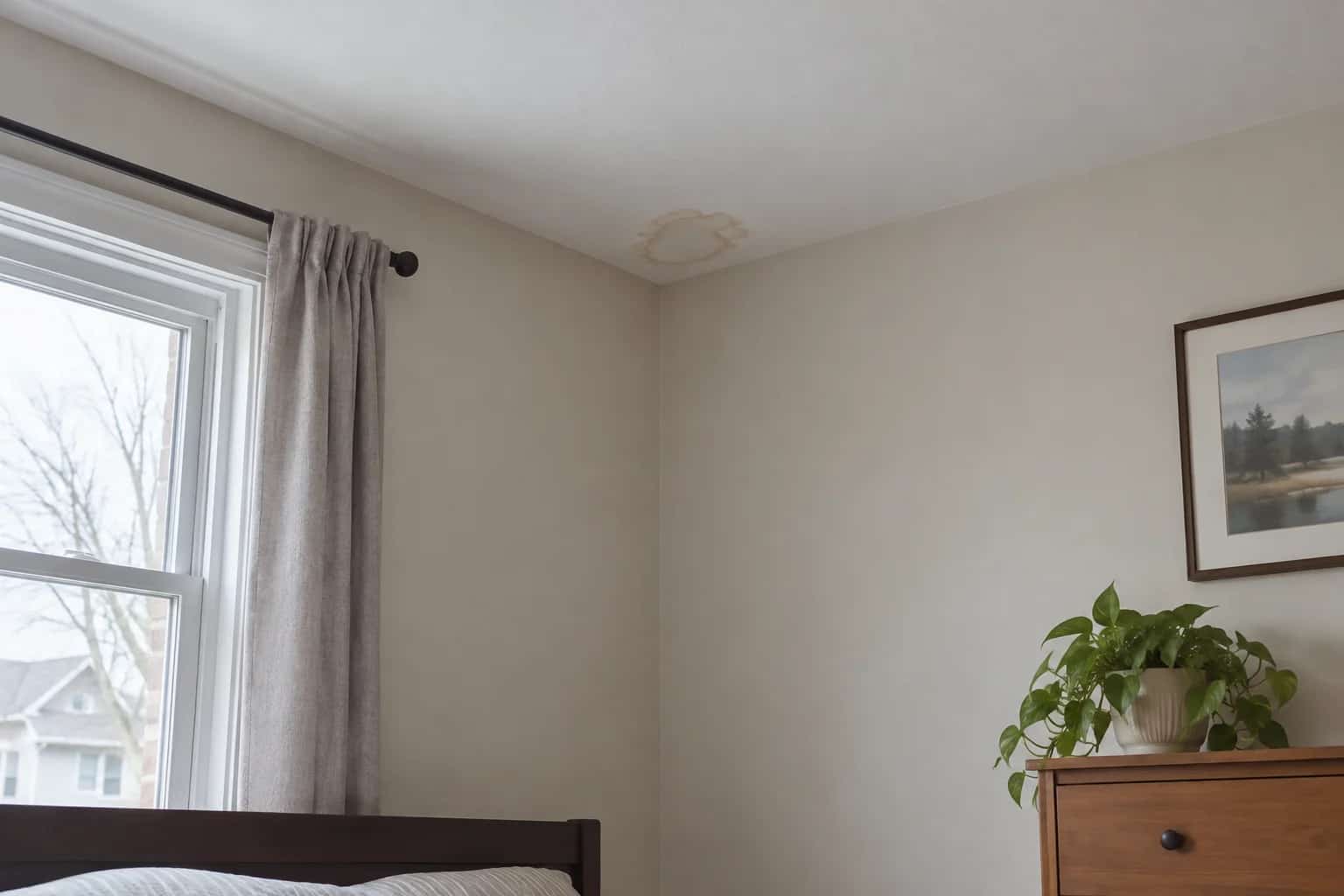
The cathedral ceiling has a stain, no hatch and a very large living-room sofa beneath it. The owner looks at the ceiling; Dave looks at the sofa. Neither wants the first diagnostic step to be demolishing the room. A good investigation can narrow the search before opening anything.
Start with the roof geometry and a map of the wet area. Then use instruments or a small opening chosen to answer a specific question. The absence of an attic makes the search less convenient; it does not make random demolition more informative.
Put Both Sides on the Same Sketch
Take a wide photograph of the room before close-ups. Mark the stain's position relative to fixed walls, a window or a chimney. Describe whether the ceiling is sloped, flat or stepped. Old renovation drawings and photographs can reveal a hidden change in roof height or a former exterior wall.
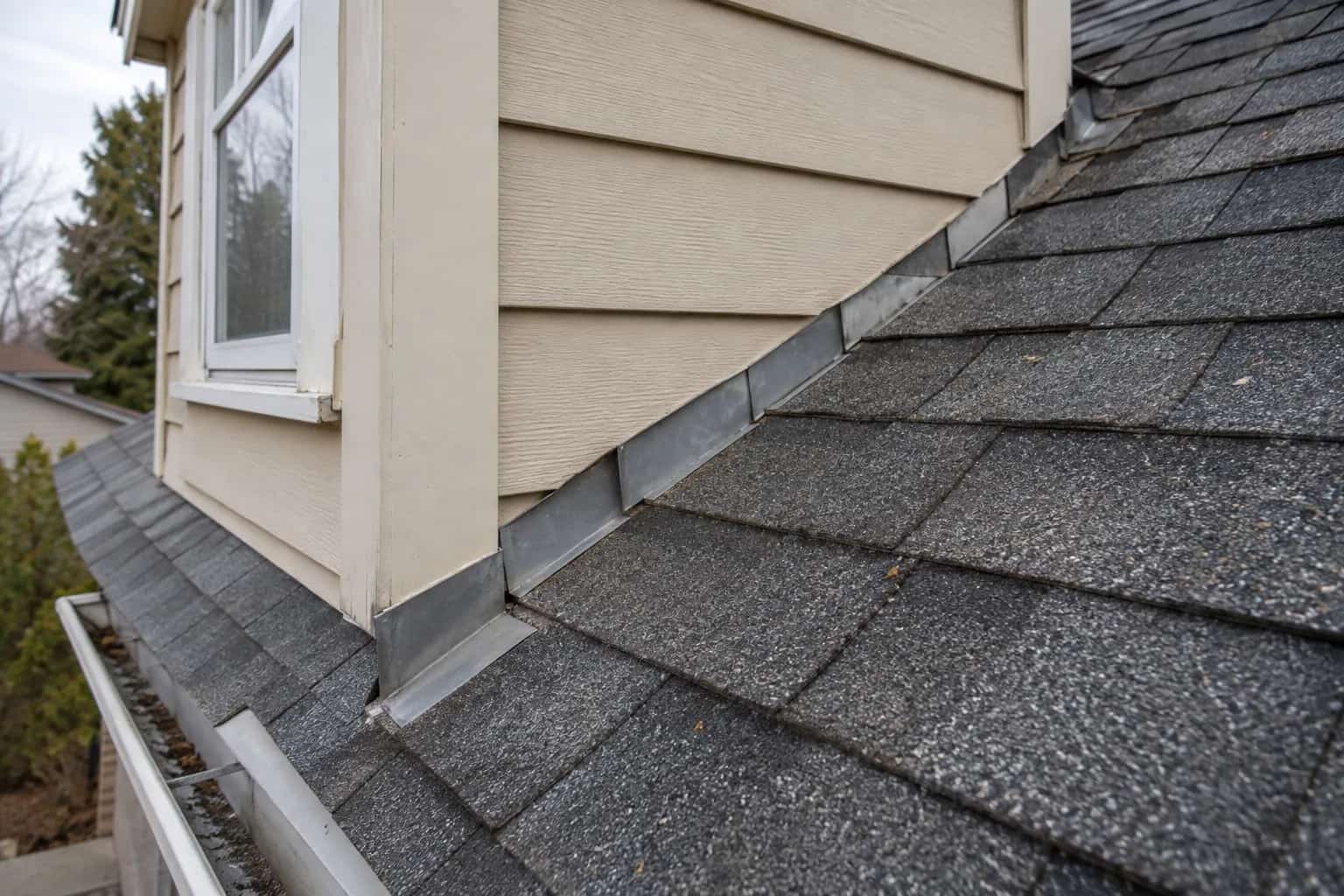
Mike transfers the room measurements outside. His first rough position shifts when the overhang is accounted for, which is exactly why guessing from the garden is not enough. Locate uphill dormers, valleys and penetrations against fixed interior walls. The outside outline and the room outline need not match.
IKO discusses leak searches without an attic. The useful principle for an owner is to work from accessible evidence before committing to broad demolition.
A Staged Search Without an Attic
Each step should reduce uncertainty before the next opening is made.
Map the room
Locate stains using fixed walls and openings as reference points.
Match the roof
Identify exterior features above and uphill of those references.
Compare readings
Use moisture or thermal observations to choose a focused investigation.
Open selectively
Expose the needed detail and include full restoration in the scope.
A Camera Sees Temperature, Not Through the Ceiling
A thermal image may show a cool patch around the stain. That can help choose where to investigate, but the colour alone does not prove wet insulation: air leakage, heating and different materials can also change surface temperature. It is a lead to follow.
Moisture readings add another comparison. A reading beside the stain, one at its edge and one on nearby unaffected material are more informative than one number announced as bad news. The operator still needs to understand the material and instrument.
An inspection camera may reveal a wet framing member. It may also deliver an excellent close-up of insulation and very little else. Dave resists calling that a completed inspection. Useful tools have limits; our thermal-inspection guide explains how readings and physical observations support one another.
Choose the Opening That Helps the Repair Too
If the ceiling is already damaged and needs replacement, a local interior opening can expose both the moisture route and materials that require drying. If the evidence points to a roof-wall junction, opening a sound ceiling far below it may tell less than exposing that exterior connection.
Before cutting, establish what the opening should reveal, how concealed services will be avoided and how the insulation, air/vapour-control layers and finish will be restored. NRCan identifies attic-less assemblies as specialist work.
The first opening may lead to a second, but Mike wants each cut to answer a question. "The wet trail continues behind this junction" earns a next step. "We have not found it, so let's remove the rest" needs a better explanation. The sofa can stay a piece of furniture rather than becoming the boundary of an excavation.