

The image on the screen is blue, orange and red. Dave asks to see the ordinary photograph beside it. Mike asks what question the survey was meant to answer. A thermal camera can be useful without every colourful patch becoming a leak diagnosis.
Infrared imaging shows apparent surface-temperature differences. Moisture, insulation, air movement and surface effects can create patterns requiring interpretation and confirmation.
Start With the Inspection Question
An interior ceiling survey looking for possible moisture is different from an exterior low-slope roof survey looking for patterns associated with wet insulation. An energy assessment looking for air leakage or missing insulation is another application. Ask which question the operator is addressing.
FLIR's inspection guidance discusses common interpretation mistakes and the limitations of the tool. Camera performance, operator knowledge and appropriate conditions affect whether a pattern is meaningful.
A survey should record relevant weather and timing, the area inspected and obstacles or limitations. Recent rain, sun, wind, surface materials and indoor-outdoor temperature differences can influence what appears. There is no single colour chart that establishes roof moisture in every house.
Pat labels the image with its location and inspection conditions. Without that context, the report risks becoming a memorable picture of an unidentified rectangle. The ordinary photograph is doing real work here.
Ask for the Ordinary Photograph Beside It
A thermal image becomes much easier to assess when you can see the same area normally. Is the patch beside a hatch, on a different surface material or aligned with a known feature? The visible photograph supplies context the colours alone hide.
Mike's next question is what would confirm the proposed explanation. If the answer is moisture, what suitable measurement or inspection supports that? If the answer is missing insulation, what access or other evidence establishes it? A useful report moves from pattern to a testable explanation instead of treating a colourful rectangle as a repair boundary.
From Temperature Pattern to Supported Finding
A temperature anomaly becomes a repair finding only after interpretation and confirmation.
Capture
Record suitable conditions, camera settings and a matching visible image.
Interpret
Consider moisture, air leakage, insulation and surface effects.
Confirm
Use appropriate moisture checks, inspection or authorised sampling.
Act
Base the repair scope on the combined findings and stated limitations.
Consider More Than One Explanation
A cooler ceiling area might relate to moisture, missing insulation or air movement. A reflective surface can produce misleading apparent temperatures. A warm area on a roof can reflect how the material absorbed and released heat, not just whether water is present underneath.
An absence of a visible anomaly does not prove that an assembly is dry. The conditions may not produce a useful contrast, or the relevant material may be concealed beyond the method's effective reach.
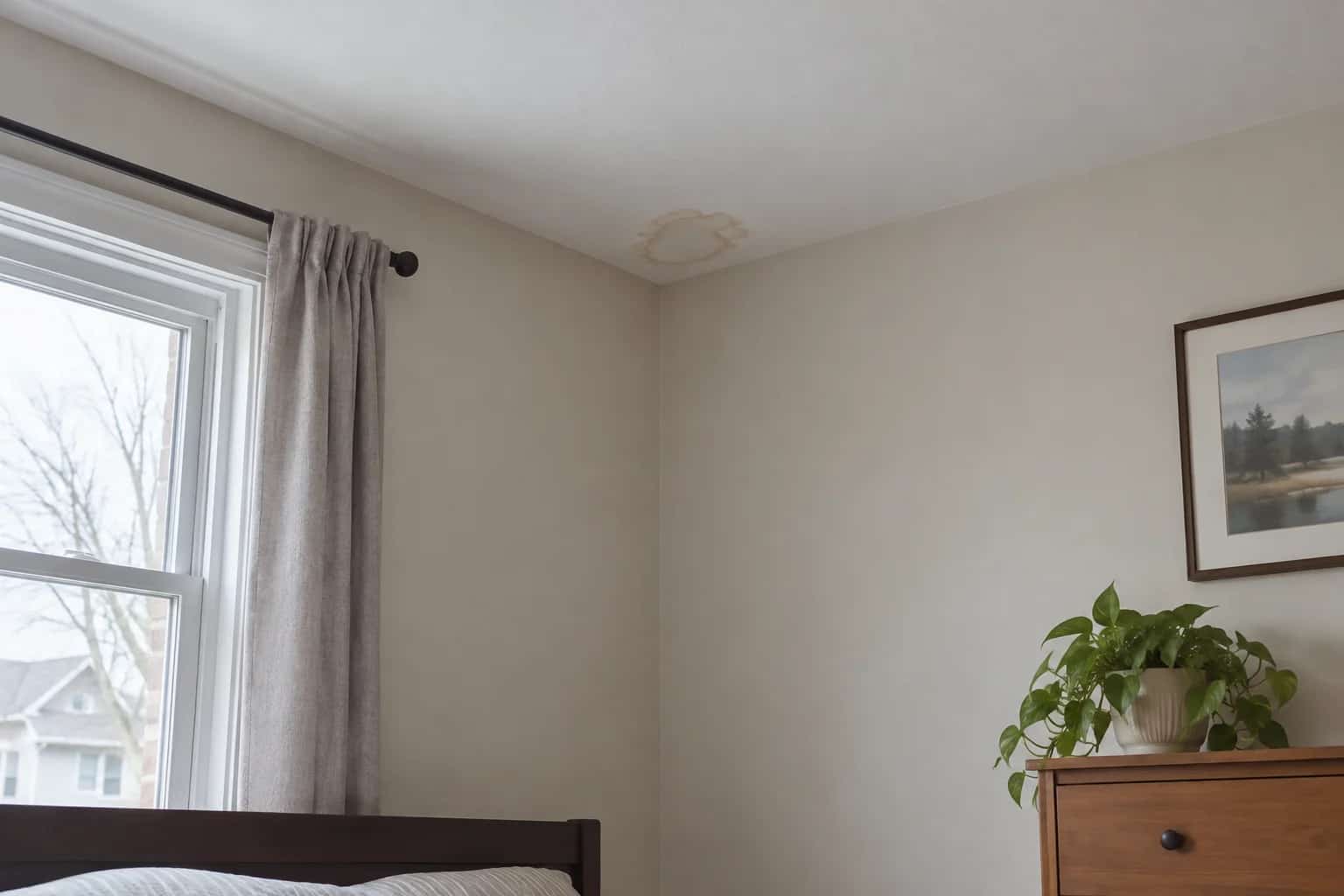
A Temperature Pattern Is the Start of the Investigation
Suspected areas may need suitable moisture measurements, close inspection, interior access or authorised test openings. The appropriate confirmation method depends on the assembly. Any roof opening must be planned and properly repaired by someone qualified to do so.
A report should distinguish a temperature anomaly from confirmed moisture and from a proven entry point. Even when water is confirmed, it may have travelled from elsewhere. Our leak-tracing guide explains why the visible symptom can be remote from the source.
If a contractor recommends coating or replacing a large roof area based on thermal images, ask how the interpretation was checked and how the boundaries of the work were determined. That is a reasonable evidence question, not a rejection of the technology.
At Steady, we want the proposed repair to follow a supported finding. Keep the colours, but insist on the explanation beside them: what was seen, what was checked and what remains uncertain.