
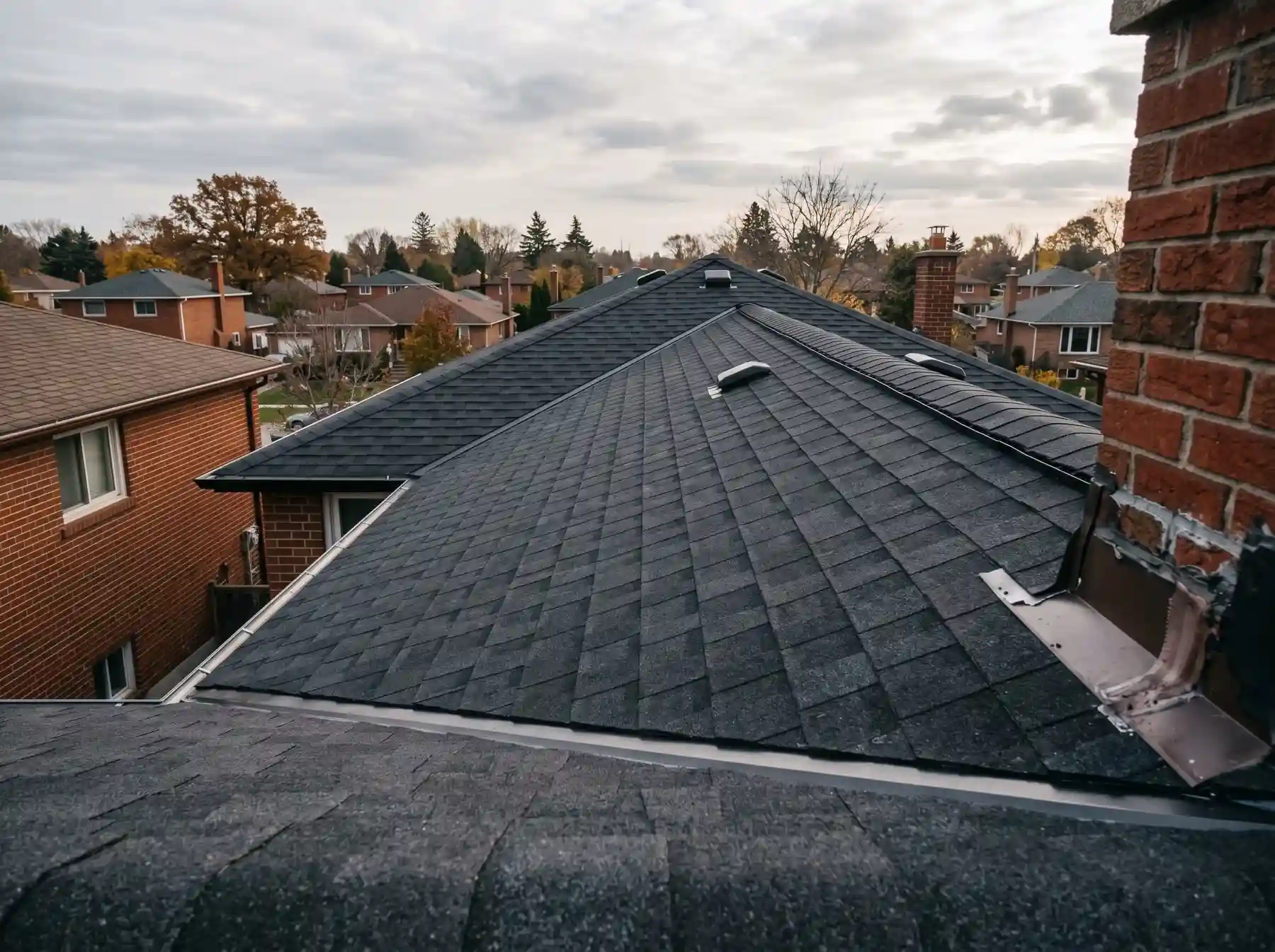
Use aerial inspection for the questions it can answer, then follow up on hidden parts. A missing shingle may photograph clearly while an adjoining defect remains out of sight.
The drone image was beautifully sharp. Dave could see the displaced shingle, the vent beside it and Pat's van in the driveway. He still could not see the concealed lap causing concern. "Good camera," Pat said. "Still not see-through."
What the Camera Can Show Well
An organised flight can record each roof plane, ridges, valleys, penetrations and edges. The wider view is useful for linking a close-up defect to its location. It also helps compare condition over time if later images use similar angles.
Ask for photographs with enough detail to support the findings, not only a video that moves too quickly to inspect. A report should label the location and explain the observation. "Rear slope, displaced shingle beside upper vent" is more useful than a folder of numbered images.
We marked the obscured areas on the image set instead of letting them disappear from the report. Lighting, shadows, snow, vegetation and angle can all hide defects. Even a uniform-looking surface in a compressed image may need closer inspection. The blank part of the investigation should remain visible on paper.
Write the question above the pictures
"Which slope lost shingles in the wind?" is often well suited to an organised aerial survey. "Why does the bedroom stain return when the exterior looks intact?" may need interior observations, closer detail inspection or a carefully planned test. The same camera can contribute to both questions without being sufficient for both.
We wrote the actual question above the image set: why did the bedroom stain return? A flight could contribute evidence, but it might need interior observations, closer inspection or controlled testing alongside it. Dave stopped comparing camera specifications and asked what the report would support. That was a much better shopping question.
Which Question Are You Trying to Answer?
Different methods answer different questions about visible and concealed roof conditions.
Missing shingles
Aerial views can locate visible damage and its roof plane.
Recurring leak
Interior evidence and closer detail checks may still be necessary.
Concealed layers
A photograph cannot show fasteners, underlayment or hidden wood.
Replacement scope
The report should connect visible evidence and limits to the recommendation.
The Layers the Camera Cannot Reach
Underlayment, fastener placement beneath shingle laps and the condition of concealed wood generally remain unknown. A camera cannot determine whether a seal is secure by looking at it from above. Nor can it establish an installation date solely from appearance.
Attic moisture, bathroom exhaust routing and underside staining require other access or methods. If water appears inside, connect the aerial observations to those interior findings before deciding the cause. A defect visible near a stain may be relevant, but proximity alone is not proof.
For purchase decisions, ask whether the service is an aerial survey or a broader roof inspection that includes other methods. Our pre-purchase inspection guide explains why scope matters more than the tool's name.

A Safe Flight Still Needs Planning
Transport Canada bases drone operating categories on factors including the aircraft, people nearby and airspace. Have the operator determine the rules for the site. A small residential job does not remove aviation requirements.
Ask how neighbouring privacy, take-off space and bystanders will be handled. Weather or airspace may prevent the planned flight; that should lead to rescheduling or an appropriate alternative, not an improvised flight.
If replacement is recommended, ask which visible findings justify that extent of work and what remains unknown. The useful report turns the images into a decision you can assess, with concealed questions still clearly identified.
The useful report labelled what the camera showed and what it could not settle. We kept the sharp image, but the concealed question stayed open until another method addressed it. Pat's van needed no further inspection; the roof did.