
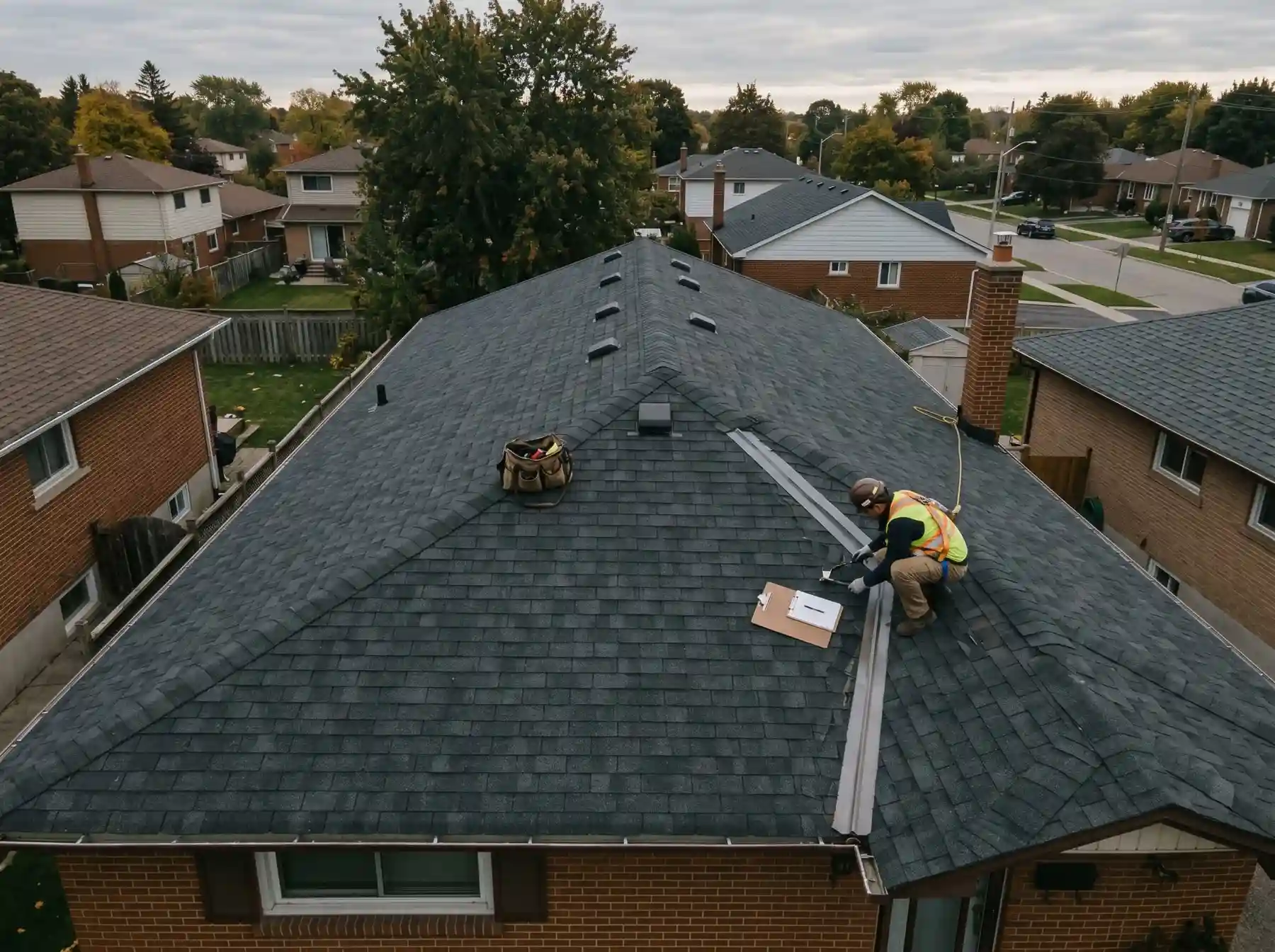
The listing says "roof updated," and the report calls it "serviceable." Leena is buying her first house and would like either phrase to come with a useful date and scope. Mike asks to read the access limitations first. Those are often the quietest lines in the report and some of the most useful.
A useful roof inspection turns those broad descriptions into findings you can act on: what is damaged, what needs attention soon, what remains uncertain and what the inspector could not see.
Read the access limits first
A general home inspection covers many systems. A dedicated roof assessment may add detail, but its value depends on the scope and access, not the job title on the report.
Was the roof viewed from the ground, a drone or direct access? Was the attic accessible? Did snow or stored belongings hide anything? Limitations belong in the report, alongside the findings.
Compare the clues
Turn findings into a next step
A defect list becomes useful when you know what is urgent, repairable or still uncertain.
A contained problem with sound roofing around it.
An isolated defect may be repairable when the adjoining materials can accept a lasting repair. The cause still needs to be confirmed.
- Extent
- Damage is limited to a specific area.
- Surrounding roof
- The adjoining shingles and deck remain suitable.
- Repair plan
- The new work can join the existing roof properly.
These are assessment questions, not a diagnosis. Roof age alone does not settle the decision.
The photographs need locations
Leena asks for a location such as "rear slope, left of chimney" beside the close-up, with a wide photograph. That gives a repair contractor something to price instead of a collection of unidentified brown marks.
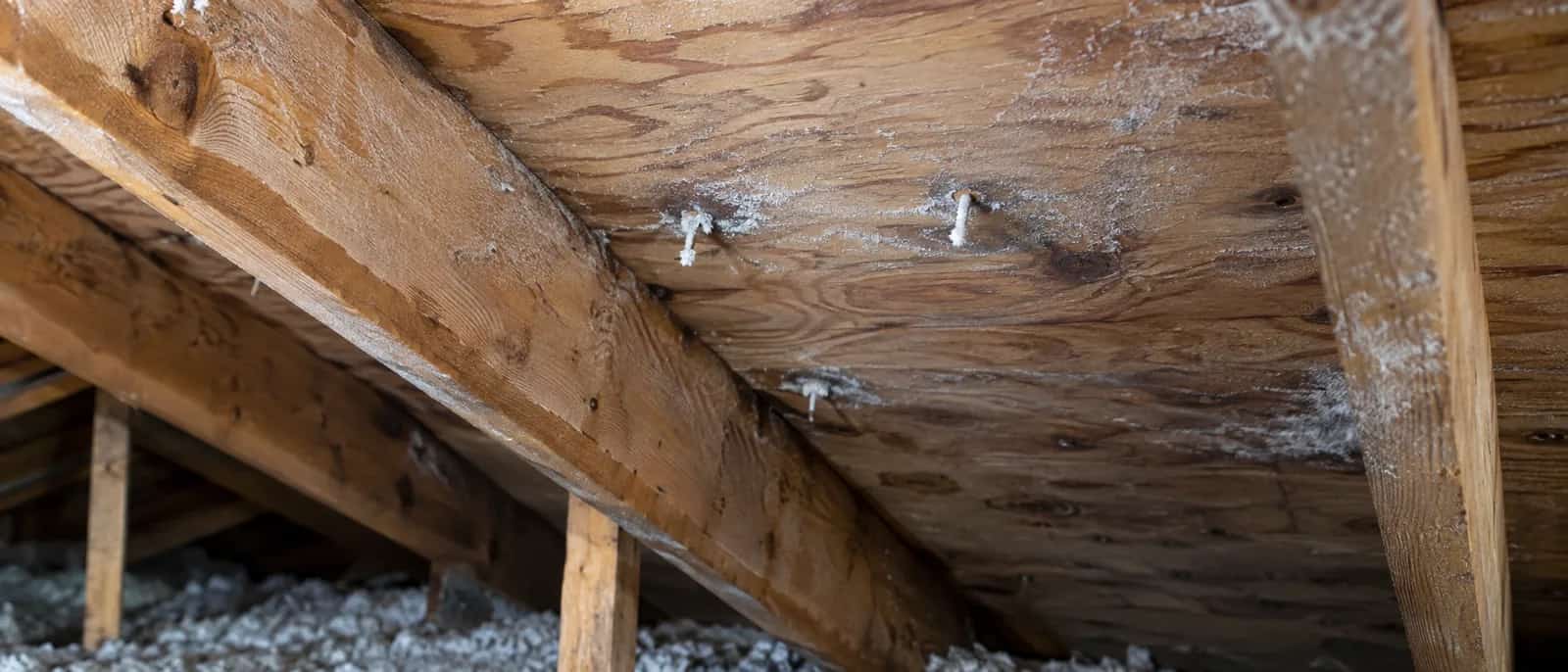
The attic can add a different set of clues: damp insulation, staining, exhaust routing and ventilation conditions. A mark needs interpretation; it does not automatically identify an active leak or its cause.
Turn the report into choices
Dave splits Leena's findings into immediate repairs, future planning and uncertainty. Missing shingles before forecast rain go on a different list from an ageing but serviceable slope. An inaccessible area belongs under uncertainty, not under "no defects found." IKO's inspection checklist is a useful reference for the roof features that a report may need to address.
A remaining-life estimate should explain its assumptions. It is planning information, not a promise that the roof will stay sound until a particular birthday.
Leena takes those distinctions to her real-estate and legal advisers before the deadline. The report supplies evidence for that discussion; it cannot guarantee a price reduction.
For a condominium purchase, pair the visible roof condition with the reserve-study assumptions and funding plan.
What to keep after closing
Save the report, photographs, installation records and any transferable warranty paperwork. They give your next inspector something better than a memory to compare against.
If the report recommends replacement, our repair-or-replace guide helps you check the reasoning before approving the work.
Leena keeps the original listing description too, but it no longer has to do the work of an inspection. She has locations, findings and a record of what remains unseen. That is something the next person inspecting the roof can use.