
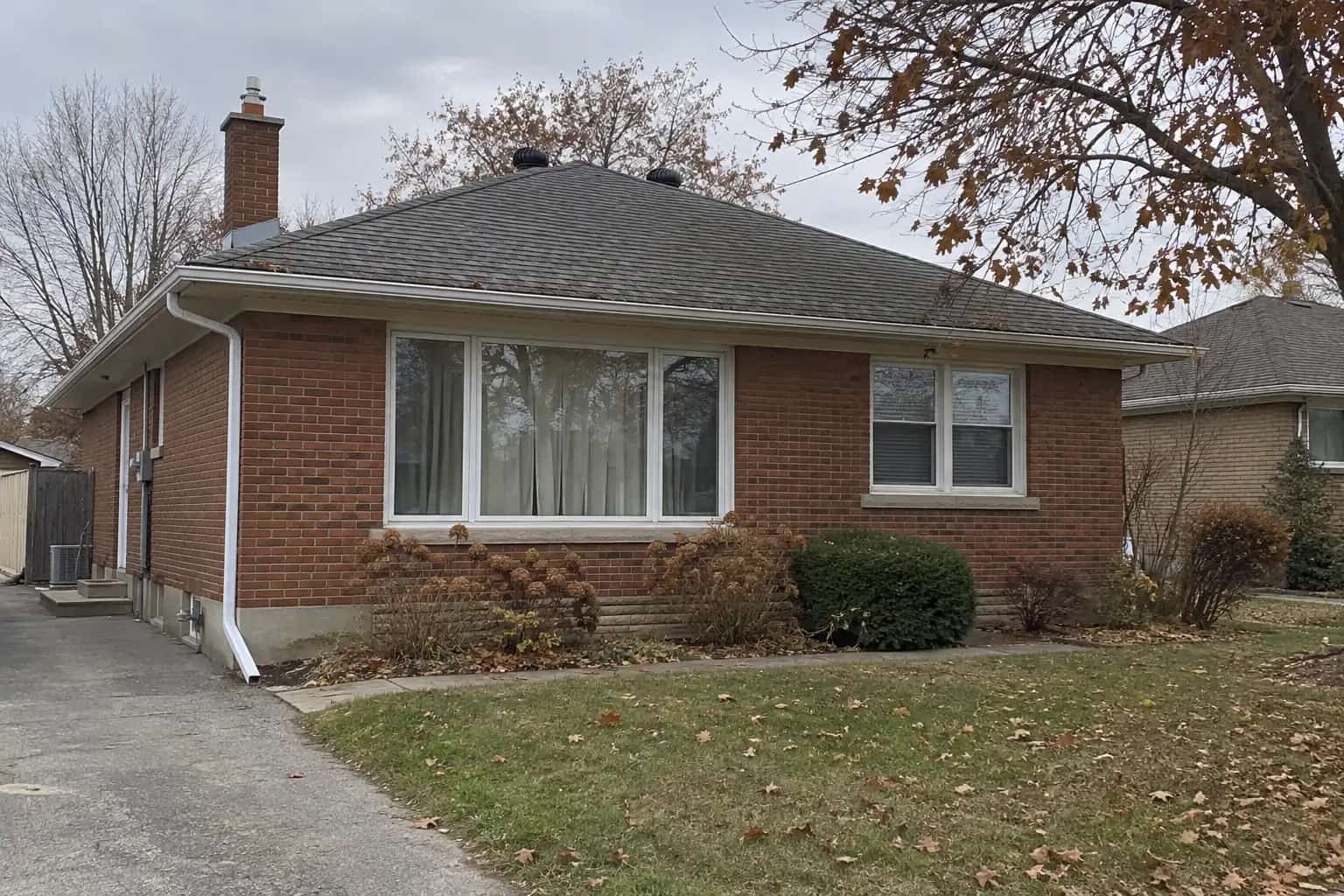
Wildfire resistance depends on the roof assembly, its condition and the places embers can collect or enter. A shingle rating is useful, but it does not settle the condition of the edges, vents and debris around that covering.
FireSmart Canada's construction guidance recommends a Class A fire-rated roof assembly and addresses gutters, eaves, vents and surrounding construction. Its recommendations reduce risk; they do not promise a fireproof house.
Mike is shown a roof brochure with "Class A" circled in pen. From the garden, Pat points out a line of dry leaves at the gutter. The rating matters, but so does the combustible material sitting beside the assembly. Preparation starts with both facts on the same page.
Ask About the Assembly You Will Actually Receive
A covering sits over other materials and connects to edges, walls and openings. When comparing roofing options, ask the supplier or contractor to identify the applicable fire-rated assembly and confirm that the proposed installation matches it. The useful answer names the system, rather than merely calling a material fire-resistant.
This matters whether you prefer asphalt shingles, metal or another covering. Two quotes naming a similar surface material may include different underlying details. Do not assume a more expensive material automatically resolves the vulnerable junctions around it.
For an existing roof, begin with its condition and identifiable construction. A replacement decision should consider serviceability as well as the wildfire objective. It may be more useful to correct an exposed edge and remove accumulated debris now while planning a properly specified replacement later.
Leaves Matter Even on a Non-Combustible Gutter
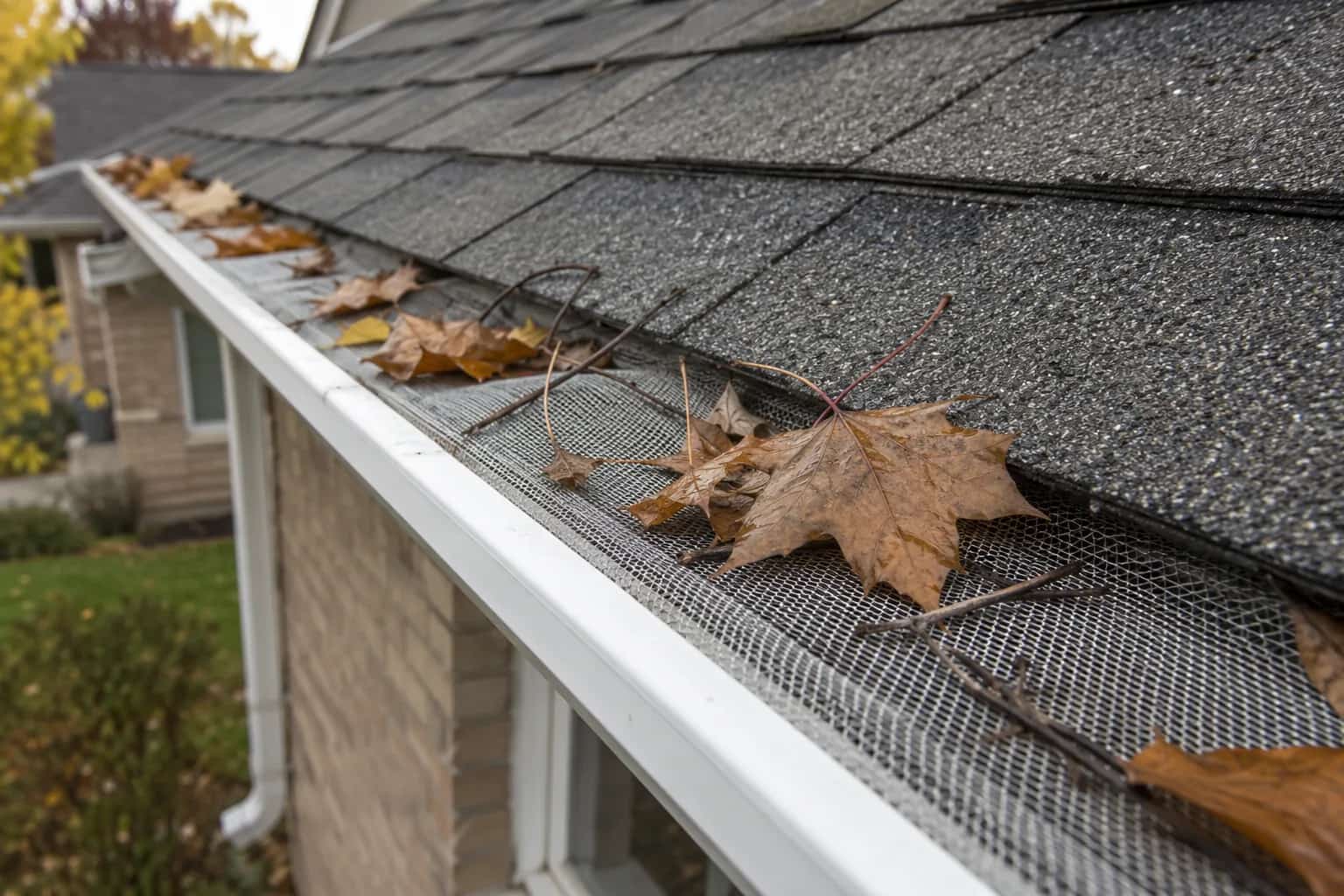
Embers can arrive ahead of the main fire. FireSmart recommends non-combustible gutters and keeping gutters and eaves free of combustible debris. A metal trough does not make the leaves inside it non-combustible.
Gutter guards change where debris collects; they do not establish a maintenance-free roof edge. Check for material resting on top, trapped at corners or gathered where roof planes meet. Arrange cleaning with appropriate roof-access precautions rather than climbing during smoke, wind or an approaching emergency.
Pat's maintenance list follows where dry material tends to remain: the shaded valley, the back corner nobody sees from the driveway and the lip behind a guard. They may need different attention. Our gutter-guard maintenance guide explains why the visible top surface belongs in the inspection.
The owner suggests gutter guards to end the cleaning job. Dave asks how the guarded corner will be inspected and cleared. The new accessory needs a maintenance plan too. "If we cannot see the debris, we have not necessarily persuaded it to leave."
Where an array covers the roof, include debris beneath the solar panels in a coordinated maintenance assessment.
Four Parts of an Ember-Resistant Roof Plan
Address the covering and the places embers can accumulate or enter.
Rated assembly
Confirm the actual installed system, not only the covering label.
Clean collection points
Remove combustible debris from gutters, valleys and roof edges.
Edges and openings
Assess eaves, drip edges and suitable vent details together.
Connected surroundings
Include nearby decks, walls and other home-ignition pathways.
Give Embers Fewer Openings
FireSmart also identifies open eaves and vents as vulnerabilities and provides renovation guidance for those details. Have a qualified contractor assess the existing edges and ventilation products against the relevant recommendations, manufacturer instructions and local requirements.
Do not staple improvised fine mesh over every opening. Ventilation still has to function, and the product's airflow, fire performance and installation detail need to work together. A purpose-specified component is a better question to raise than whether an arbitrary screen looks small enough.
A roof assessment should also note how it meets a wall, deck or nearby combustible feature. FireSmart's renovation guidance treats the home as connected parts. An ignition elsewhere can threaten the roof even when the roof covering itself was carefully selected.
Separate Preparation From Emergency Response
Do maintenance and improvement work ahead of wildfire conditions. During an active incident, follow local emergency directions and evacuation orders; roof work is not a reason to delay leaving.
After smoke or ash exposure, the question changes from reducing ignition opportunities to safe inspection and cleanup. Read our wildfire smoke and ash guide for that next stage. For preparation, a useful plan pairs a documented roofing choice with accessible maintenance and sound edge and vent details. Each addresses a different way fire can reach the building.
They finish the preparation list before there is an active emergency: roof condition, debris, vulnerable connections and appropriate vent details. Once local authorities issue emergency instructions, this list does not become a reason to stay and do one last roof chore. That is the point where the household plan takes over.