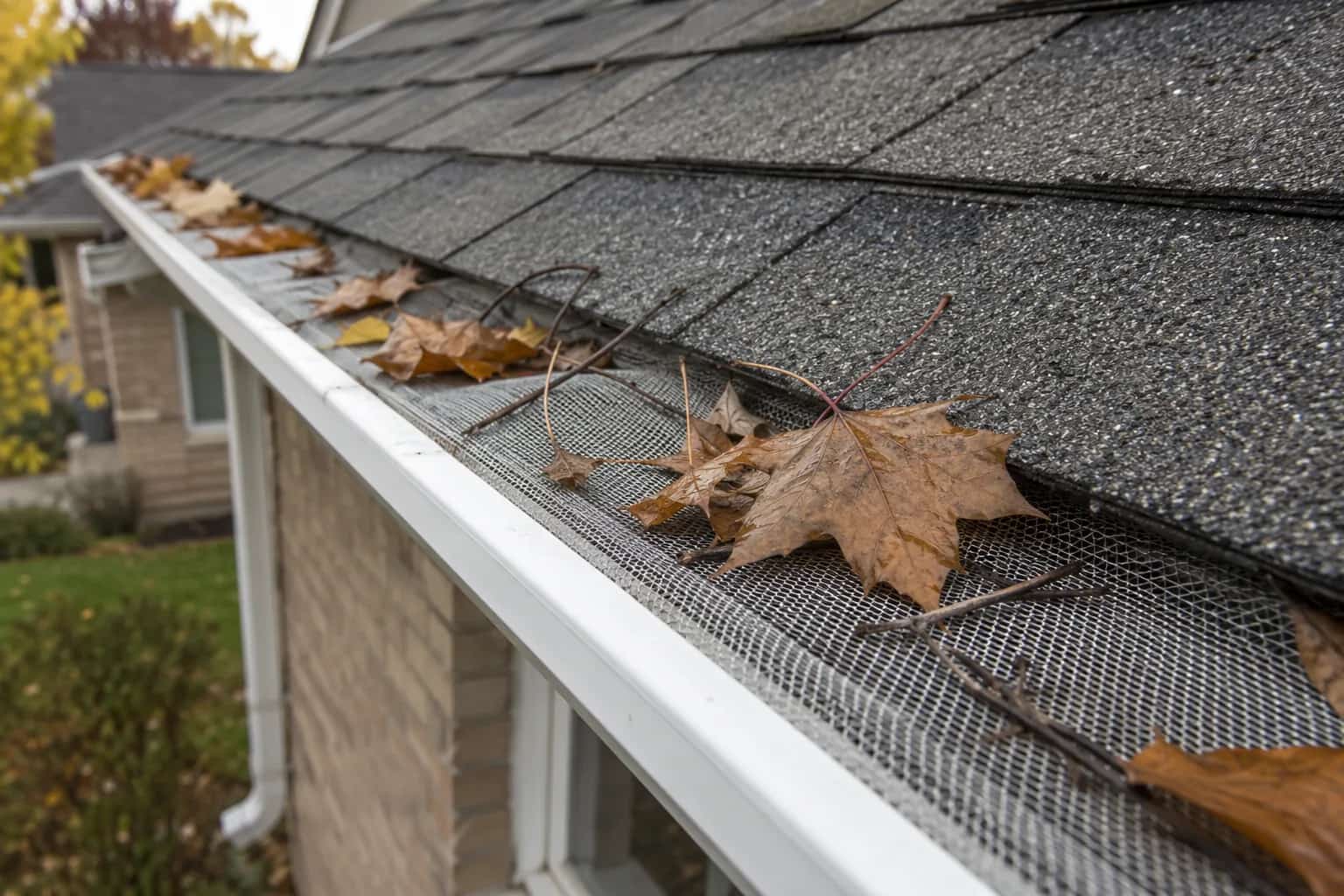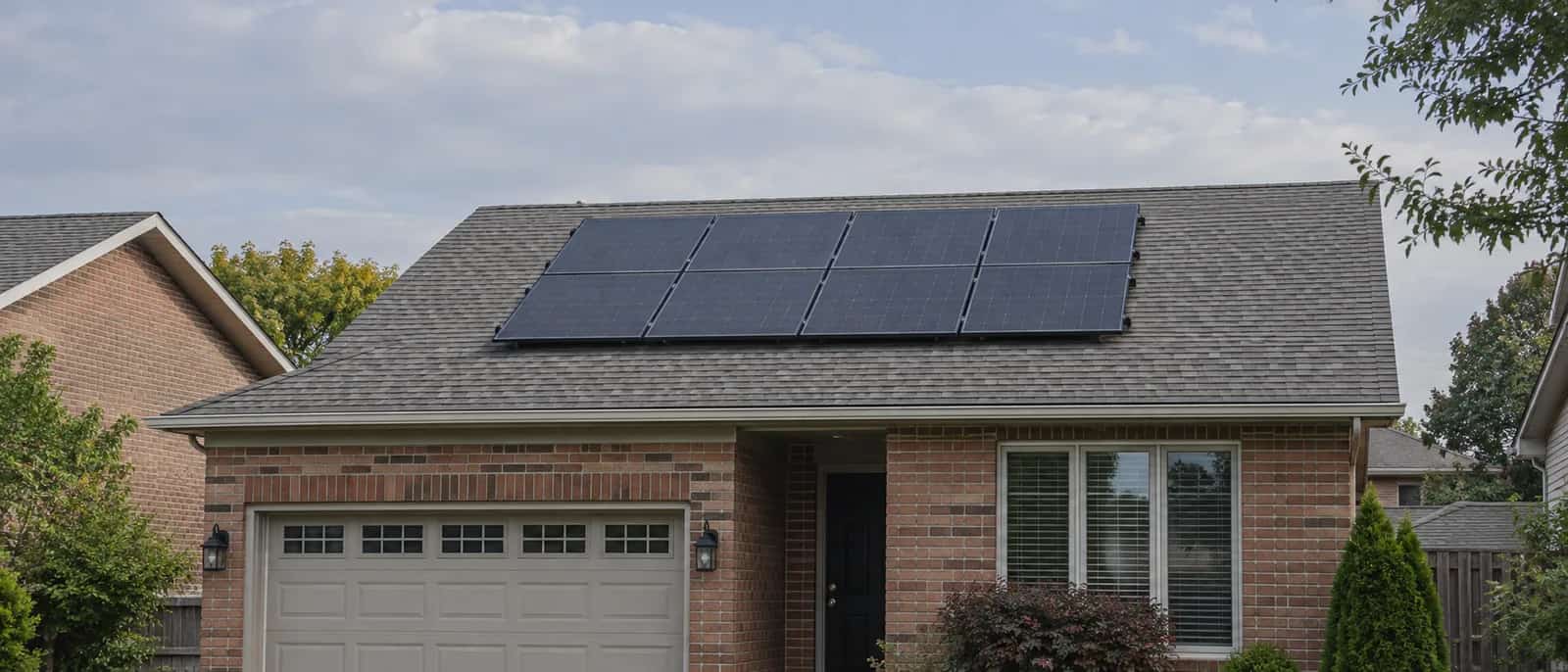
The gutters are clean. A narrow fringe of brown leaves is still visible beneath the solar panels. That sheltered patch deserves a place in the maintenance plan, especially where wildfire preparation is a concern. The question is what has collected and how it can be removed safely, not whether the roof looks tidy from the driveway.
FireSmart Canada treats combustible debris, roof edges and openings as parts of a home's wildfire exposure. Applying that principle to a concealed leaf collection beneath an array is sensible maintenance judgement. It is not evidence that every solar roof has the same ignition risk or that the panels caused the buildup.
The homeowner's photograph shows clean glass and one untidy fringe. Pat enlarges the fringe. "That is the bit we need somebody qualified to see." The clean rectangle above it does not settle the concealed condition below.
A clean top can hide a different underside
Rain may move material across exposed panel glass while leaves or nesting material remain near supports and roof junctions below. Describe the observed location: lower edge, valley side or gap beside a chimney. Ground photographs can help identify which part needs a closer look. Pat marks the location on the wide view rather than sending a mysterious close-up of six leaves.
Do not diagnose the whole space from that small visible fringe. Ask for an inspection that records the accessible underside, roof surface, drainage route and relevant wiring/support condition. A gutter-cleaning visit may not include solar-system access or the competence to assess those components.
The Canadian Solar manual linked from its downloads library calls for maintenance to keep modules clear of accumulated material and reserves electrical or mechanical inspection and maintenance for qualified personnel. The instructions for the actual array are the reference; one manufacturer's manual is not permission to clean every installation the same way.
Coordinate access before clearing debris
Roofing and electrical equipment meet in the same work area.
Locate the collection
Record the visible array edge and nearby roof features from safe ground.
Identify responsibilities
Have the solar provider coordinate any roofing or wildlife work.
Inspect and clear safely
Use the system-specific method and qualified access.
Record recurrence
Document cleared locations and the findings that set future maintenance.
Give the work to people who can coordinate it
Start with the solar installer or maintenance provider. Explain the visible debris and any recent roofing work. Ask whether the assessment needs the roofer involved, particularly where leaves occupy a valley, roof-wall junction or damaged covering beneath the array.
The work order should describe who handles the solar equipment, who checks the roofing and who records the completed condition. If a panel must be removed for access, establish the system-specific process and reinstatement checks before that becomes an improvised part of gutter cleaning.
We would rather have one joined-up visit than two companies each declare the visible half spotless. The leaves do not care whose invoice covers the final six inches. Pat's marked photograph goes to both providers so the boundary is visible before the visit.
Do not turn the cleanup into electrical work
Panels exposed to light can produce electricity. Switching off one piece of equipment does not establish that every part of an array is de-energized. The Canadian Solar manual explicitly warns about electrically active modules under illumination.
Do not reach under panels with metal tools, drag a rake around concealed cables, walk on modules or use a pressure washer as a substitute for access. Damaged modules, loose wiring or signs of burning require appropriate professional attention; active fire or an immediate emergency requires emergency services.
If nesting or wildlife activity is suspected, tell the provider before removal. Any exclusion arrangement must be compatible with the array and preserve necessary access and drainage. An improvised screen can move the problem somewhere less visible without solving it.
Agree what the next inspection should look for
Request a before-and-after location view, a description of the material removed and any findings needing follow-up. Ask whether the same nearby trees or roof geometry are likely to feed that collection point again. Use the observed pattern and equipment instructions to set maintenance, rather than inventing one universal cleaning interval.
Include debris beneath the array in the wider ember-resistant roof plan, while keeping other priorities such as gutters, vents and nearby combustible features in view. One clean roof patch does not complete a whole-property wildfire assessment.
Do this preparation ahead of an active incident. Follow local emergency and evacuation instructions; approaching smoke is not a deadline for a last-minute roof visit.
If planned maintenance reveals a leak or a roof approaching replacement, the solar leak coordination guide and removal-and-reinstallation guide explain the next decisions. The useful record says what was reached and checked, not simply that somebody washed the panels.