
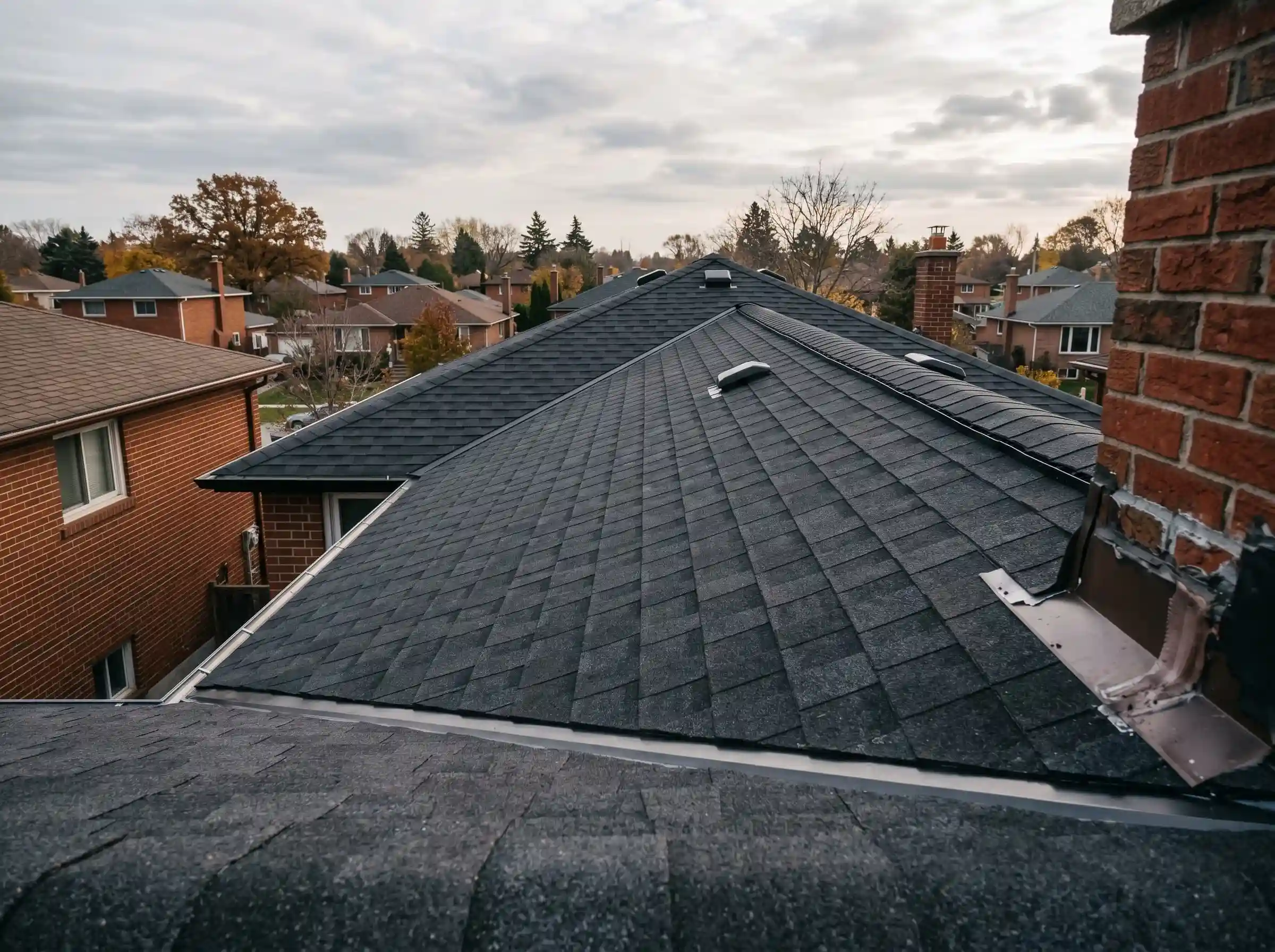
Dave held the grey shingle sample against the brick and went quiet. Inside, he had called it neutral. Outside, it looked blue. Pat glanced back at the kitchen window. "Your countertop has strong opinions."
Choose the colour outdoors against the materials that are staying. We took the samples out of the kitchen and started again with the brick, mortar, stone and trim actually on the house.
Start With the Whole Wall
Stand back far enough that individual bricks become a combined colour. A red brick wall may include brown, purple or orange tones; the mortar can soften or sharpen the overall effect. Check any stone accents too. A grey roof that works beside the brick may fight a warm limestone porch.
IKO's colour guide recommends considering brick undertones and the other exterior materials. Treat this as a comparison exercise rather than a rule that every red house requires a particular roof colour.
Pick two or three candidates. Twelve samples tend to turn a manageable decision into a family referendum with no closing date.
A Colour Choice That Starts Outside
Narrow the choice against permanent materials before confirming the exact product.
Read the wall
Compare brick, mortar and any stone as a combined exterior colour.
Place real samples
View full-size shingles beside those materials from ground level.
Change the light
Compare normal daylight and overcast views from street distance.
Record the selection
Specify the line, colour, cap and metal trim together.
Put the Samples Outside
Use full-size shingles or a board showing several courses. Hold or securely position them where you can compare them with the wall from ground level. Do not climb onto the roof to stage a sample.
Look in morning light, ordinary daylight and overcast conditions if time permits. Deep shadows can make a blend look nearly black, while direct sun can reveal brown or blue granules you barely noticed indoors. A phone picture is useful for remembering the comparison, but screen settings can shift colour again.
Include the gutter, fascia and window frames in your view. Those narrow bands sit between the roof and wall and can make the same combination feel more or less connected.
Texture Changes the Colour Impression
Architectural shingles create shadows through their profile. A highly varied blend can look busy on a house that already has mixed brick and stone. A quieter blend may make those existing details easier to read. Conversely, a broad, simple roof may benefit from some variation.
Our architectural and three-tab comparison explains the construction difference. For colour selection, the practical point is to examine the actual product, not just another line with a similar colour name.
A nearby example could help next, provided it used the same product line and colour and could be viewed from a public place. We would compare slope and exposure too. A steep front slope shows much more roofing than a low roof tucked behind the eaves. Dave's favourite bungalow photo could not make that difference disappear.
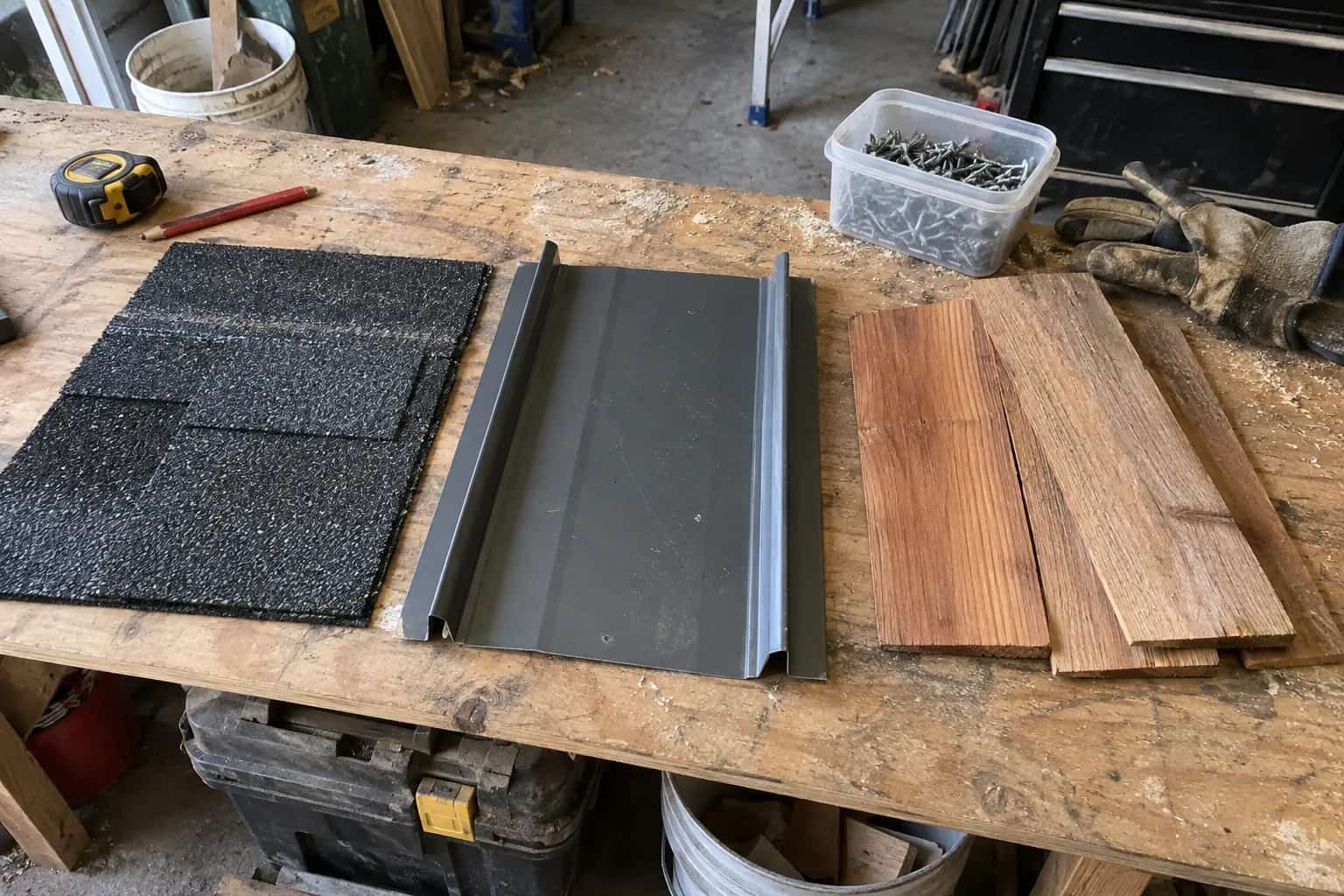
Give the last two samples different jobs
With two samples left, we stopped asking which was nicer on its own. Dave held the quieter blend beside the mixed brick and stone; Pat moved the more varied one into view beneath the broad front slope. Now each had a job. The question was how much attention the roof should attract, and the busy porch had already volunteered for plenty.
Then check the least flattering everyday view: the house under ordinary cloud, from the route you use coming home. A combination that only works in a warm sunset will get limited opportunities to impress you in November.
If a door colour is the only conflict, remember which change is easier to make later.
Write Down the Final Choice
Record manufacturer, product line and exact colour on the agreement. Confirm the ridge-cap and metal trim colours as well. Matching is sometimes complementary rather than identical, so look at those pieces together before installation.
Keep the approved product and colour in writing, including the cap and trim. If the finished roof develops unexpected bands, compare the pattern under different light before deciding the colour was wrong.
Before we packed up, Dave read the manufacturer, line and colour back from the agreement while Pat checked the trim choices. "The grey one" had narrowly escaped becoming an expensive specification.