
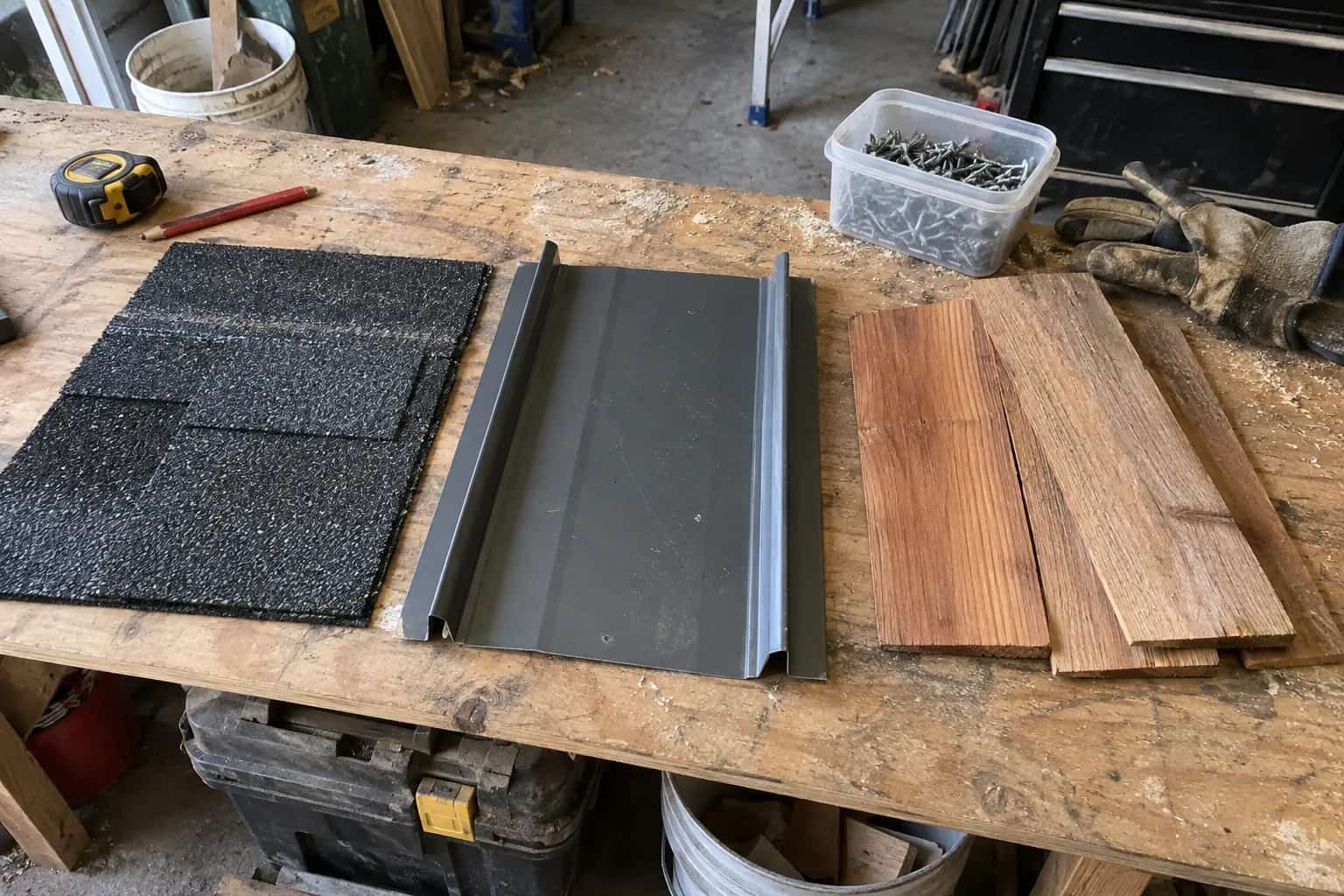
Amir likes the orderly lines of his old roof. The quote calls the replacement an "architectural upgrade", but the sample is a different colour and photographed in different light. Mike sets that comparison aside. First, look at two complete shingle samples; then decide which pattern you actually want.
The textured sample wins at the kitchen table. Then the estimates arrive, and the less expensive roof includes better flashing work. Choose the complete installation before paying for the more impressive shingle profile. Architectural and three-tab shingles differ, but style alone cannot rank two roofs.
Put Named Samples Beside the Quote
IKO's Marathon Plus AR technical sheet identifies a traditional three-tab product. Its regular cut-outs form a repeating rectangular pattern. IKO Cambridge is an architectural laminate, using layered material and an irregular visual pattern for depth. Availability and colours vary by market, so have the supplier confirm the exact Canadian product before choosing.
Ask to see full samples or manufacturer product photographs at the same scale and in similar colours. A dark roof at sunset and a pale roof at noon are poor evidence of a construction difference. On the actual samples, compare the cut-outs and layered edges, not just the printed colour names.
For Amir's comparison, the appearance preference stays on the table. Request two written scopes with identical tear-off, deck allowance, underlayment, flashing, ventilation and cleanup. The changed lines should identify the shingle, starter, ridge product, application requirements and applicable warranty. That isolates what the product choice actually buys.
Do not assign a universal life expectancy or wind rating to either family. The current product documents and the installation determine those claims. A thicker-looking sample is not evidence that the old chimney flashing can stay.
The Installation Pattern Changes Too
Shingle dimensions, the exposed portion of each course and the sideways offset vary by product. IKO's dimension chart illustrates why one installation layout does not fit every line. A roofer switching products must switch to the corresponding instructions.
This matters during a small repair. A shingle that looks close in colour may have a different height or exposure, making it a poor fit among the existing courses. Ask whether the proposed replacement genuinely matches the installed product, or whether a larger area must be rebuilt to keep proper overlaps.
Likewise, confirm which starter and ridge cap go with the selection. A quote saying only architectural shingles leaves several important pieces unnamed. Those pieces should appear beside the field shingle, not emerge as a surprise on installation morning.
There is no need to talk Amir out of liking a simpler pattern. The useful work is making the appearance choice with the right product information and keeping the rest of the roof scope honest.
Before ordering, check local supply and keep the bundle label. If spare shingles will remain, agree on dry, flat storage following the manufacturer's advice. Remembering the exact product is much more useful than remembering that it was charcoal-ish. For impact resistance, compare the separate product classification rather than judging thickness by eye.
If the new joint pattern looks wrong, compare it with the exact product offset instructions instead of using another roof as the template.
Pattern, Product, Complete Scope
Regular cut-outs make a repeating tab pattern. Hold deck, flashing and other roof work constant before comparing price.
Three-tab
Regular cut-outs make a repeating tab pattern.
Architectural
Laminated layers create an irregular depth pattern.
Exact product
Read the named line, Canadian warranty and instructions.
Equal scope
Hold deck, flashing and other roof work constant before comparing price.
