
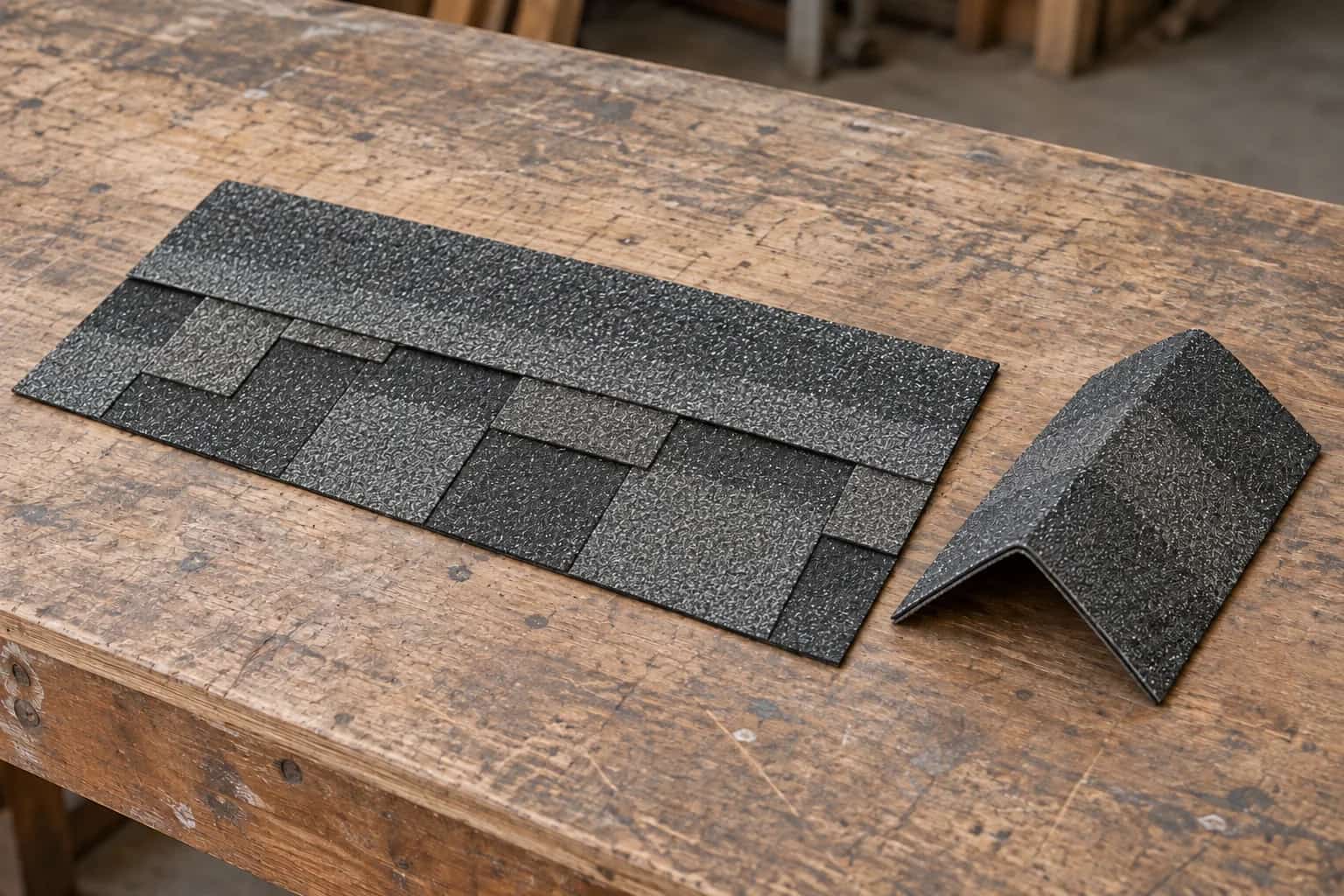
There are bundles left beside the driveway, and Owen asks whether those can finish the ridge. Pat checks the product name rather than the quantity. Spare material is useful only when it is suitable for the job. The peak is a poor place for a creative leftovers policy.
The broad slopes are finished, and a few bundles remain. That does not mean the peak should be capped with whatever is left. Hip and ridge caps need a product and fastening detail suited to bending over the intersection, especially above a ridge vent.
Field Shingles and Caps Have Different Jobs
Field shingles cover the broad slopes in overlapping courses. Caps bend over hips and ridges and overlap along those intersections. Their shape, exposure and attachment must suit that use.
IKO's cap-shingle guide explains purpose-made products and their application. Historically, certain three-tab shingles could be cut into caps under approved instructions. That does not mean any modern laminated field shingle can be cut and folded the same way.
A thick layered shingle may not form the intended cap profile. Ask the installer to identify the cap product rather than describing it as whatever is left from the bundles.
The Fastening Stack at a Vented Ridge
Additional components change the attachment compared with ordinary field shingles.
Supporting deck
The specified fastening must achieve the required substrate engagement.
Ridge vent, if present
Its own attachment and opening details remain part of the assembly.
Compatible cap
The cap profile, overlap and fastener must suit the vent and roof system.
The Ridge Vent Changes the Stack
Where a ridge vent is present, the fastener must pass through the cap and vent assembly into the required substrate engagement. A nail suitable for field shingles may be too short for that stack.
The vent also has its own fastening, opening and end-treatment instructions. Cap appearance does not establish that the vent beneath is correctly installed. Ask for both product names and how their instructions are coordinated.
Our nail-length guide explains why fasteners should be selected for the actual layers rather than one standard nail everywhere.
Mike lays the cap and vent information beside each other. Owen had chosen the shingle colour carefully without realising that the vent adds to the fastening stack. The finished ridge has to look right and follow both sets of installation requirements.
A Small Product Choice With a Large Visual Effect
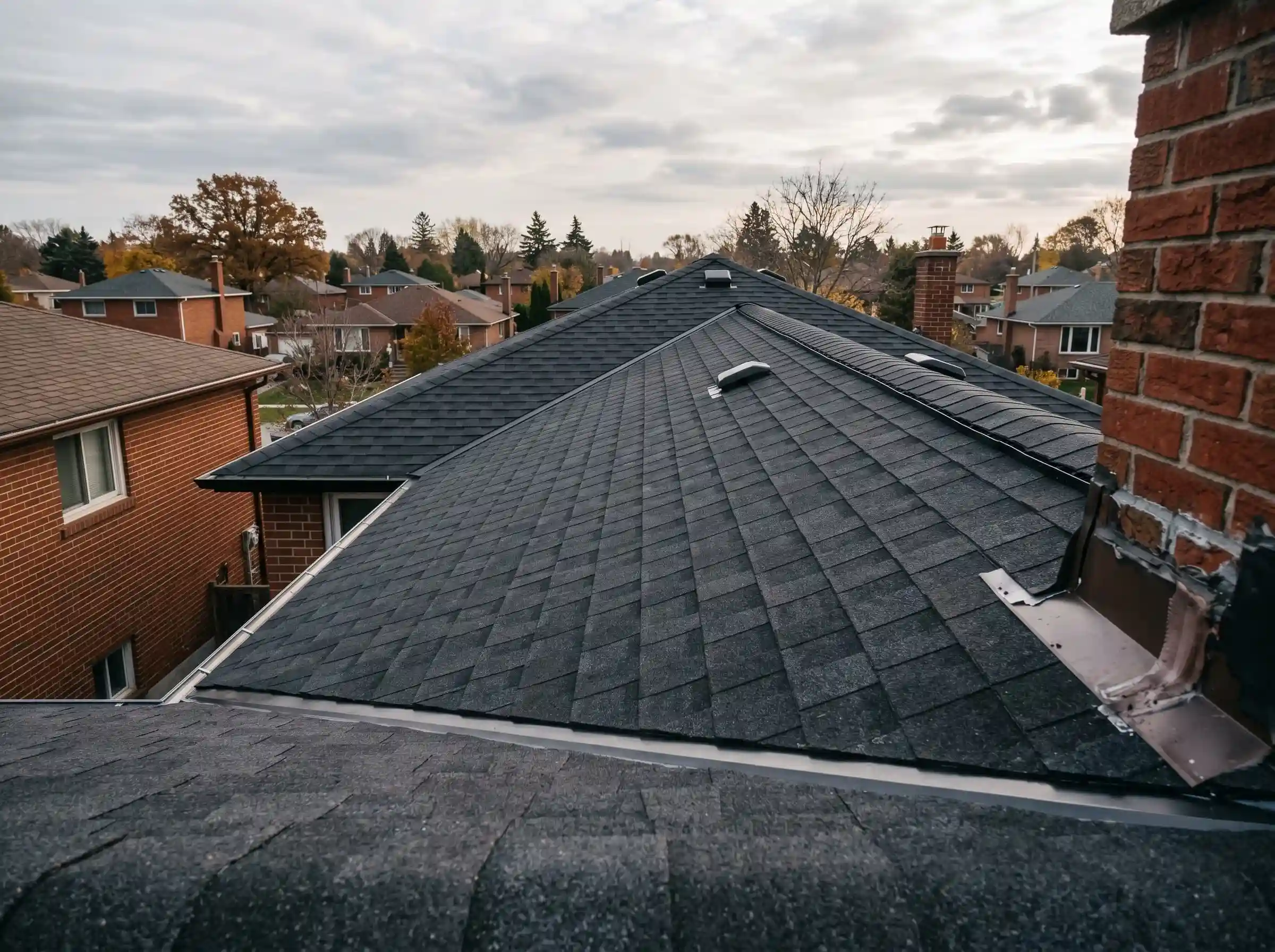
On a low roof hidden behind the eave, the cap profile may be barely noticeable. On a long hip facing the street, it can draw a clear line through the entire roof. Compare the actual cap beside the field shingle while choosing materials, rather than discovering the contrast after installation.
If Owen later needs a few caps repaired, Dave will want the profile as well as the colour. A close granule shade on a different thickness can still stand out. Discuss the acceptable blend and practical alternatives before treating colour as the entire matching job.
None of that replaces compatibility. A handsome cap still needs to work with the vent and fastening below it. If impact resistance is a purchase priority, verify the cap classification as well as the field shingle.
Inspect Cracks and Missing Pieces Promptly
From the ground, watch for displaced caps, broken corners or a ragged line along the ridge. Do not walk the peak to examine them. A roofer should check both the visible cap and what lies underneath, including fasteners and any vent.
The final cap termination needs the specified weather protection too. It should not be improvised merely because it is the last piece installed.
Save the cap product name, not just the field-shingle colour. If a few pieces need replacement later, that is the small line on the invoice you will be glad someone included.
From the street, Dave points out how prominent the long hip will be. Owen compares the actual cap profile with the field shingle before deciding. Later, the cap name goes on the record too. "The grey one" is a frustrating specification when somebody needs matching repair pieces.