
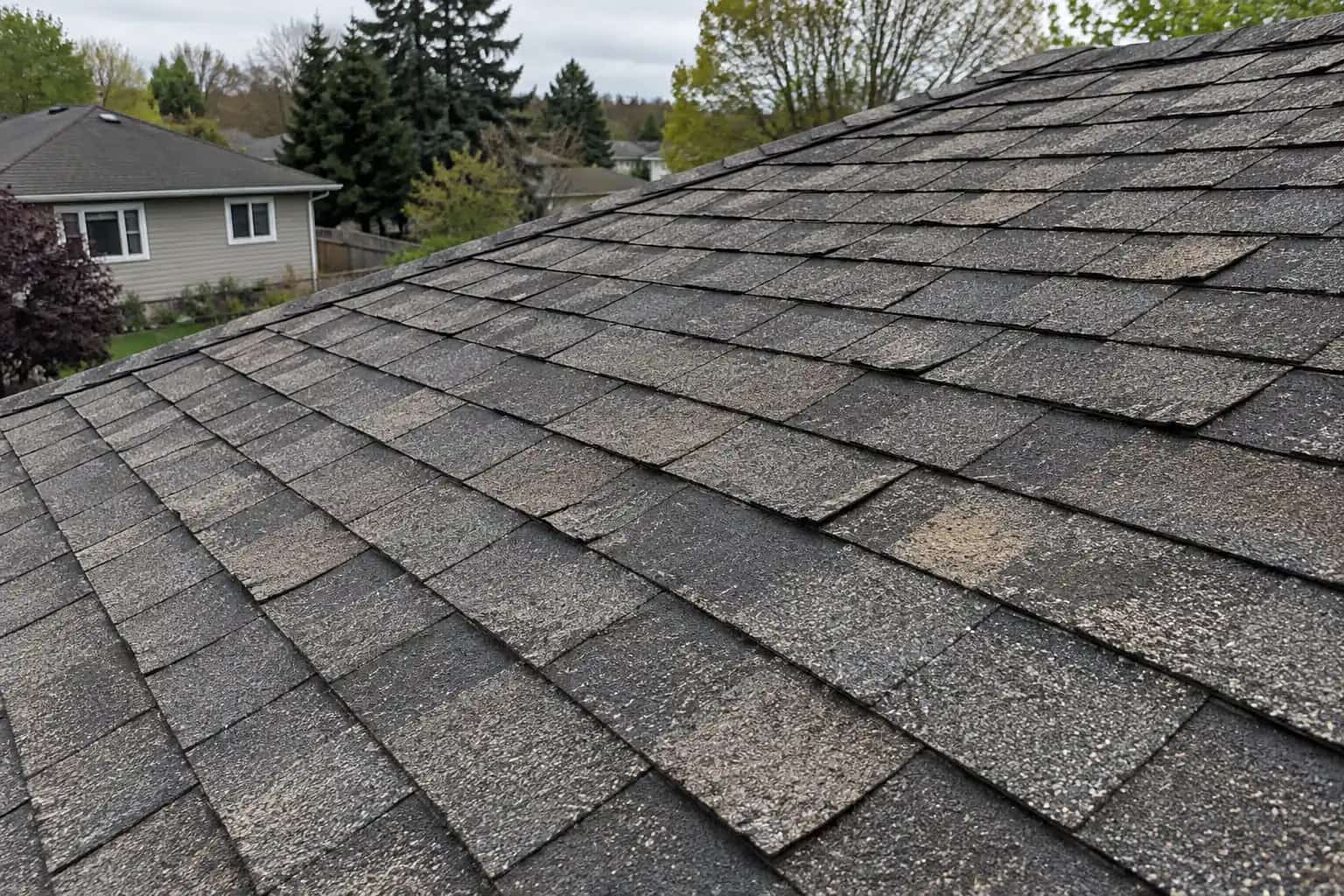
Leanne has circled six dark spots on a photograph. Her neighbour has circled the same six and written "hail" above them. Mike asks for the older roof picture still sitting in her phone. Two of the spots are there already. That does not clear the whole roof, but it does change the conversation.
The storm has passed, and a photograph shows small dark spots scattered over the roof. A dark spot is not a date stamp or a diagnosis. Blisters, impact damage and other wear can look similar from a distance; the assessment needs to explain what happened to the material.
Raised, Opened or Struck: Read the Shape First
A blister is a local raised pocket in the surface. While intact, it may look like a little dome. Once its top opens, the remaining crater can lose the very feature that made it recognisable. Hail is an external impact; the inspector looks for resulting material damage and the wider strike pattern. A photograph of a dark circle alone does not tell those histories apart.
There are documented non-storm routes to blistering. GAF's technical bulletin on wet underlayments warns that trapped moisture can produce blistering, buckling or wrinkling in shingles. That is a possible mechanism, not a diagnosis of your roof or a reason to blame attic ventilation from the driveway.
Think of three marked locations: one intact raised spot, one opened spot beside it and one fractured area on a different slope. A useful assessment does not assign all three the same cause because they share a colour. It records the surface shape, whether the shingle material is damaged, the nearby pattern and any earlier photograph of that location.
Describe the Mark Before Naming the Cause
A blister can be raised or open at its top. A possible impact mark may show indentation and granule loss. These enlarged sections help describe the surface, not diagnose it: real marks overlap, and appearance alone cannot attribute damage to hail or establish its extent. Do not press, scrape or break a mark to test it.
Conceptual drawing. Product details, dimensions and attachment requirements are not shown.
What the Comparison Can and Cannot Show
- Intact blister: raised local surface; do not press it flat to test it.
- Opened blister: exposed local patch where a raised area has broken; its original shape may no longer be obvious.
- Possible impact: a mark requiring inspection for fracture or other functional damage, supported by storm context and distribution.
These descriptions help you read a report. They cannot replace close examination by someone equipped to access the roof. Ask for an overview and close-up of the same numbered location, with the interpretation beside it. For storm dates, records and claims logistics, continue with hail inspection timing.
Preserve What You Can From the Ground
Record the storm date, approximate time and any immediate leak. Photograph debris or displaced shingles where they can be seen safely. Keep earlier roof photographs if you have them; they may show whether an appearance predates the event.
Do not scrape marks, pop blisters or press hard on shingles to demonstrate damage. Apart from roof-access risk, altering the surface can make the cause harder to assess. Leave material sampling to a qualified assessor, with permission and a plan to repair the sampling location.
The two old marks stay on Leanne's list, beside the new ones. Now the inspector has locations to compare instead of six circles being asked to tell the same story.

Let the Diagnosis Determine the Repair
A small area of damaged material may allow a local repair if surrounding shingles can be worked with safely. Widespread damage or fragile roofing may require a different scope. Ask how the recommended work follows from the documented condition.
An impact rating belongs in the product record, not in place of the damage findings. If opinions disagree, compare the inspected locations and reasoning before comparing the repair totals.