
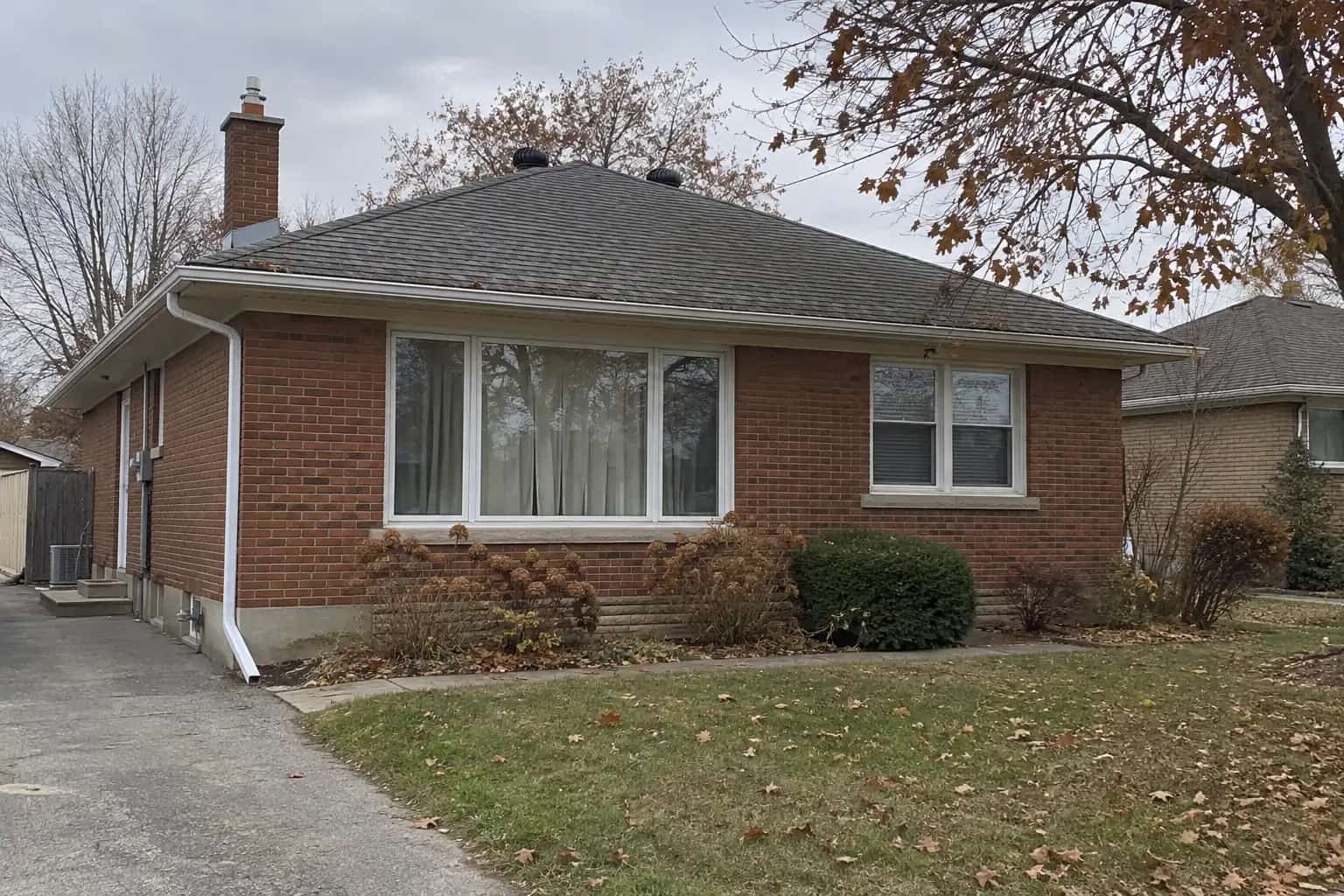
Three tabs are missing after the windstorm. The roof around them was already brittle. At the kitchen table, the owner has a replacement estimate and an insurer's request for photographs.
Dave separates the papers. "Let's write down what changed, then what the repair needs."
Weather, physical damage and policy coverage are separate parts of the claim. An older roof can suffer new storm damage. A storm does not turn every old defect into new damage. A located, honest record helps the next person assess both.
Protect People and Limit Further Damage
Stay away from fallen wires, unstable trees and damaged roof edges. Keep people out of rooms with a bulging ceiling or other signs of instability. Arrange appropriate emergency help when safety is involved. Do not climb onto a wet roof to produce better claim photographs.
Contact the insurer promptly and ask about emergency mitigation, documentation and authorisation for further work. IBC's severe-weather guidance explains the role of the insurer's assessment. Keep the name of the representative and the claim reference with your notes.
Temporary protection and permanent replacement are different scopes. Save invoices for tarping, water removal and other necessary work, with photographs where safe. Retain damaged materials when the insurer requests them and it is safe to do so; ask before a contractor disposes of evidence.
After Hail, Preserve What Will Disappear
IBC's hail guidance supports documenting the damage and contacting your insurance representative. Once conditions are safe, keep the storm time, ground-level photographs and pre-storm roof records. Do not go into a storm or onto a roof to mark suspected impacts. If hailstones remain in a safe ground location afterwards, a photograph beside a familiar scale can preserve context; it cannot calculate the impact received by every slope.
A dented accessory can help direct an inspection; it does not establish the condition of every shingle or justify a whole-roof replacement by itself. The report should separate possible hail effects from wear, scuffing and marks with an uncertain cause, and identify the inspected slopes.
A broken skylight, exposed opening or active leak needs prompt protection even while the full assessment is being arranged. A dry roof with suspected marks still merits a scheduled assessment; the absence of leakage in one light shower does not settle the damage question. Tell the scheduler the active symptoms. Ask for documentation before temporary work conceals them, and retain the inspection, correspondence and mitigation invoices together.
Keep the claim file factual
Separate the observed damage from the policy decision.
Event
Record timing and what is known about the weather.
Observation
Locate damage without guessing its cause.
Assessment
Explain the repair boundary and inspection limits.
Coverage
Let the insurer decide the policy response.
Completion
Keep mitigation, repairs and owner upgrades distinguishable.
A Useful Disagreement Is Specific
Suppose the roofer recommends a whole slope while the insurer initially allows a smaller repair. The productive question is why the scopes differ. Is the roofer identifying additional damaged shingles, or saying a limited repair cannot be made satisfactorily in the surrounding material? Has that reason reached the adjuster?
Ask for the disputed area and the technical reasoning to be identified. This gives the insurer something to review and keeps owner-chosen upgrades separate. Arguing only over the two totals obscures the construction question that may explain the difference.
When the contractor and insurer describe different repairs, make a labelled comparison of the disputed scope and evidence before treating either total as the answer.
Which Shingles Changed, and What Shows It?
If the rear slope was inaccessible, write that down. It may feel less impressive than a report covering the whole roof, but it tells the adjuster what remains unknown. Confidence is not a substitute for a view of the shingles, especially when the repair scope is being disputed.
A helpful report identifies the roof plane and feature, then distinguishes observation from interpretation. "Three shingle tabs missing on the west slope beside the chimney" is an observation. A statement about why they detached requires assessment of the surrounding installation and damage.
Ask for an overview photograph, detail photographs and any limitations. Were all slopes accessible? Was snow still covering the rear roof? Did the assessment include the attic or only the exterior? Those gaps can matter when another person reviews the file.
Older invoices and dated maintenance photographs provide useful context. Include them even when they show previous repairs. Omitting the history can make the current damage harder to understand.

A Filled Example of a Useful Claim Note
For the wind-damaged tabs, the file could begin like this:
- Event: strong wind on Tuesday evening; exact gust at the house unknown.
- Observation: three tabs missing beside the west chimney, photographed from the garden Wednesday morning.
- History: a repair invoice from two years earlier names that chimney; include it rather than guessing whether the work overlaps.
- Unanswered question: is the surrounding material repairable, and what caused the loss?
- Next evidence: a contractor's located close-ups and explanation of the proposed repair boundary.
The first three entries record information. The fourth prevents an assumption being presented as a finding. The fifth gives the assessor something useful to request. Keep optional owner upgrades outside the claimed damage scope.
Keep the Coverage Conversation Specific
Do not sign a full replacement contract solely because someone says insurance "always covers wind". Policies and facts differ. Our guide to replacement cost and depreciation explains the questions to ask about payment after coverage is assessed.
At the end, reconcile the accepted scope with the completed work and any remaining interior repair. A settled payment and a finished building repair are separate milestones; know which one you have reached.