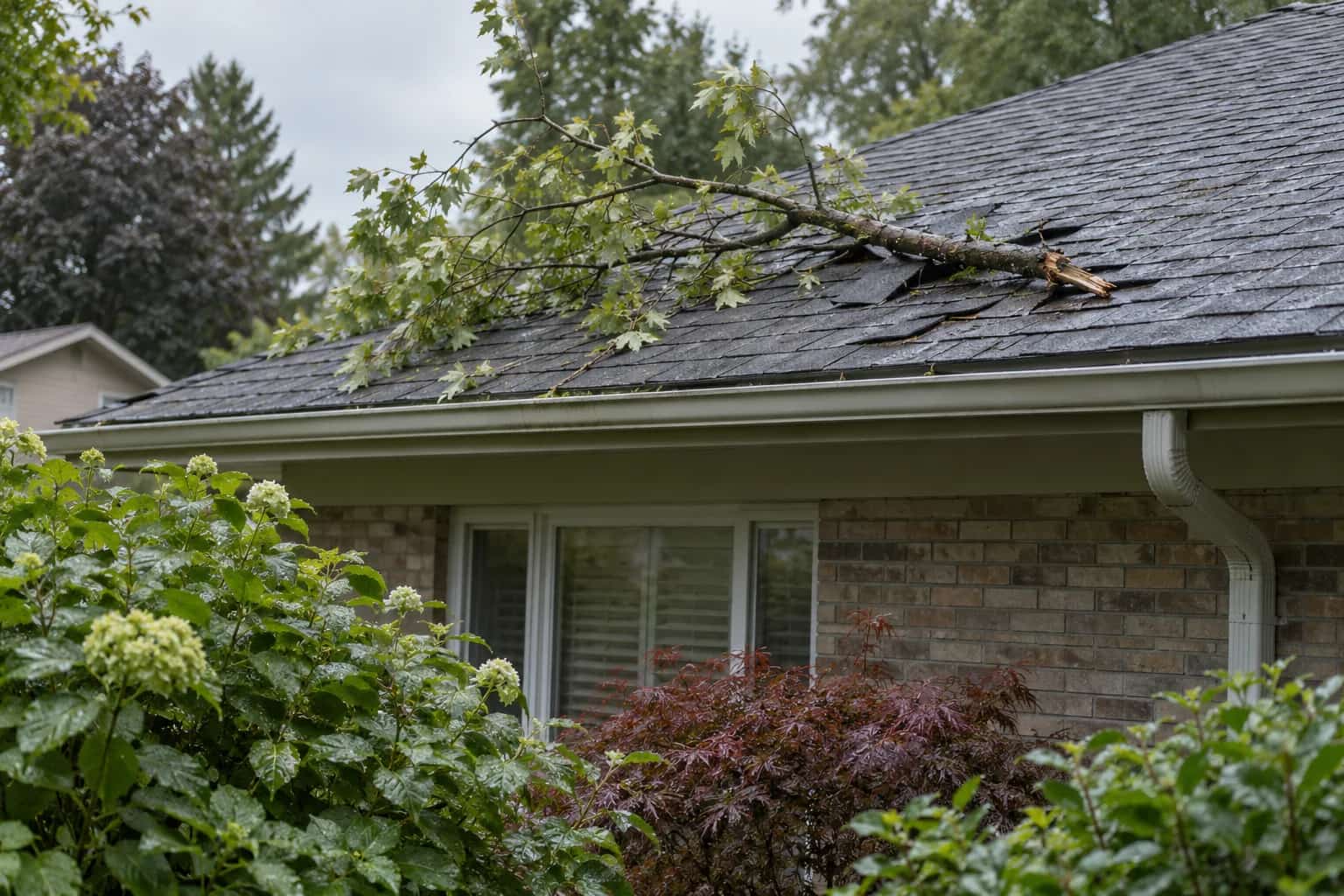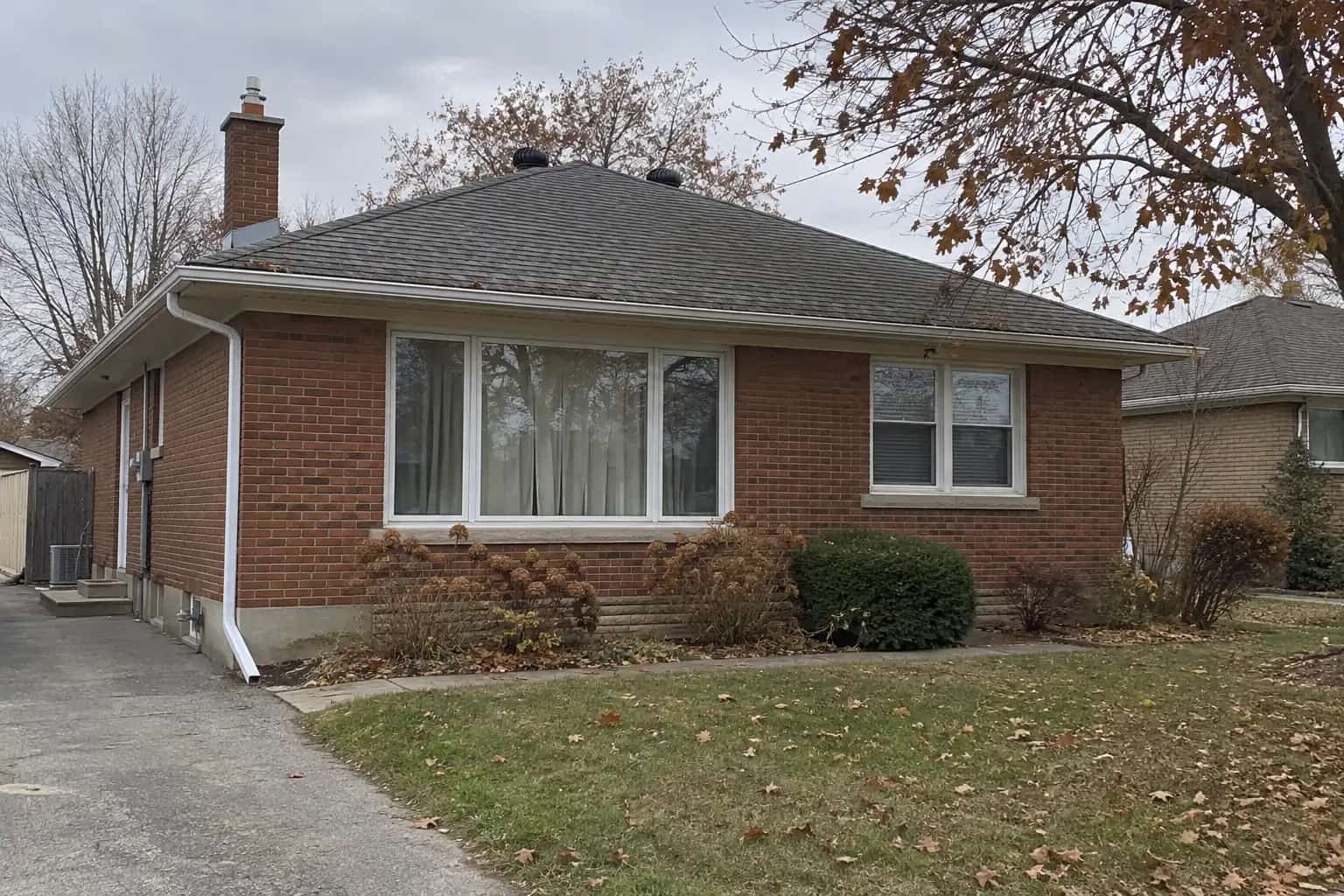
The owner wants the moss gone and points at the nearest tree. Dave points at three separate things: a rubbing branch, leaves in the valley and growth on the shaded slope. Pruning may help particular roof problems, but it is not one treatment for all three. Give the arborist and roofer a defined problem to solve.
Clearance has to suit the tree
Species, branch structure, health, growth and exposure affect a pruning decision. A fixed distance copied from an article may not be appropriate for every tree or roof. The arborist should also consider how the branch moves in wind and how removed material will be lowered without striking the building.
Do not cut a loaded branch while standing on the roof or a ladder. Branches near electrical lines require the appropriate utility and qualified tree professionals.
IKO's tree guidance identifies contact, shade and debris as different ways trees can affect roofs. Use those categories to describe your concern rather than turn them into a blanket instruction to remove mature trees.
"How far back?" is the first question. The arborist needs to consider the actual tree and proposed cuts, not accept a number copied from a roof article. Mike adds the lowering route to the discussion. Removing a branch should not introduce it to the shingles on the way down.
Check the local rules before approving cuts
Trees may be protected even when they stand on private property. Toronto's tree and ravine information explains that protected trees and areas can require permits for injury or removal.
Ordinary appropriate pruning and damaging cutting are not interchangeable. The arborist should establish whether the proposed work needs municipal review, especially in a ravine or near a protected tree. In Pickering, Ajax, Whitby or another municipality, check that municipality's rules rather than applying Toronto's requirements by assumption.
If the tree belongs to a neighbour or the municipality, resolve ownership and permission before scheduling work.
Once the pruning is agreed, the homeowner asks whether the moss will disappear. Pat explains that the existing surface still needs its own compatible assessment and treatment. They plan the follow-up roof and gutter cleanup too, instead of calling the garden work the end of the roof work.
Match the tree problem to the response
Different observations require different professionals and work scopes.
Branch contact
An arborist evaluates clearance and safe pruning.
Persistent debris
Targeted cleaning and tree management address collection points.
Surface growth
A roofer identifies the growth and a compatible treatment.
Unstable limb
Keep clear and arrange a tree-risk assessment promptly.
Existing moss needs its own assessment
Dave keeps the three findings separate in the scope: clearance for contact, less recurring valley debris where the pruning can help, and an assessment of existing growth. The tree contractor can then explain the likely benefit of each cut without inheriting a promise to cure every mark on the roof.
Improved conditions can help the future maintenance plan. The current shingles still need a material-compatible cleaning or repair decision.
A dark stain is not always moss. Algae staining, lichen and moss can look quite different up close and have different implications. Our guide to black streaks and moss helps separate those observations.
Avoid scraping, pressure washing or applying a household mixture because it worked on a patio. The roof material and manufacturer's maintenance advice should guide the treatment.
If substantial debris will fall during pruning, arrange roof and gutter cleanup afterwards. Ask for the roof to be protected during tree work and inspect for new contact damage when the work is done.
Save photographs of the branches before pruning and the roof condition after cleaning. The next season, observe whether the same valley still collects material. If it does, adjust the maintenance plan rather than immediately order another large cut.
For sticky spots beneath branches, identify possible sap before choosing a cleaner so roof cement or another surface condition is not mistaken for tree residue.