
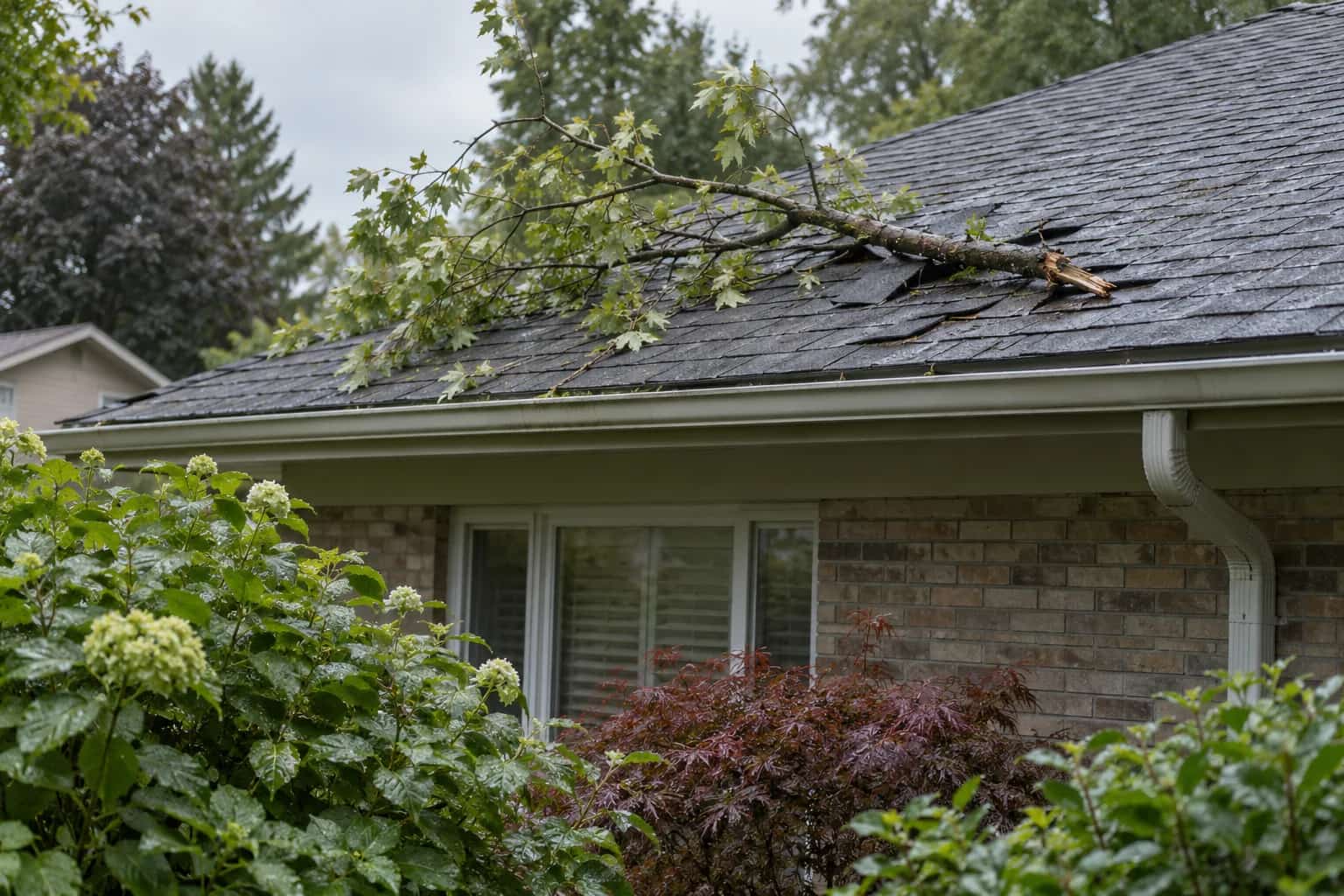
A glossy patch beneath a branch can be tree resin. A glossy patch beside a chimney can be old roofing cement. Neither should be attacked with the cleaner that worked on the car. Identify the material and the shingle condition before choosing a treatment. A small stain is easier to live with than a bare patch where cleaning removed the protective surface.
Keep the inspection at ground level until a roofer can reach the area safely. Do not climb up to test whether the spot feels sticky, and do not pour a solvent onto an unknown roof covering.
The owner has brought out a bottle that removes sticky labels from jars. Mike leaves it on the patio table. The bottle has excellent qualifications for the kitchen; nobody has established its relationship with asphalt shingles. Above them, two dark marks sit in different places: one under a branch, one beside old flashing.
Give the Patch Some Context
Take a wide photograph showing the branch, roof feature or recent work near the mark. Then use zoom for detail. Note when you first noticed it and whether its size or appearance has changed. A mark revealed when leaves fall may have been there longer than it seems.
Tree species, branch position and nearby repair history are useful information. They are not a diagnosis on their own. A tree above the roof does not make every dark spot sap, just as a stain beside flashing does not prove a failed repair.
IKO's roof-damage guidance identifies sap and resin from some trees as possible asphalt-shingle exposures. That supports investigating the deposit. It does not supply a universal safe solvent or establish that every small spot has caused damage.
Three Observations That Change the Work
A surface deposit on otherwise intact shingles may be mainly an appearance and maintenance decision. Ask whether leaving it alone while monitoring is preferable to a treatment with uncertain effects.
Material connected to an earlier repair needs the repair record. Removing roof cement around a detail without understanding its purpose can expose the very opening it was temporarily covering. The permanent repair may need attention, but cleaning should not accidentally become demolition.
A softened, blistered or bare shingle surface needs a condition assessment. Removing the residue cannot restore lost granules or a damaged shingle. A local replacement may be more useful than repeated cleaning, depending on the surrounding roof's flexibility and condition.
Ask for photographs that distinguish the deposit from the surface beneath or beside it. If the condition cannot be determined without testing, agree on the method and its limits before a whole slope is treated.
Dave checks the old repair photographs supplied by the owner. The mark beside the flashing was there before the branch grew over that corner. The convenient single explanation has split into two questions, which is progress even if it has ruined the promised ten-minute cleanup.
Identify Before Treating
A similar-looking dark patch can represent a deposit, repair material or damaged covering.
Surface deposit
Assess whether cleaning is useful and compatible.
Old repair material
Understand its purpose before removing it.
Damaged shingle
Evaluate local repair rather than appearance cleaning alone.
Recurring tree exposure
Coordinate targeted arborist advice and roof maintenance.
Ask the Manufacturer a Precise Question
Find the shingle brand and product if possible. Send the manufacturer or its technical support the observed deposit, age of the covering and proposed cleaning product. The useful question is whether that method is acceptable for this material, including contact time, rinsing and protection of adjacent surfaces where applicable.
A cleaner described as safe for roofs may be intended for a different covering. Likewise, a recommendation for algae should not be borrowed for resin. Our stain and moss guide deals with biological growth, a separate identification problem.
Have the contractor explain how access, runoff and any trial area will be managed. Do not accept appearance alone as the test of success. The treated area should retain its sound surface and weather-shedding function.
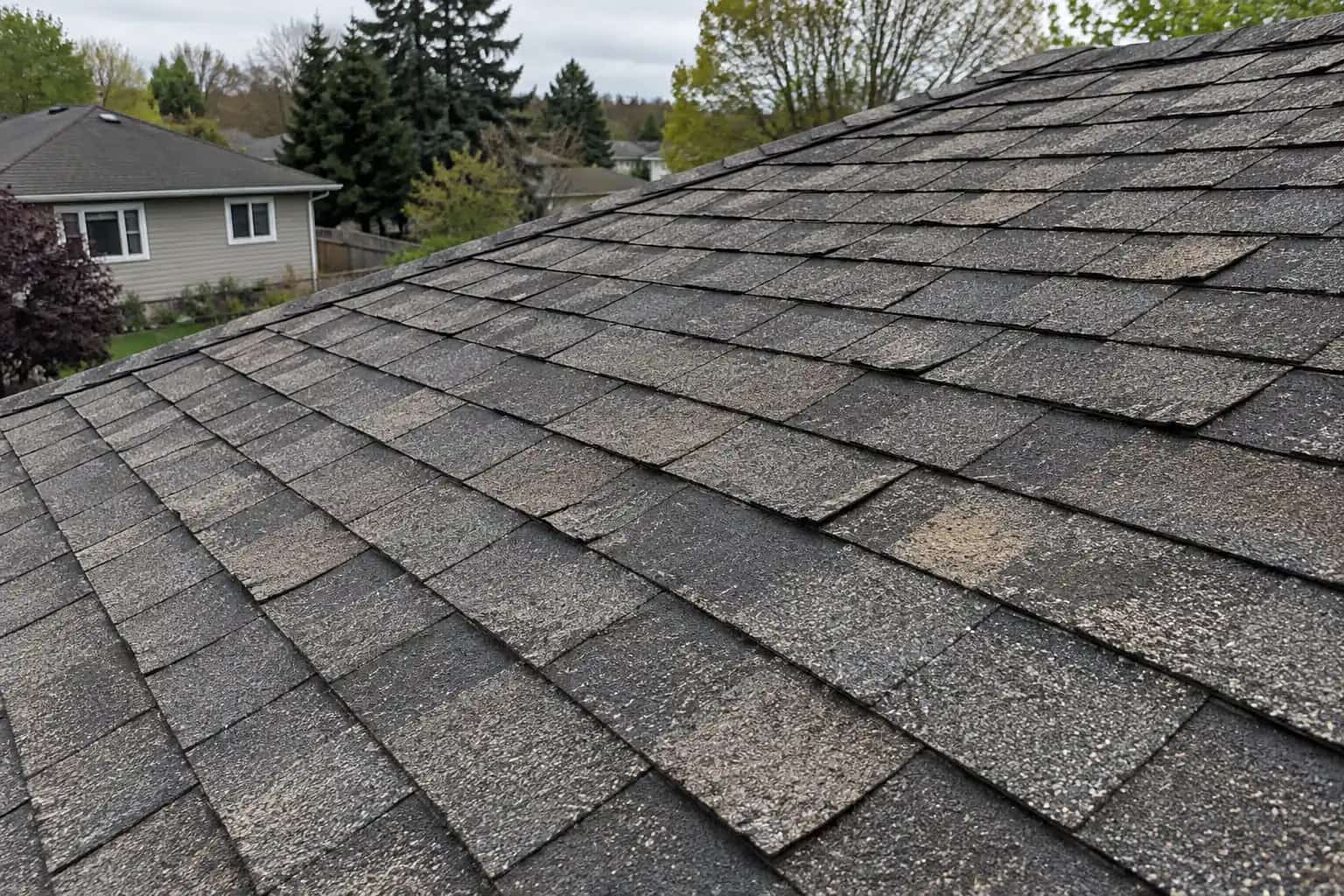
Fix the Recurring Exposure Without Overreacting
If a tree is involved, discuss targeted work with an arborist. Pruning should consider tree health, ownership and local protection rules, not simply the desire for a perfectly clean roof. Removing every branch over a house is not a necessary conclusion from one sticky patch.
The tree and roof guide separates contact damage from recurring debris and shade. Use the same discipline here: what exact exposure will the proposed cut reduce, and what maintenance remains afterward?
Keep a dated photograph after any agreed treatment or repair. If new spots appear, compare their location rather than repeating the same chemical experiment. A useful plan may be modest: identify the deposit, preserve the roof surface, address a particular branch and check the area next season. It does not need to turn a few marks into a whole-roof project.