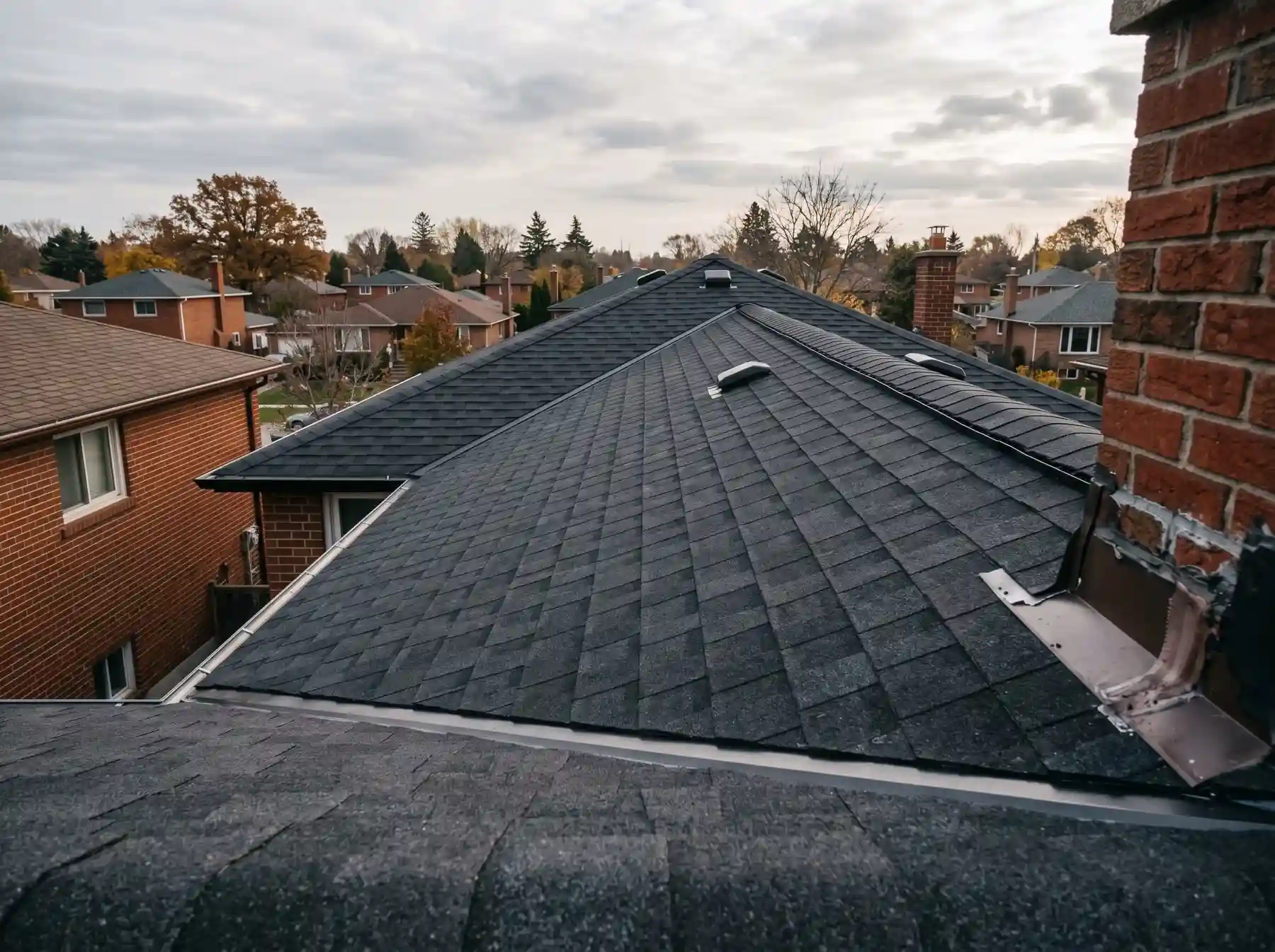
The antenna installer has found a good signal position. The owner is delighted; Mike wants to know what holds the mount and where the cable enters. Choose support, flashing and the service route before drilling through roofing. A strong signal cannot tell you whether the attachment will keep water out.
Ask whether a wall, gable or other suitable location can meet the equipment's needs with fewer roof penetrations. That is a design option to assess, not a guarantee that every antenna can be moved off the roof.
Choose the Location With the Whole Building in Mind
The best signal position may be difficult to service or close to overhead electrical hazards. Have the installer evaluate clearances, access, wind exposure and the proposed cable route. Keep antennas, ladders and handling equipment away from power lines; an awkward position is a reason to redesign the work, not improvise.
ISED's antenna-system procedures address applicable federal processes and requirements. The installer should determine what applies to the proposed equipment and location, including any local consultation or other approvals. Do not assume all installations have identical requirements.
For a shared or condominium roof, obtain the relevant owner's or corporation's permission before designing around that surface. Access to the roof is not authority to alter it.
The owner prefers the highest location because it looks decisive. Dave asks who will reach it when the cable needs attention. They compare technically suitable positions using the future visits as well as installation day. An accessible alternative deserves a place in the discussion, even if it looks less heroic.
Count the Future Visits Too
Compare a difficult roof position with any technically suitable alternative using more than installation day. Someone may need to adjust the antenna, replace a cable or remove obsolete equipment later. A mounting point that repeatedly requires awkward roof access carries that obligation for as long as it remains.
Mike asks the installer to explain why the chosen location is needed and how service will work there. Where penetrations are necessary, they need a maintainable detail. Where a suitable alternative avoids them, the owner can weigh its appearance against fewer roof interruptions.
Before agreeing the mount, Pat asks to see the attachment and weatherproofing detail rather than a promise to "seal around it." The removal plan gets a line too. Nobody wants the next roof visit to begin with an abandoned bracket and a mystery hole.
Resolve Four Parts of an Antenna Mount
Signal location, structural support, water management and cable safety must work together.
Position
Select a workable signal location with safe access and clearance.
Support
Specify mounting into a suitable structure for the equipment and loads.
Water
Integrate each penetration with the roof's drainage and flashing.
Cable
Coordinate protected routing, grounding and electrical requirements.
Fasten to Structure and Flash the Opening
Ask what supports the mount beneath the covering and how the attachment is specified for the equipment. Shingles are a weather covering, not a structural fixing base. A chimney also needs assessment before it is used as support; masonry condition and the mounting arrangement matter.
Specify flashing compatible with the roof material and slope that directs water around each attachment. Exposed caulking alone should not be the weatherproofing plan. Check the roof warranty implications before installation. Retain photographs of the finished attachment and any concealed detail, with the equipment and mounting model recorded.
Cable routing should avoid loose loops, rubbing against sharp edges and interference with drainage. Wall and roof entries need suitable weatherproofing and strain management. Grounding and electrical requirements belong with the appropriately qualified installer; this is not a place to copy a neighbour's wiring.
ESA explains how Ontario homeowners can verify a Licensed Electrical Contractor when electrical work is involved. Ask who is responsible for that portion rather than assuming the roof crew will handle it.
Write the future removal scope down with the installation details. Removing equipment can leave fasteners, supports and holes behind; proper roof repair belongs in that job, not on a later owner's list of unexplained leaks.
If water later appears, give the leak investigator the mount location and installation timing. Those are useful clues for tracing the entry, while leaving room to find another cause.