
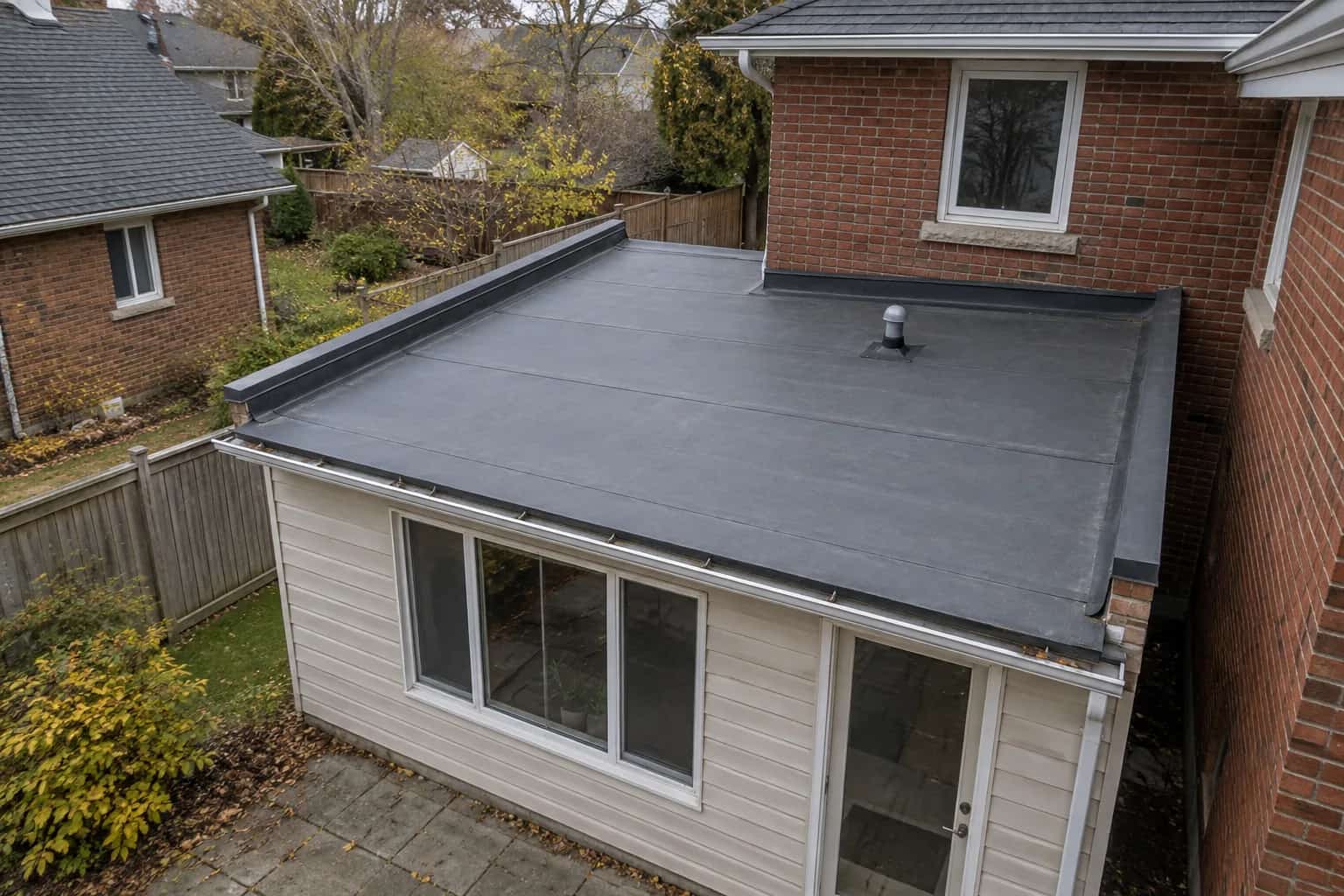
The proposed walkway runs neatly from the hatch to the equipment. Then the service technician points to the panel on the other side. Mike turns the drawing around. A path can look excellent while leading everyone to the wrong end of the job.
The technician goes up to service one unit, but the membrane gets walked on all the way there. A small protective square beside the equipment does little for the repeated route from the hatch or access point.
Compatible walkway pads protect those routes and working positions. They do not turn a membrane roof into a terrace, and they do not provide safe access or fall protection by themselves.
Put Protection Where the Work Actually Happens
Mike redraws the path to the actual service side, with room for working positions and the removed panel, tools and parts. If the practical job requires walking around the equipment, a straight decorative strip on the other side will not protect the route people use.
Match the Pad to the Membrane
Walkway products are system-specific. A loose mat from a hardware shop may be chemically unsuitable, move in wind or interfere with drainage. Attachment methods also vary.
Carlisle's PVC walkway data includes drainage gaps and access around field seams as part of its product instructions. Those dimensions belong to that product; the useful general lesson is that layout and inspection access matter alongside surface protection.
Ask the roofer to name the walkway product and show its compatibility with the existing roof. If the membrane identity is uncertain, resolve that before installing a protective material that may be difficult to remove later.
Pat adds the working position and somewhere suitable for the removed panel and tools. A sharp part or tool case placed beyond the protected area can still damage the membrane even while the technician's boots stay on the pad. The equipment contractor's ordinary movements are much more useful than our guess about how tidily someone ought to work.
Repeated service traffic also raises the question of protection beneath the membrane; walkway pads and a cover board address different parts of the assembly.
A walking route must leave a water route
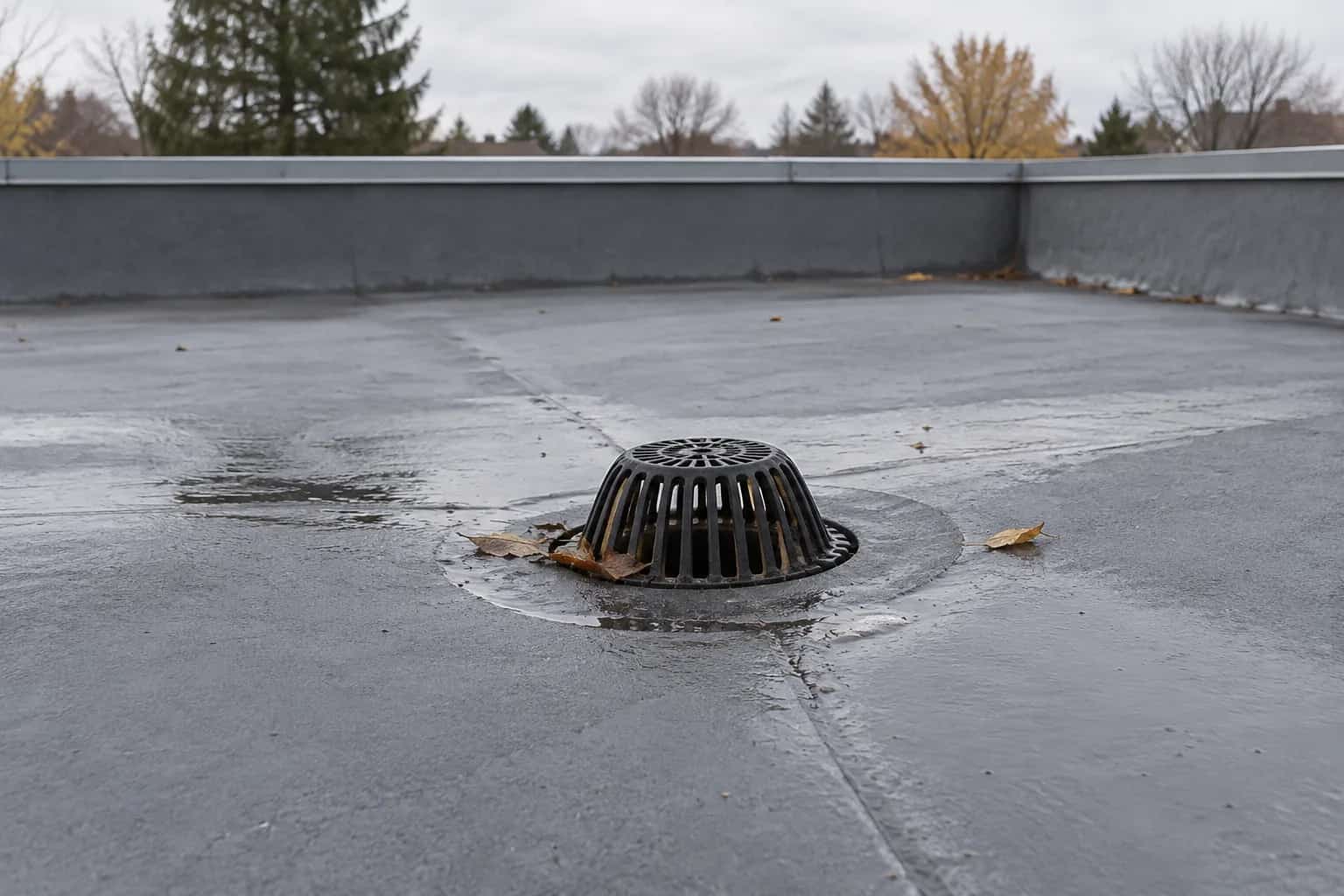
Pads sit above the membrane shown here. Their layout must preserve drainage to the low point instead of creating small barriers across the runoff path.
Schematic view. Shows relationships, not installation dimensions.
Do Not Build a Small Dam
Water still needs a route to drains or scuppers. Pads placed across a shallow drainage path can trap debris and hold water. Protection should respect the roof's slopes and preserve access to outlets for maintenance.
Seams also need to remain inspectable as required by the system. Covering a known suspect lap with a walkway does not repair it. Address the defect first and coordinate any protective covering with the approved detail.
For roofs with a future terrace, read about decks above membranes. Occupied deck assemblies involve additional structural and waterproofing requirements beyond service walkways.
Make the Route Part of the Service Visit
Tell the service team where the protected route is and include its condition in future roof inspections. A moved or worn section needs attention before repeated visits damage the surface it was meant to protect.
If the equipment changes, revisit the layout. A replacement unit with its service panel on the opposite side can turn yesterday's useful path into a route nobody follows.
Dave checks the drainage route before the layout is final. We want a service path, not a small dam with a convenient walking surface. When the unit changes, the drawing needs another look; the next technician should not have to choose between the marked route and reaching the panel.