
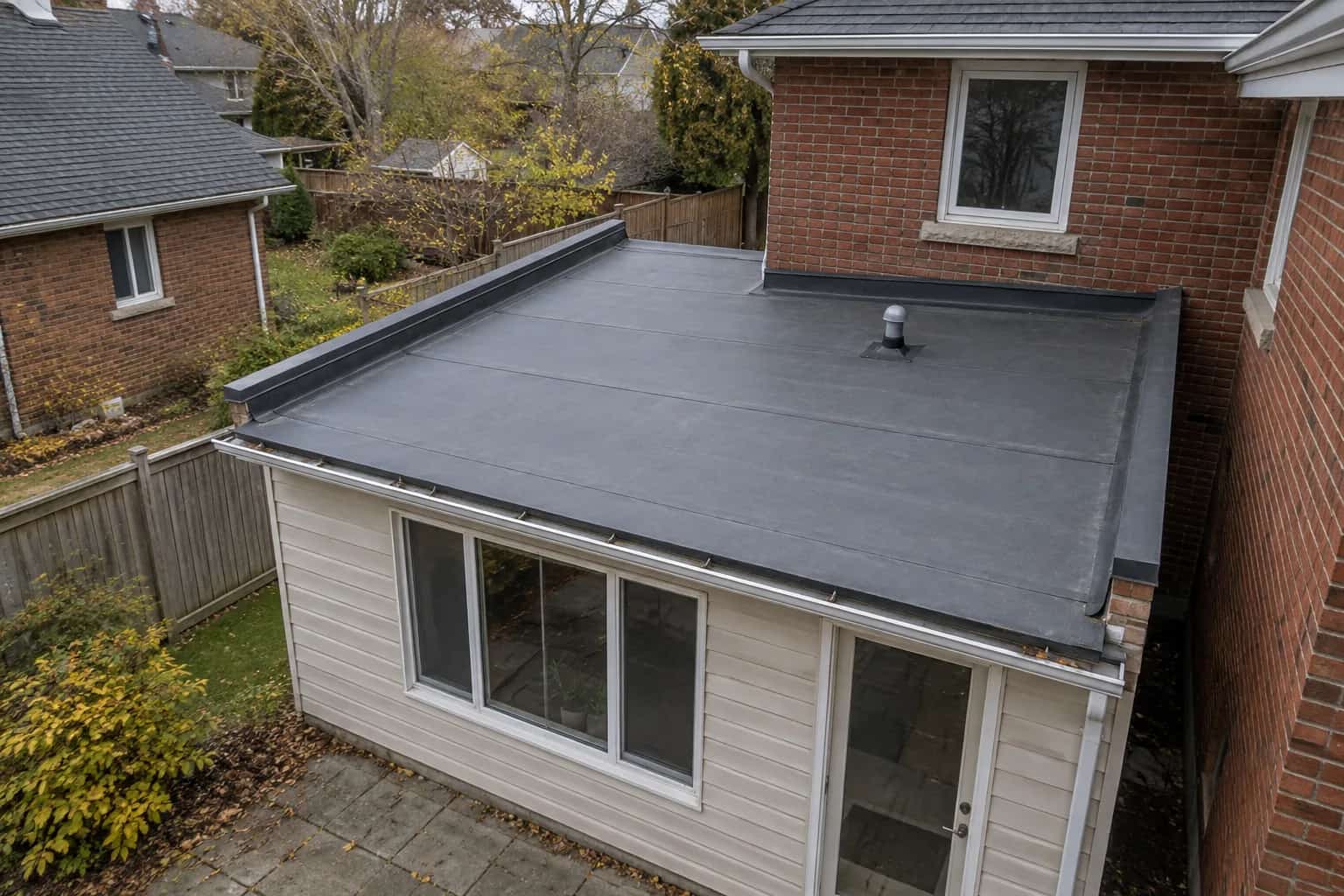
Mike is reviewing an addition-roof quote when the owner crosses out the cover board. It sounds like packaging: a board that covers something before the real roof arrives. Pat rescues the line with his pencil. "That one stays in the roof. The pallet is the bit we take home."
A cover board can provide a durable, compatible surface beneath the membrane, but the right choice comes from the roof assembly. A small roof does not automatically need one, and it does not automatically qualify to omit one. Ask what purpose it serves in the proposed system before deleting it to save money.
What Is It Doing Below the Membrane?
Carlisle describes cover boards made from several materials, including high-density polyiso, gypsum and other products. Depending on the system, they can improve the supporting surface and contribute to resistance against punctures, traffic or other damage.
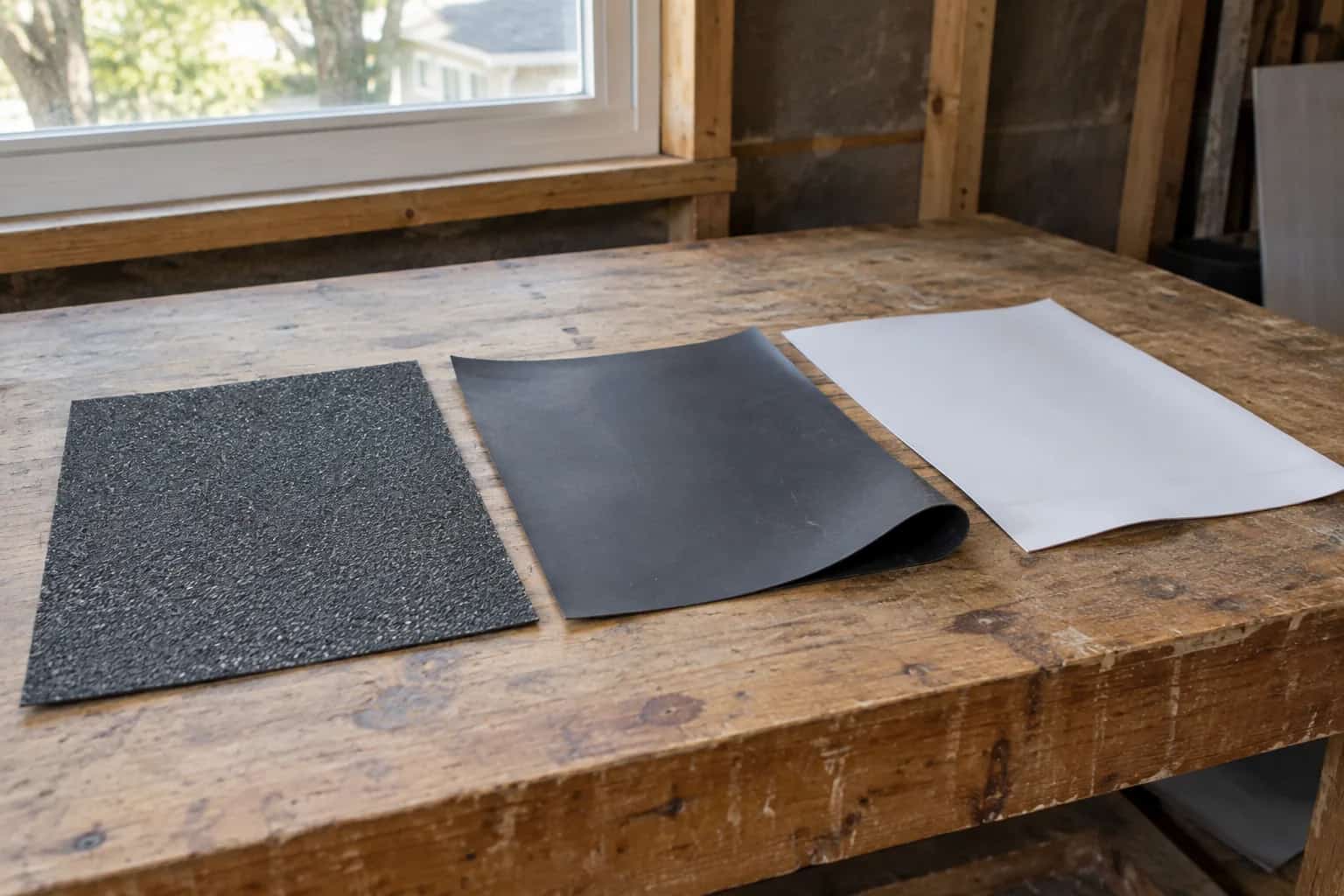
That does not make every board interchangeable. The membrane, adhesive or fastening method, insulation and deck all influence the specification. A product that feels solid on the table still needs to be suitable for the proposed assembly.
Nor is a cover board the waterproofing. Water control still depends on the membrane, seams and details. Keeping the layers' jobs separate helps prevent a reassuring word such as "protective" from becoming a promise the product does not make.
It Is Different From the Roof Deck
The deck supports the roof assembly. A cover board installed higher in that assembly does not excuse an unresolved structural or deteriorated-deck problem. If the quote includes both deck repair and a cover board, ask the contractor to identify each location on a simple section drawing.
Mike draws the layers beside the crossed-out item. The owner immediately understands why "replace bad plywood" and "install cover board" are two different allowances. Roofing quotes improve considerably when their nouns are given somewhere to stand.
The same exercise helps distinguish a cover board from tapered insulation used to establish drainage. A strong surface and an appropriate route for water are separate needs.
Four Different Jobs in the Assembly
A cover board is one specified layer, not a substitute for the others.
Deck
The structural supporting surface must be suitable.
Insulation
The designed insulation arrangement serves the roof assembly.
Cover board
A compatible board provides the specified membrane substrate.
Membrane
The waterproof covering needs complete seams and details.
The Product Name Matters
SOPREMA Canada's SOPRABOARD page describes a particular asphaltic-core board with glass-fibre facers and specified installation options. It is a Canadian example of why the generic phrase "roof board" is inadequate. It is not permission to substitute that board into every single-ply assembly.
Ask for the exact board, thickness, intended application and approved attachment. If an alternate product is proposed because stock is unavailable, ask who has confirmed equivalence for this membrane and assembly. Similar dimensions do not prove compatible facings, adhesives or system performance.
Pat's pencil now stays beside the product name. An upgrade cannot be evaluated if the quote leaves enough room to deliver almost anything flat and rectangular.
Ask About Access and Damage
A little roof beside an upstairs window may receive more maintenance traffic than a larger inaccessible roof. Explain how windows, vents and equipment will be serviced. The contractor can then address the substrate and any protective access provisions together.
A cover board should not be used to justify careless treatment of the finished membrane. Keep tools, temporary equipment and future trades in the conversation. Ask how damage will be prevented during installation and later service visits.
For the separate question of membrane thickness, see our 60-mil versus 80-mil comparison. Buying more material in the top sheet and improving its support are different decisions.
How to Compare Two Offers
Have both contractors show the proposed layer arrangement and explain any omission. The useful answer might be that the selected assembly requires a board, that it is an optional improvement for a particular exposure, or that another documented substrate arrangement is intended.
Ask what changes in performance, warranty eligibility and price. Include the attachment and compatible materials in that answer. A line item reading "premium board" is not enough.
The owner uncrosses the allowance once its role is clear. It may still be changed after comparing suitable systems. At least the decision is now about what belongs in the roof, rather than what sounded like a delivery accessory.