
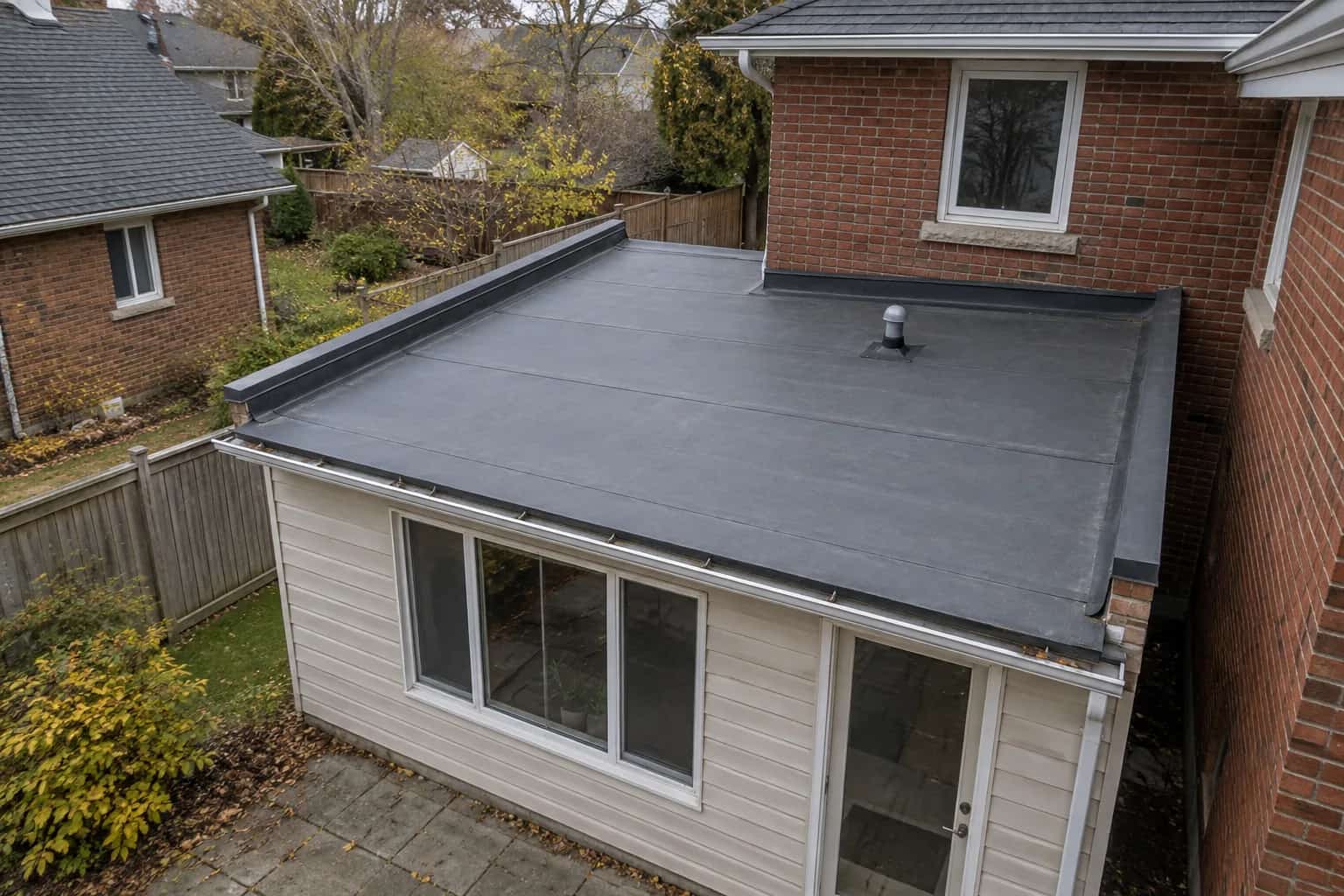
Pat hears "loose-laid" and knows the next question before it arrives: does that mean the rubber can just sit there? Mike turns the drawing round. "It sits in a system. The system is the important bit."
A ballasted EPDM roof is a genuine option, but it needs a designed assembly and a suitable building. It is not a shortcut consisting of rubber, garden-centre stone and confidence. For a house addition, structural suitability and the complete restraint arrangement must be settled before comparing prices.
What Holds the Membrane in Place?
Carlisle describes ballasted systems as loose-laid membranes held by stone or pavers. Its overview emphasizes large, open roofs, where the installation approach can have economic advantages. The manufacturer's EPDM range includes different application methods.
That establishes the method, not the suitability of a particular house. Ballast, membrane, insulation, edges, penetrations and other restraints must follow the selected system. Loose-laid does not mean the perimeter and details are left loose.
Ask for a drawing that identifies what provides restraint in each part of the roof. If the answer only points at the stones, the explanation is incomplete.
Can the Building Carry the Proposed Roof?
The weight of the full assembly belongs in a structural assessment, together with other relevant loads. Do not use a generic ballast quantity from a commercial-roof example as a recipe for a residential addition.
The existing surface is not proof of capacity either. A previous owner may have added layers, altered supports or changed how the space below is used. The contractor should establish what exists and identify who confirms suitability where structural input is needed.
Dave had initially expected the discussion to be about rubber thickness. He is quite happy to be wrong before anyone has ordered a load of stone. Being wrong on paper is unusually easy to clean up.
Four Questions Before Ordering Ballast
A stone-covered appearance is not a residential system design.
Structural suitability
Confirm the building can support the proposed assembly and relevant loads.
System restraint
Specify membrane, ballast, edges and wind design together.
Drainage access
Keep outlets and required inspection areas serviceable.
Future maintenance
Plan how the covering will be moved and reinstated for repairs.
Wind and Edges Need a Complete Design
The specification must account for the actual roof and location. Ask how the chosen system addresses wind, the roof perimeter and any changes in height or exposure. Ballast selection and arrangement are design matters, not a homeowner's decorative preference.
Do not replace the specified material with whatever landscaping aggregate happens to be cheaper. The supplier and designer must confirm any substitution. The same applies to pavers: a heavier-looking option is not automatically an approved equivalent.
For Ontario work, obtain the applicable Canadian project documentation. A US manufacturer's overview can explain the concept without establishing compliance for your building.
Think About Finding the Next Problem
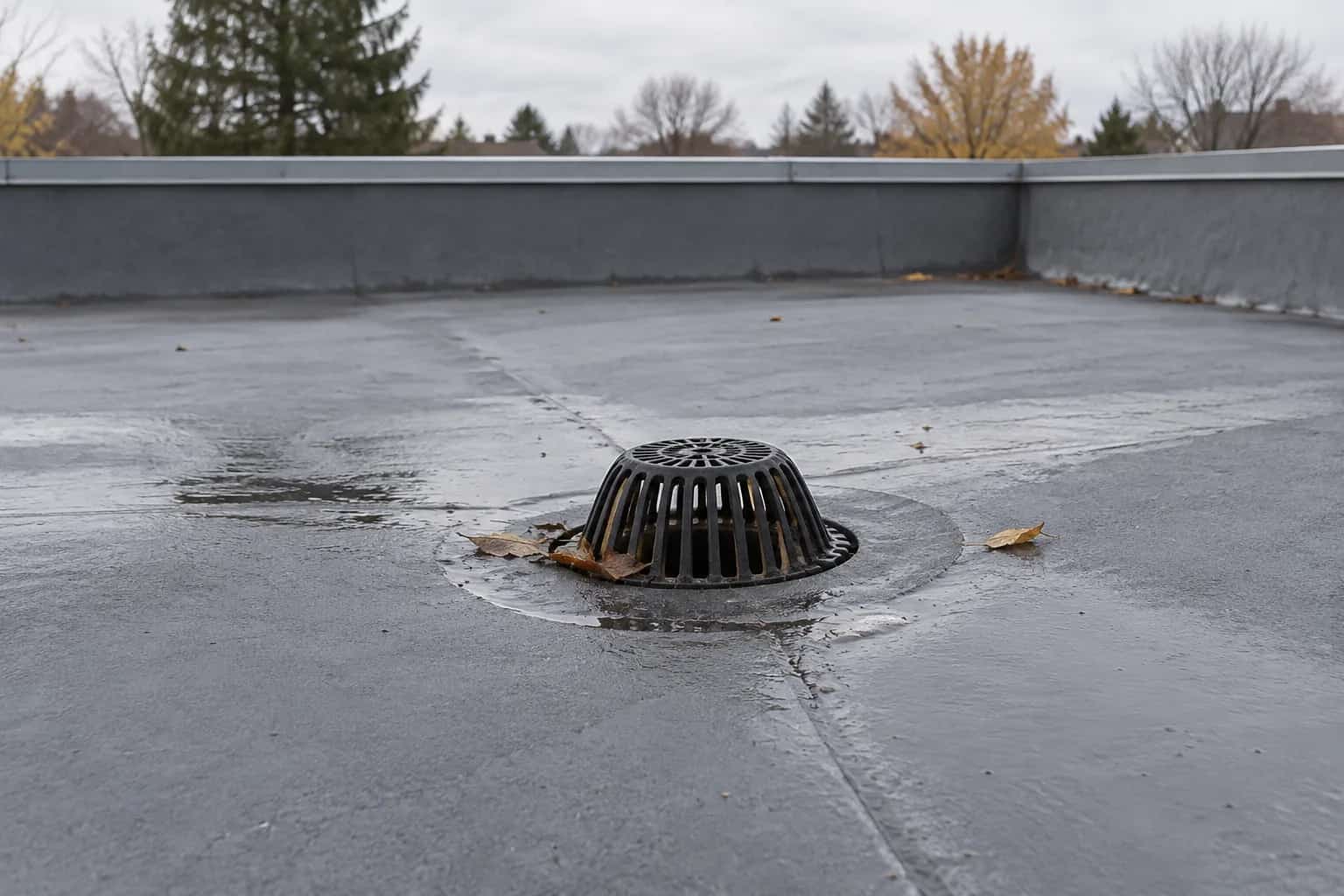
A covered membrane needs a maintenance plan. Ask how drains and inspection points stay accessible, how a suspected leak is investigated and how ballast is removed and reinstated without damaging the roof. Include access to any equipment.
The homeowner at Mike's table wants the rear addition to be easy to maintain from the existing access point. That preference belongs in the comparison now. It would be frustrating to discover later that the apparent saving came with a service arrangement nobody had discussed.
A ballasted roof also does not automatically become a terrace. If people will occupy it, say so at the design stage. Guarding, access and the complete occupied-roof arrangement require their own resolution.
Compare Against Suitable Alternatives
Request a complete price alongside any suitable adhered or mechanically attached system. Include structural work if needed, perimeter details, drainage, delivery access and future service provisions. Compare warranties for the actual assembly rather than for the membrane roll alone.
Ballast can make sense where the building and system support it. It may be unnecessarily complicated on a small, awkward addition. Neither answer follows from the word EPDM alone.
Pat writes one sentence at the top of the comparison: "Confirm the roof can use it before pricing how cheaply we can install it." That saves a surprising amount of discussion about stones.