
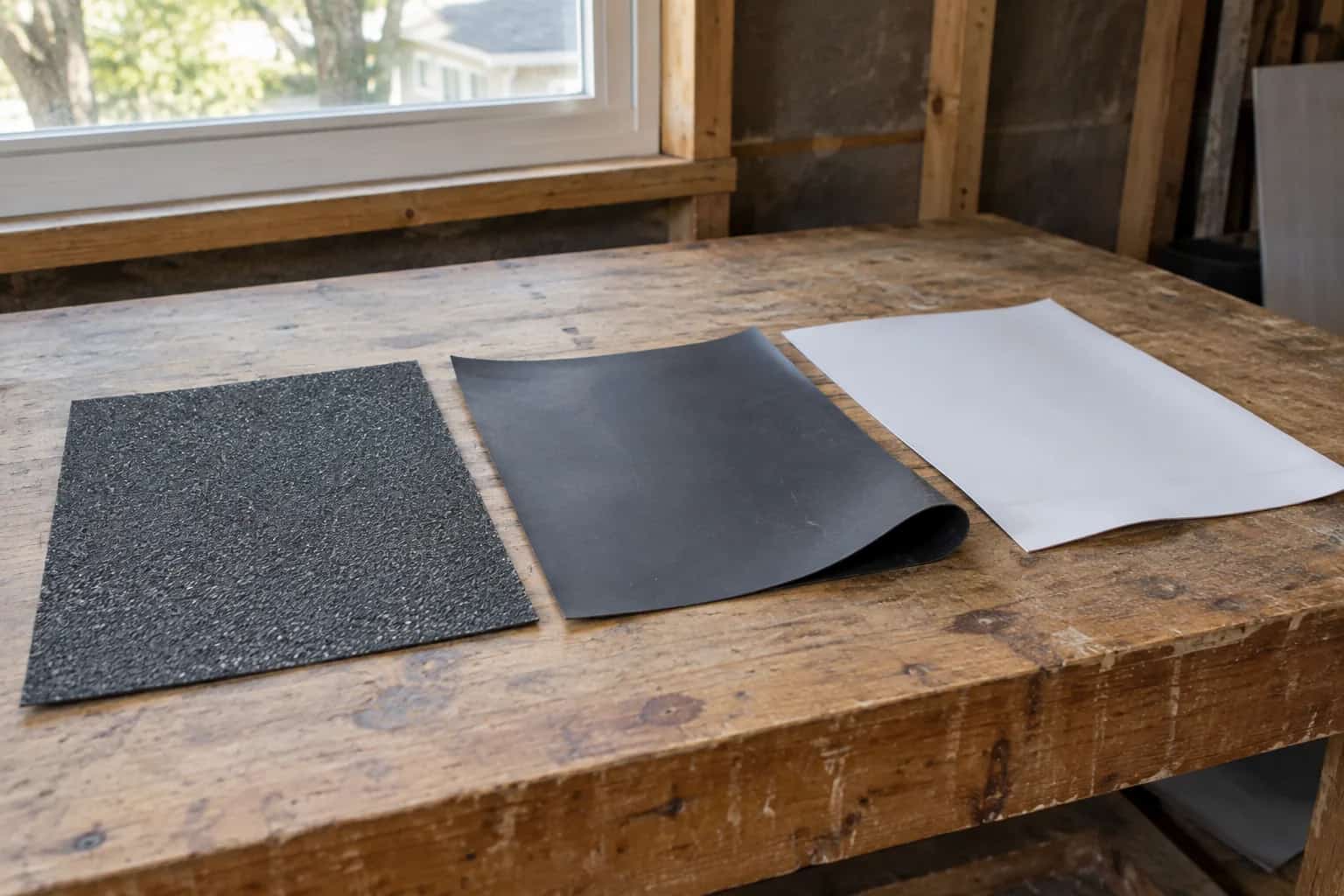
Pat bends two membrane samples over the table edge. The thicker one feels reassuring. Dave looks at the quote and notices that its allowance for the wall flashing has disappeared. "Lovely sample," he says. "Where did the wall go?"
A thicker membrane can be a worthwhile upgrade, but compare it within a complete, suitable roof system. A 60-mil versus 80-mil decision should not quietly become a choice between a well-detailed roof and a thicker sheet with less work underneath it. A mil is one thousandth of an inch; it is not a millimetre.
Compare Like With Like First
Start with the manufacturer, membrane chemistry, product family and reinforcement. Two samples with different formulations or construction cannot be ranked fairly from total thickness alone. Even their flexibility in your hand is only one observation, not a service-life test.
Carlisle's PVC discussion distinguishes overall thickness from material above the reinforcing scrim. It also explains why reinforcement position and the formulation of the weathering layer matter. That is a useful warning against treating the outside measurement as the entire specification. It does not establish a universal winner across PVC, TPO and EPDM.
Have the contractor identify what the proposed thicker option changes: the product, warranty eligibility, resistance relevant to the application, or some combination. Ask for the manufacturer's supporting document. "Commercial grade" tells you much less than an exact product name.
Read Beyond the Total Thickness
Compare equivalent products before assigning value to a larger number.
Named membrane
Identify chemistry, product line and reinforcement.
Thickness information
Compare total thickness and the manufacturer's relevant layer data.
Supporting assembly
Check cover board, insulation and attachment.
Finished details
Specify seams, drains, edges and service access.
The Roof Under the Sample Still Matters
A membrane rests on an assembly. If the surface below it is unsuitable, rough or inadequately supported, a premium sheet does not make that concern vanish. The proposal should identify the deck preparation, insulation, cover board where specified and attachment.
Our cover-board guide explains that separate layer. Carlisle's cover-board discussion describes how a suitable board can contribute to a stronger supporting surface and resistance to damage. Those are system choices, not reasons to install any rigid board beneath any membrane.
Pat lays the samples beside the full assembly sketch. Now the owner can see where the quoted money goes. This is less dramatic than stretching a scrap between two hands, but it has the advantage of resembling the roof being purchased.
Think About Who Will Use the Roof
Tell the contractor if service people must cross it to reach equipment, windows or another roof. Ask how access will be handled and whether the system calls for protected walk routes. A thickness upgrade should not be sold as permission to drag tools across the surface.
Also describe future plans. A proposed deck, equipment stand or solar installation changes the discussion. Sort out supports and access before the roof is installed rather than assuming a thicker membrane can accommodate whatever arrives later.
Keep the distinction between occasional maintenance access and an occupied terrace. A roof covering selected for one does not automatically create the other.
Compare the Installed Scope
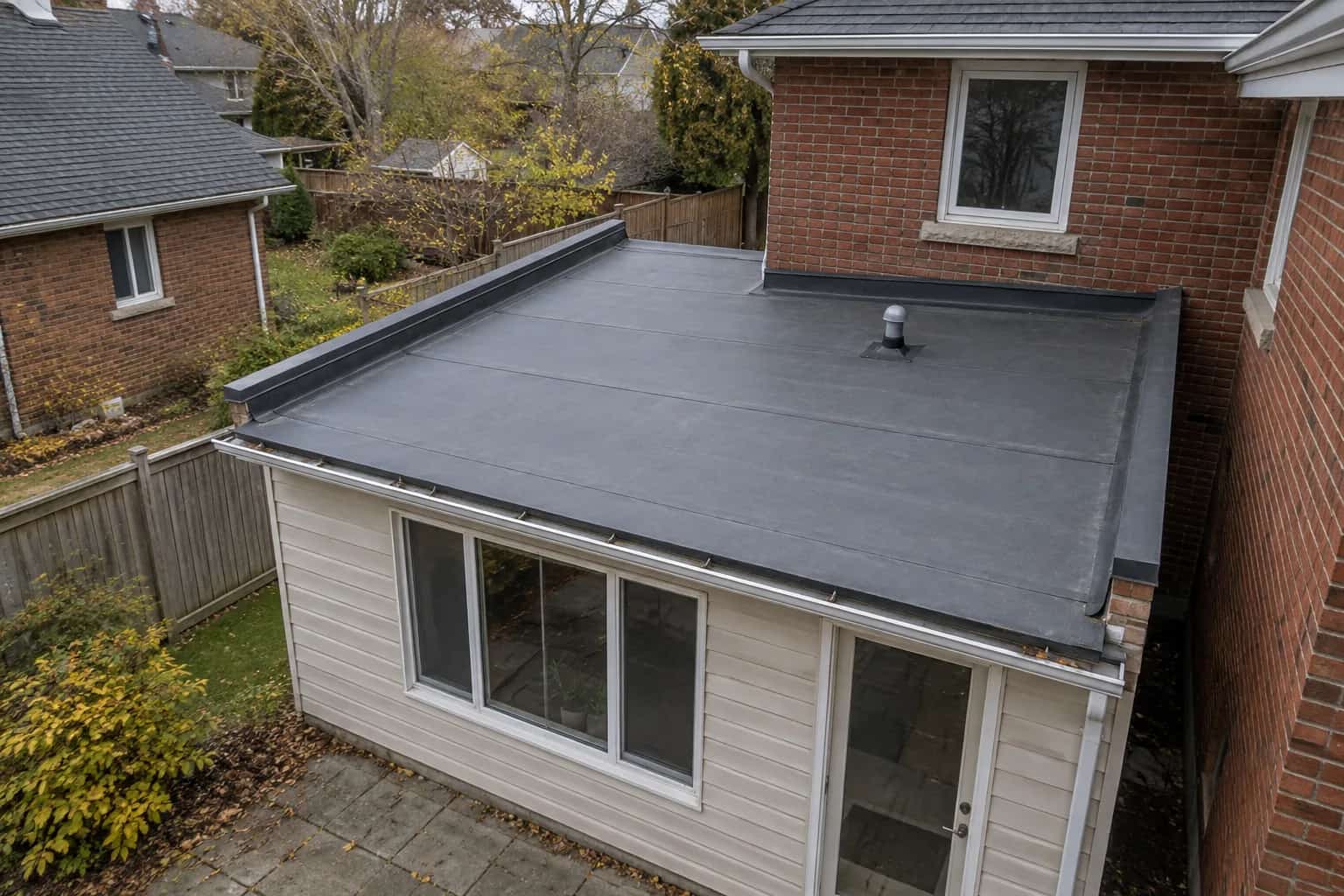
Request two prices with the same preparation, insulation, drainage work, perimeter details and penetrations. Show the membrane upgrade separately. Then ask whether the warranty actually changes, which conditions apply and who supplies the completed warranty document.
Do not infer a service-life increase by dividing 80 by 60. Thickness arithmetic is not weathering evidence. Nor does a longer warranty title tell you whether labour, details or workmanship are included.
Dave restores the missing wall flashing to the comparison before anyone picks a sample. The thicker option may still win. It should win because it adds something useful to the agreed roof, rather than because the rest of the specification slipped out while everyone was admiring the material.
Keep the Final Product Identifiable
Save the selected product sheet, thickness, reinforcement description and installation record with the quote. Photograph labels before the empty packaging leaves. That makes future repairs and warranty enquiries easier than describing a roof as "the thick white one."
The useful choice is a named membrane on a suitable assembly, installed with complete details. Once those points match, the thickness premium becomes a decision you can actually evaluate.