
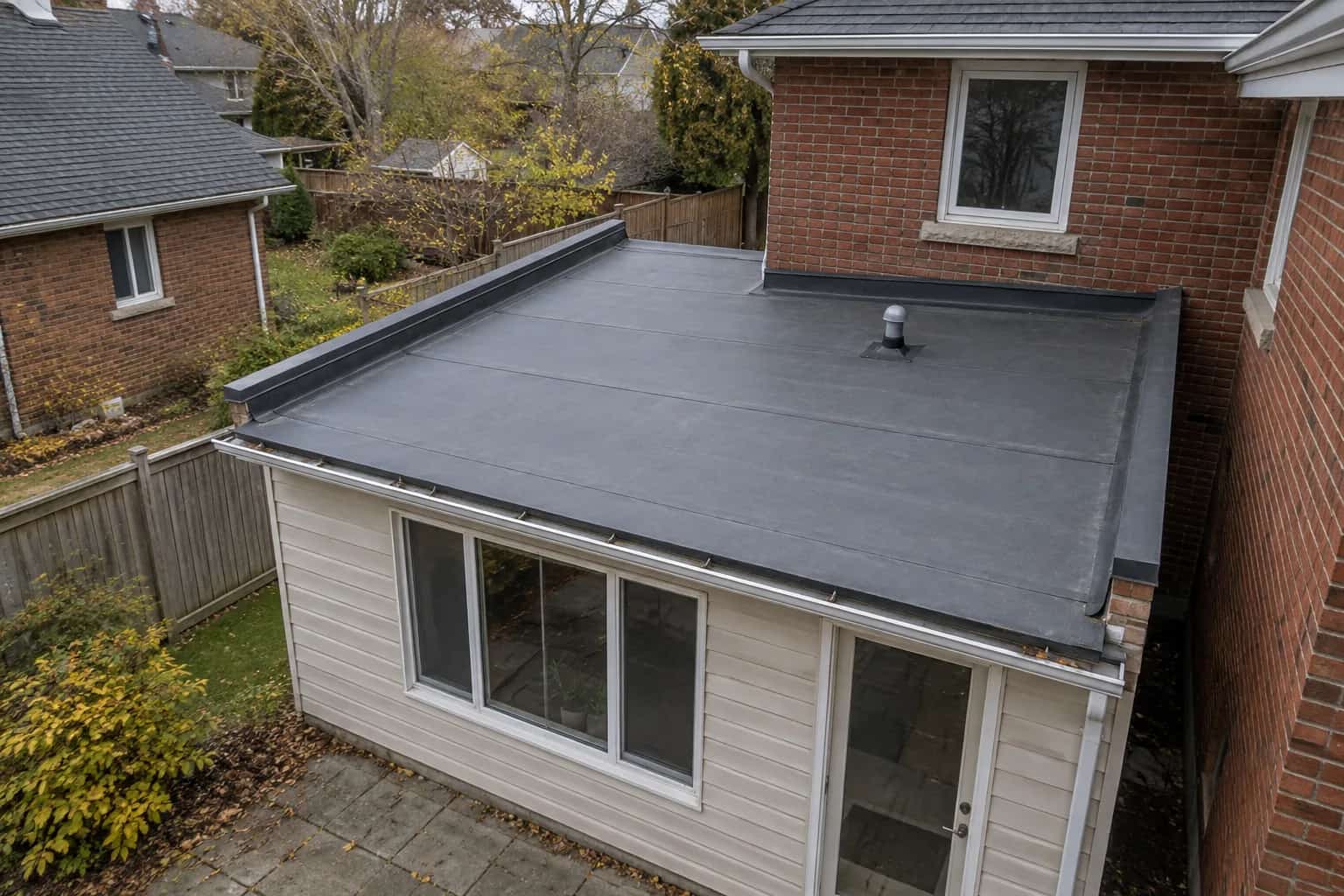
The owner likes the word "adhered" because it sounds continuous. Dave likes a drawing because it reveals what is actually continuous. He asks where the insulation attaches. The answer is not on the quote. "We've chosen the last layer," he says, "and misplaced the first three."
Fully adhered and mechanically attached membranes can both belong to suitable roof systems. The choice depends on the deck, supporting layers, product requirements and project design. The label alone does not tell you how securely the entire roof is connected to the building.
What Do the Names Mean?
An adhered membrane uses the specified adhesive arrangement to bond it to an approved substrate. A mechanically attached system secures the membrane using its specified fasteners and associated components. Exact layouts vary by product; the quote should name the system rather than rely on a generic description.
Carlisle's system resources separate adhered, mechanically attached and other assemblies across its product families. That is a useful starting point: attachment is part of a documented system, not an interchangeable finishing preference.
An adhered top sheet can sit above mechanically secured supporting layers. Ask how every layer is restrained. Otherwise, two contractors may be describing different things while apparently disagreeing about the same roof.
If loose-laid EPDM and stone are proposed instead, assess the ballast load, restraint and service access as a separate roof system.
Choose the Assembly Before the Attachment Label
The membrane must connect to a suitable supporting system.
Inspect the deck
Identify its material, condition and suitability.
Choose the complete system
Include insulation, board, membrane and attachment.
Confirm project design
Resolve wind resistance and perimeter details.
Plan installation
Meet product conditions and protect unfinished work.
Start With the Existing Deck
Identify the deck material and condition, including what must be repaired after the old roof is removed. The selected assembly must have a suitable attachment route to the structure. Unresolved deck concerns should not disappear inside a line item for membrane replacement.
Where verification or testing is needed, ask who specifies and records it. A homeowner should not have to choose a fastening pattern or pronounce a surface ready for adhesive. You do need to know what the contractor's price assumes and how unexpected conditions will be handled.
Mike marks the deck on Dave's sketch. Now there is somewhere for the other layers to go. It is an embarrassingly effective improvement to a quote that previously began halfway through the roof.
Adhesive Needs Its Own Installation Plan
Ask which adhesive is proposed, what substrates it permits and what installation conditions it requires. Product instructions govern preparation, application and weather limits. "Fully adhered" does not mean any glue applied on any dry-looking afternoon.
Discuss nearby windows, air intakes and occupied rooms with the contractor so the selected products and work sequence can be planned appropriately. Do not assume every adhesive has the same handling requirements.
A delay caused by unsuitable conditions should have a protection plan. It should not trigger an undocumented change of adhesive simply to keep the original schedule.
Fasteners Need More Than a Box Count
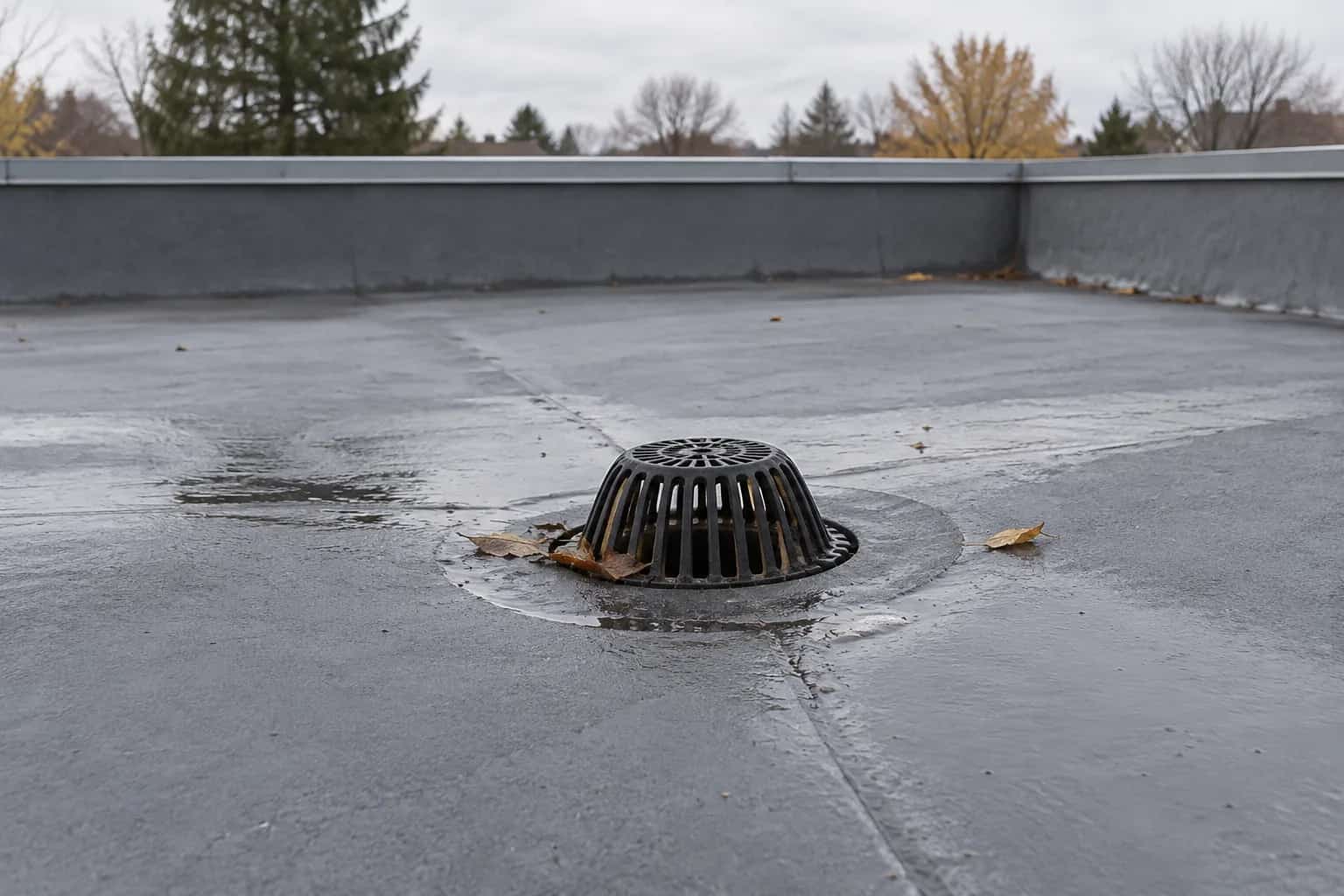
For a mechanically attached assembly, ask how the fasteners, plates, substrate and layout are selected. Wind resistance depends on the complete arrangement, including roof edges and corners. The number of visible fasteners in a sample does not establish suitability for your addition.
Have the contractor identify the applicable project requirements and system documentation for Ontario. A manufacturer's overseas example or generic product brochure is not a site-specific design.
Pat prefers this conversation before delivery. Discovering that a substitution needs a different supporting assembly is much easier while the roof is still represented by paper.
Compare the Details That Both Options Need
Either choice still needs proper seams, wall flashings, drains, penetrations and perimeter work. Ask whether both prices include the same preparation and insulation. Review cover-board selection separately where it changes between offers.
Also ask about future access and repair. Who services the roof, what records will they receive and what warranty applies to the selected installation? Avoid deciding from a claim that one attachment method is always quieter, stronger or longer-lived without evidence for the exact assembly.
Dave's finished sketch shows a continuous explanation from the deck to the membrane, even though the layers use different means of attachment. That is the outcome worth asking for: a roof whose connections have all been considered, rather than one reassuring word at the top of a quote.