
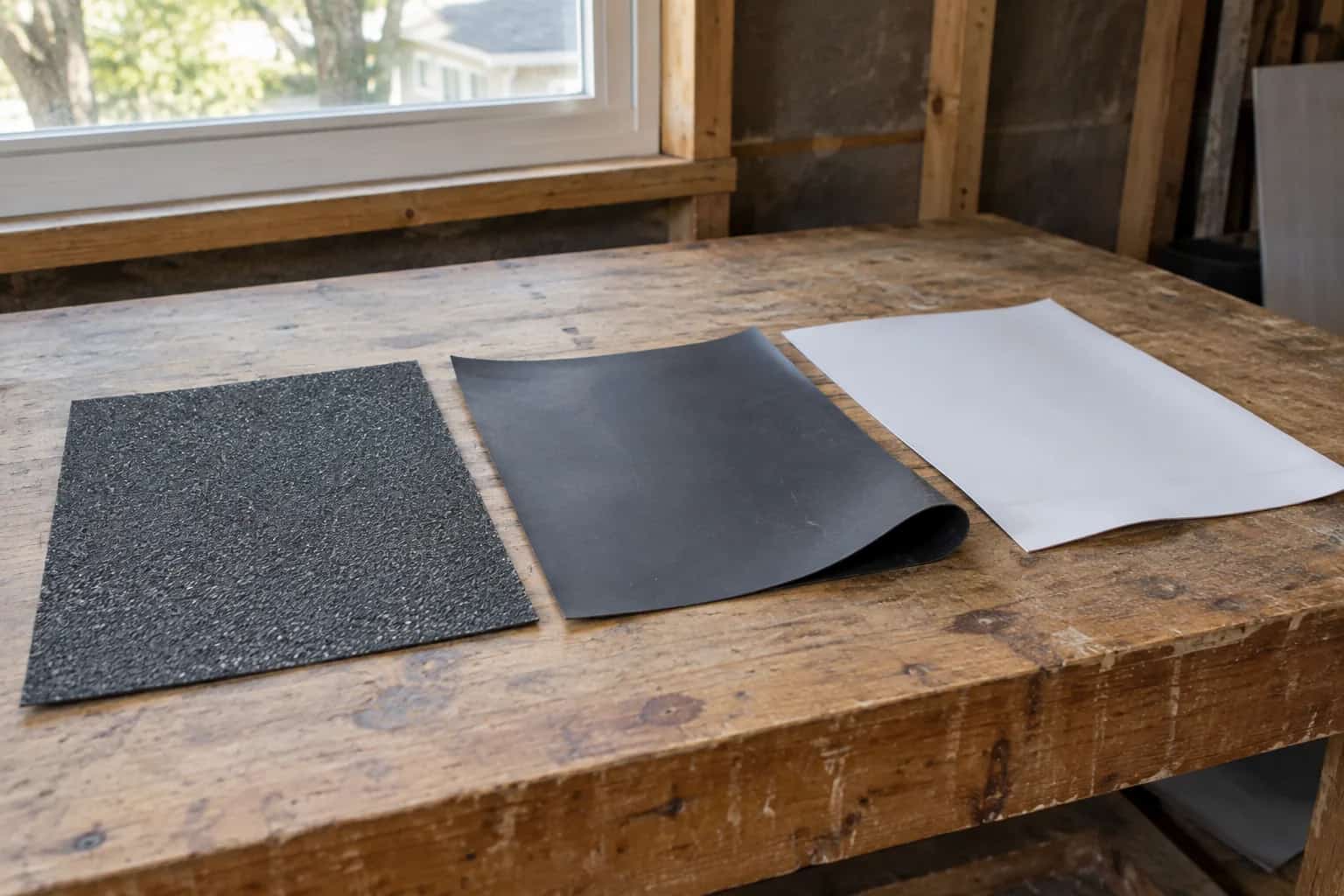
Two white roofs can look identical from an upstairs window and require completely different repair products. TPO and PVC are both thermoplastic membrane families with heat-welded seams, but their chemistry, product options and exposure strengths differ.
For an ordinary residential addition, both deserve consideration as complete systems. Where grease or other unusual discharge reaches the roof, a suitable PVC product may have a specific advantage worth paying for. The useful comparison starts with what will land on this roof and what will support the membrane, not which acronym sounds more durable.
Anne has two quotes for a white roof and assumes the letters at the top describe much the same thing. Dave asks what discharges onto the addition. That question is more useful than a contest between acronyms: ordinary rain and an unusual chemical exposure create different buying decisions.
Where PVC Can Offer a Meaningful Advantage
Carlisle describes its Sure-Flex KEE HP PVC as suitable for demanding exposure including grease and air-conditioning coolants. Its KEE resin modifier is intended to provide flexibility and improve weathering performance.
That is a concrete reason to investigate the product for a roof exposed to kitchen exhaust or equipment discharge. It is not a reason to declare every PVC sheet immune to every chemical. The actual substance, concentration and contact conditions still need a compatibility check.
For Anne's ordinary rear addition, Mike puts drainage, supporting board and competent installation ahead of a specialist exposure capability she may never need. If the actual discharge creates a compatibility question, it moves back up the list. The choice needs a reason attached to this roof.
TPO Has Real Product Choices Too
IKO's InnoviTPO range includes 45-, 60- and 80-mil membranes in white, grey and tan. A mil is one thousandth of an inch, not a millimetre: 60 mil is about 1.5 mm. Colour and thickness are therefore choices within the family, not a distinction between TPO and PVC.
The InnoviTPO 60-mil product information permits mechanically attached or fully adhered arrangements according to the specification. That means two quotes headed "60-mil TPO" can still describe different attachment systems.
White TPO's reflectance is a product characteristic, but it does not by itself establish your annual energy saving in Ontario. Insulation, the rest of the building and heating and cooling use affect that outcome. Do not let a cool-roof headline replace the assembly comparison.
Within the chosen membrane family, compare 60-mil and 80-mil proposals as complete assemblies, not just two thickness labels.
Similar Appearance, Separate Specifications
Resolve these three items before comparing price.
Membrane identity
Name the manufacturer, product, reinforcement and thickness.
Accessory identity
Match cleaners, patches, flashings and walkway products to that membrane.
Assembly identity
Specify the insulation, cover board, attachment and drainage details.
The Old Roof Can Change the Choice
A recover proposal needs to identify what remains underneath and how the new membrane is separated or bonded to it. This is where product variants matter.
For example, Carlisle's Sure-Flex FRS PVC FleeceBACK uses fleece that the manufacturer identifies as a separating layer for rough or asphalt substrates. That is a feature of this specific assembly, not permission to lay any smooth PVC sheet over an unidentified old roof.
Fleece-backed thickness also needs careful reading. Carlisle's PVC FleeceBACK specification distinguishes membrane thickness from total sheet thickness including fleece. Comparing that total directly with an unfleeced membrane number gives a misleading impression of how much waterproofing material you are buying.
The thickness figures look straightforward until Pat points to a fleece-backed specification. The total sheet measurement includes a layer doing a different job. Anne puts the two numbers in separate columns. Comparing them as though they measured the same thing had made one bid look simpler than it was.
Both Depend on the Seams and Awkward Corners
Heat welding is not a guarantee by itself. Surface preparation, conditions and equipment affect the join. The Canadian InnoviTPO manual requires test welds and seam checks; its instructions are specific to that system.
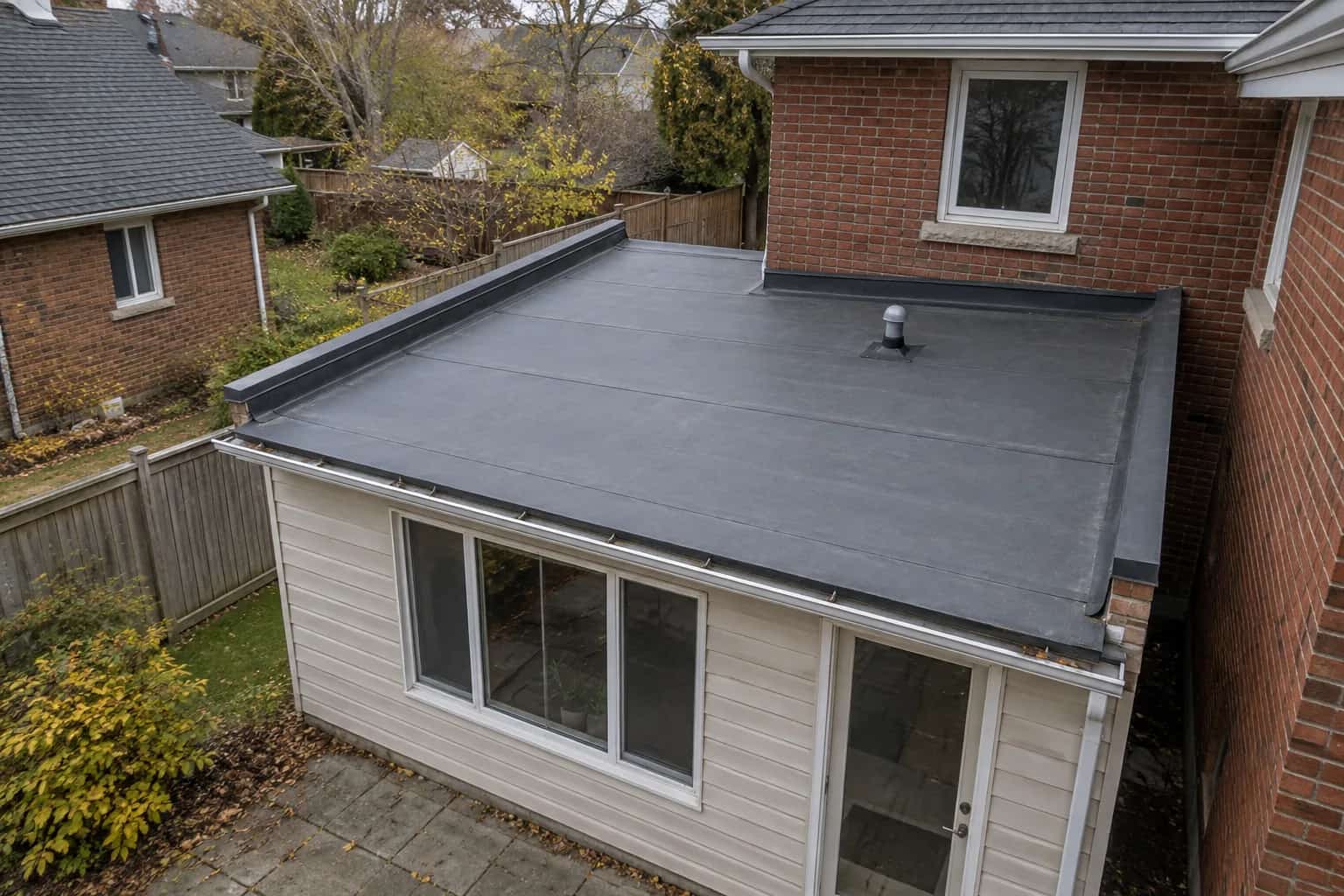
On a small roof, a drain, wall turn and pipe can occupy a large share of the labour. Suitable factory accessories and space to work around them matter. A thicker field sheet cannot compensate for a poor corner. Our open-seam guide explains the consequence of a failed connection.
A Useful Way to Choose
Compare both bids with the same deck repairs, insulation, cover board, drainage and detail scope. Then weigh the differences that remain:
- Unusual chemical or grease exposure: investigate a PVC product with documented suitability for that exposure.
- An ordinary residential roof: compare installed system quality, local service capability and actual price without assuming a chemical-resistance premium is necessary.
- A proposed recover: examine the specific backing, separator and adhesion arrangement, and first establish that retained material is suitable.
Keep the exact product identity for future repairs. Years later, a white patch chosen by colour can be the wrong chemistry. The roof may look simple from the window; the specification should make its important differences clear.
Mike finishes at the wall turn and drain, where a small roof can demand plenty of careful work. "We should spend as much attention on that corner as on the big white rectangle." Anne keeps the exact product names with the final scope. Future repairs will need chemistry and system details, not a paint match.