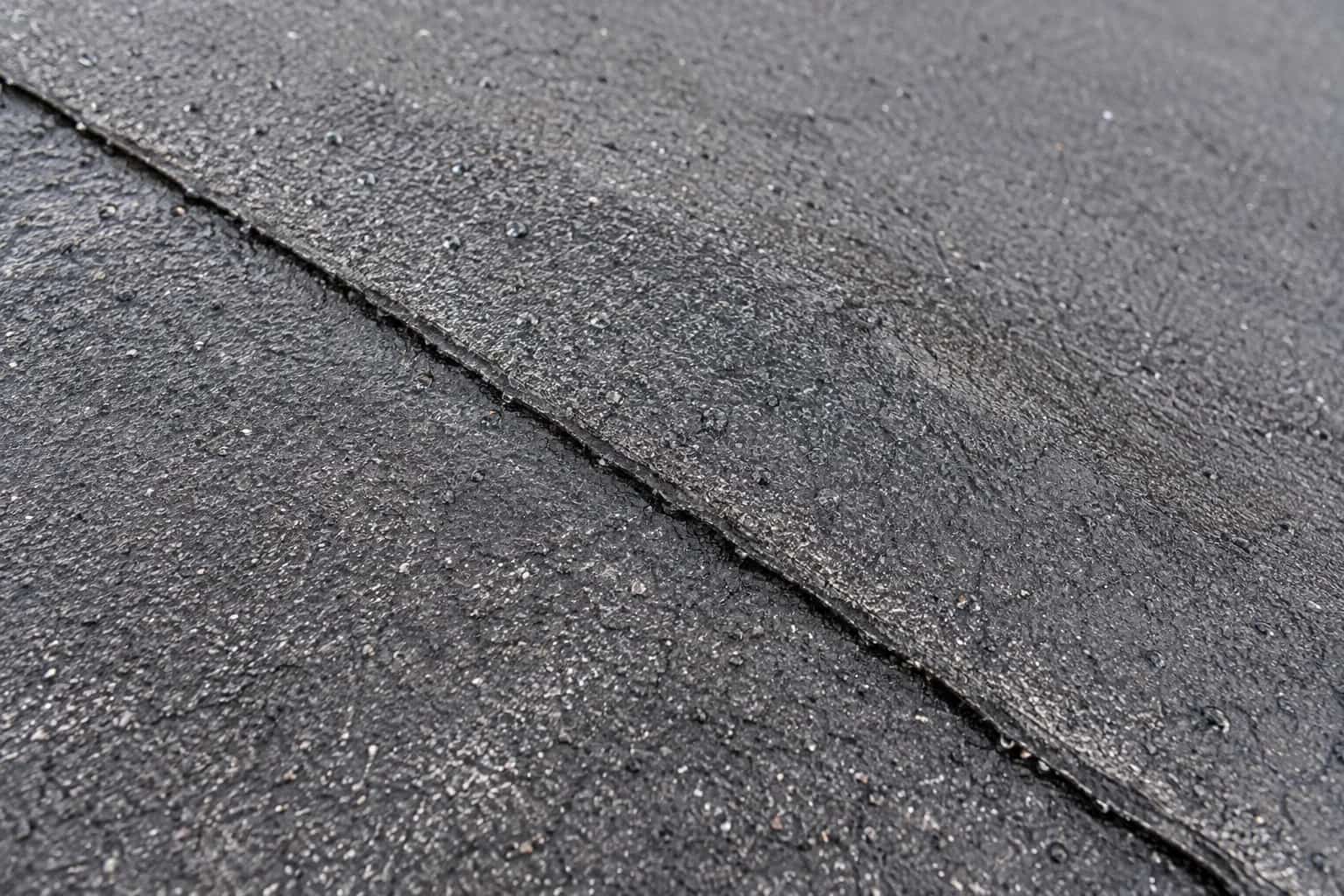
A flat-roof seam has lifted just enough to invite a fingernail. Mike keeps his hands off it. Pulling the edge farther open would make a clearer photograph and a worse roof. The useful question is what failed at the joint and whether the surrounding assembly can support a lasting repair.
An open seam is a potential water route even when the material on either side looks healthy. Arrange prompt assessment rather than a cosmetic treatment of the roof surface.
The Join Matters as Much as the Sheet
Low-slope roofs are assembled from sheets, flashings and details. Their connections have to remain watertight through temperature changes and normal building movement. A sound sheet beside an unsuccessful join is still an unsuccessful roof at that location.
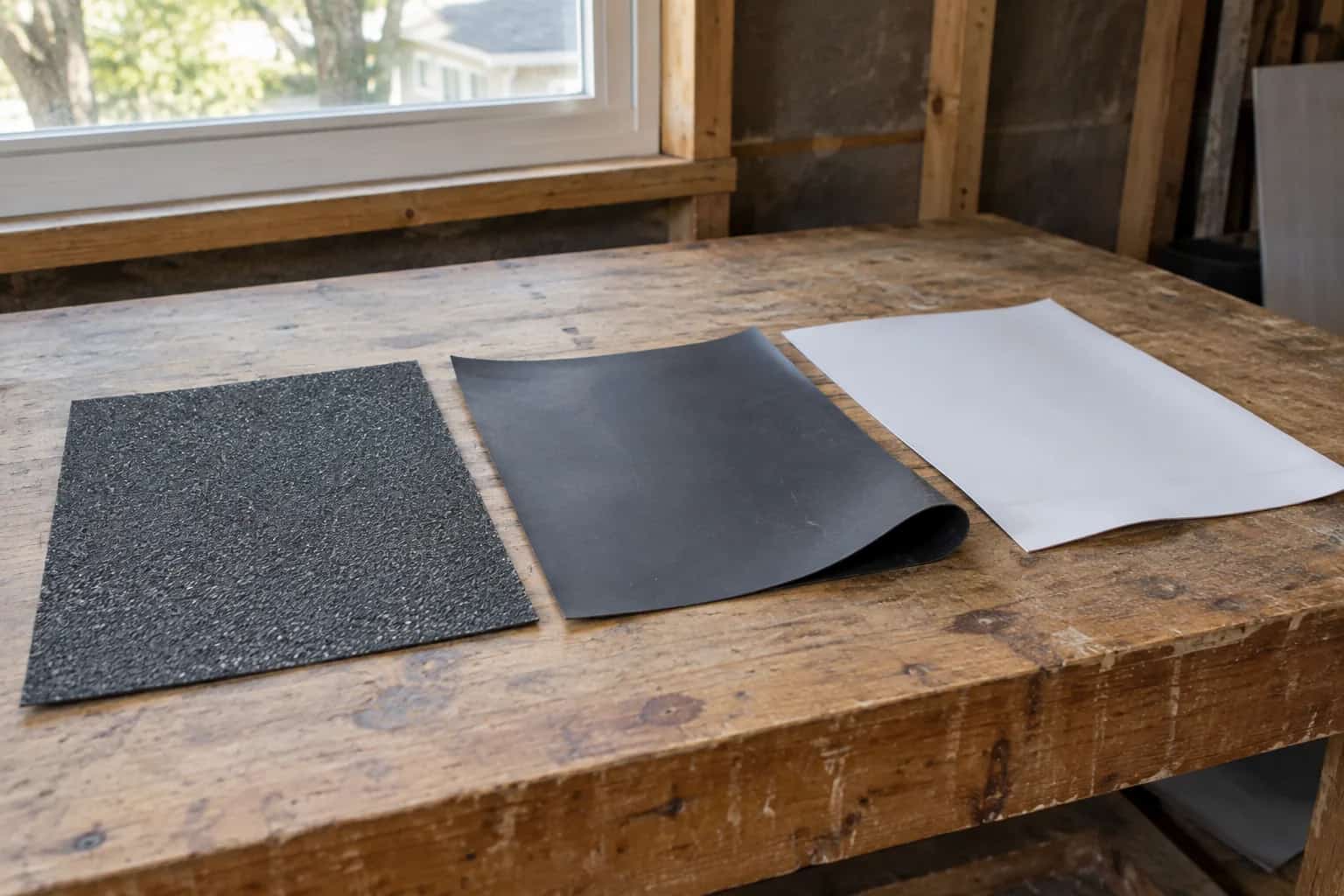
Different products make that join differently. Modified bitumen systems use their approved bituminous application methods. EPDM seams commonly rely on compatible preparation and seam products. TPO and PVC are thermoplastic systems with heat-welded seams. Their similar appearance does not make their cleaners, patches or joining methods interchangeable.
The Canadian InnoviTPO installation manual is one example of the detailed requirements attached to a particular membrane. It is not a repair specification for an unidentified white roof.
Dave asks for the membrane identity before discussing repair products. Black roofing material is not one interchangeable substance. The fact that two containers both promise waterproofing is not a compatibility specification.
Three Seams, Different Connections
These systems cannot share an improvised universal seam treatment.
Modified bitumen
The approved system joins reinforced asphalt-based sheets using its specified application method.
EPDM
Seams commonly use compatible tape and preparation products specified for that rubber system.
TPO or PVC
Thermoplastic seams use heat-welded connections with membrane-specific preparation and checks.
One Failed Lap or the Same Fault Repeated?
Mike would investigate a short damaged seam beside recent equipment work differently from several parallel seams pulling apart. The first may be local damage. The second may indicate a repeated installation or material condition that one patch will not address.
Weathering, dirt and earlier sealants also affect preparation. The attractive new patch has to bond or weld to something suitable, not simply cover the visible gap. This is where membrane identity matters: the right treatment for one roof can be the wrong material for another.
Water beneath a sheet may travel before appearing indoors. A dry ceiling does not settle whether insulation is dry, and a distant stain does not rule the seam out.
Pat draws a small patch around the visible seam, then leaves a question mark underneath. If insulation below is wet, the work may extend beyond the line you can see. That is why the quotation needs a discovery process as well as a patch size.
The Repair Should Reach Sound Material
A proper local repair has a defined failed area, a compatible connection to sound surrounding membrane and a check of the finished join. Wet insulation or damaged backing may widen the work. That extra scope should follow an observation, not a blanket assumption.
Temporary protection before more rain can be sensible, provided permanent work has a plan. Our SBS and EPDM comparison helps decode the system names when an old invoice says little more than "flat roof."
The finished seam matters more than the size of the patch. Keep monitoring the original indoor symptom through rain before treating a repainted ceiling as proof of success.