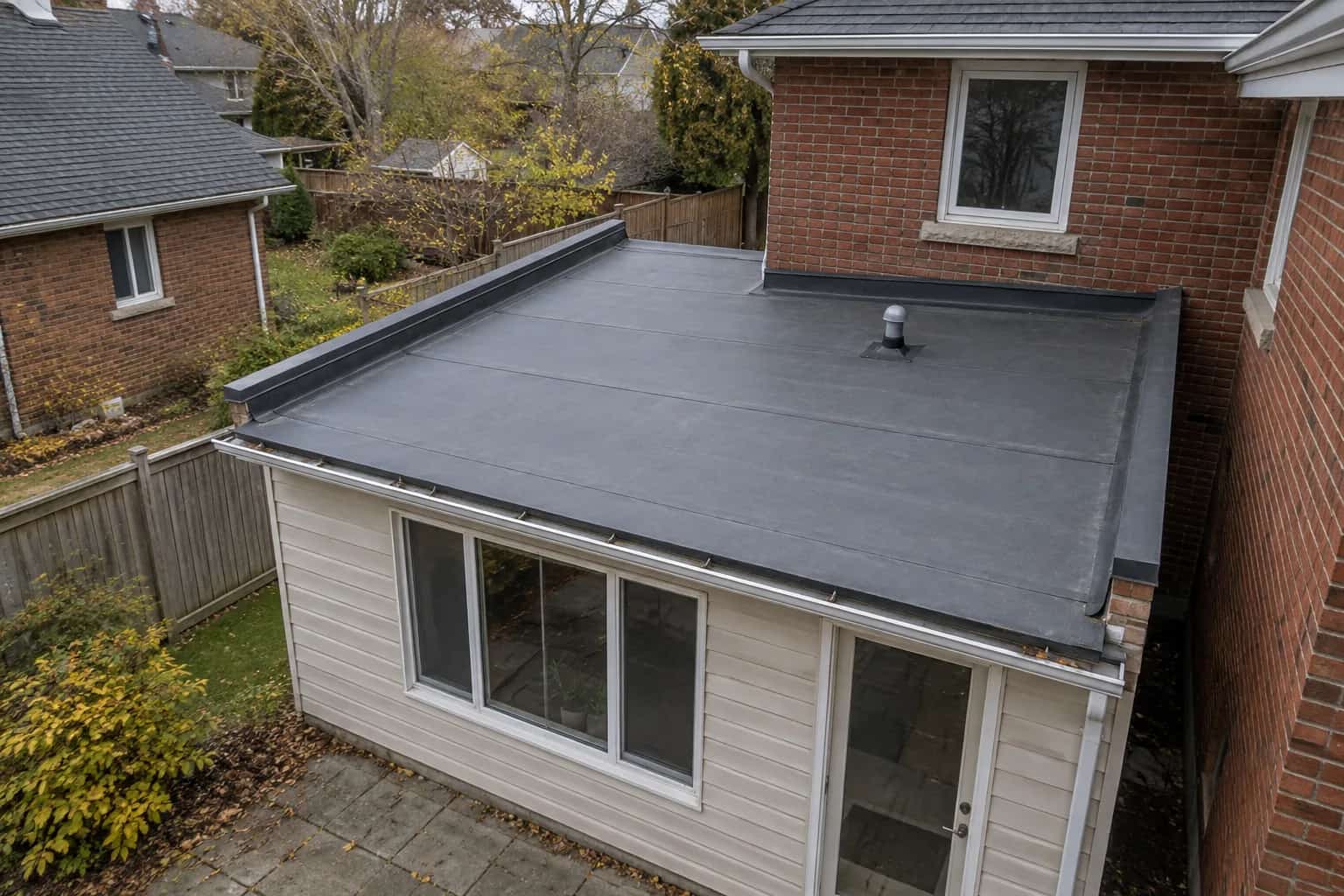
You notice a bubble in the flat roof from the upstairs window. By the next morning, someone has suggested pressing it down and someone else has suggested a new roof. Neither has identified the membrane yet.
Leave the raised area undisturbed and have the system, surface and seam condition assessed. An intact blister and a split beside a lap can need different responses. The shape does not choose the repair, and making a hole to see what is inside can create the leak you wanted to prevent.
What the Roofer Needs to Know
Find the original invoice, product name and any previous repair record. A description such as black rubber is not enough: several materials look dark from a window. The repair method must suit the actual membrane, its reinforcement and the layer beneath it.
Record whether the area was present at installation, appeared recently or has visibly changed. Note nearby work, including equipment servicing or a terrace alteration. A chair leg, tool or maintenance route may explain damage at a raised spot even if it did not cause the original separation.
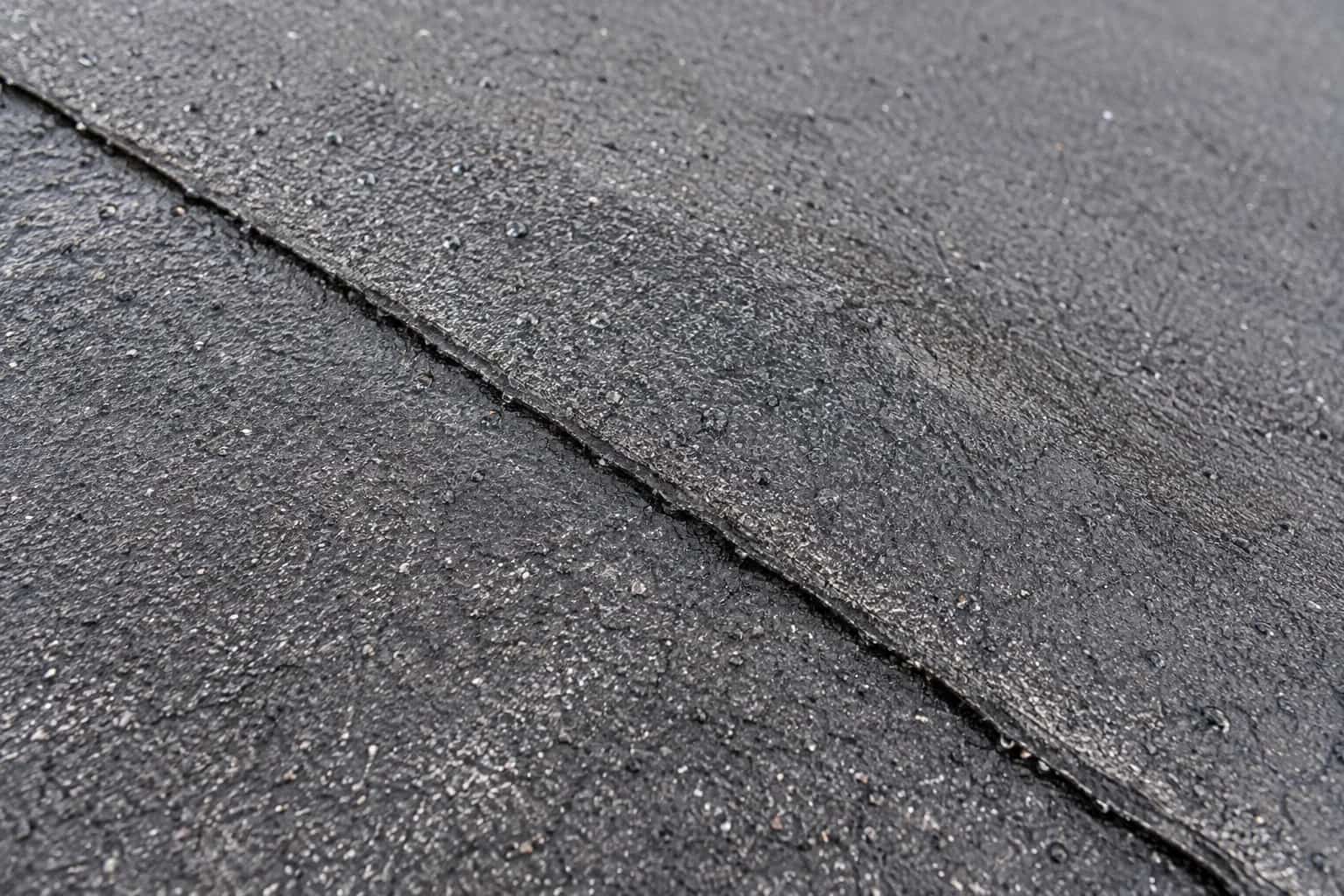
The inspector should assess whether the surface remains continuous, whether the raised area reaches a seam, and whether there are cracks or exposed reinforcement. Location matters. A bubble in a repeatedly walked service route faces a different exposure from one in an undisturbed corner.
Three Findings, Three Different Decisions
- Intact surface, away from vulnerable details: have the membrane identified and the condition assessed. A documented monitoring decision may be proportionate; appearance alone does not establish a leak.
- Opening, split or disturbed seam: arrange prompt roof assessment and compatible repair. Record any interior water separately; do not assume every wet area starts at this blister.
- Softness, repeated blisters or suspected wet layers: ask whether investigation must extend below the surface and beyond the visible patch. A surface coating cannot demonstrate that underlying layers are dry or bonded.
GAF's RUBEROID/GAFGLAS guarantee specimen distinguishes non-leaking blisters from specified exceptions, including seam-related integrity concerns. That is a warranty example, not a repair manual for an unidentified roof. Use the issued guarantee and manufacturer's assessment route for this system.
Pat puts the patio chair down, watches one leg rock and lifts it straight back off. The raised membrane is exactly where the chair wants to live. "Chair's easier to move," he says. That is the whole repair plan for the furniture, but not for the roof.
Dave checks whether the raised area reaches a seam and asks for last year's photograph. An unchanged outline is useful history. It is not permission to puncture the bubble. The crew can decide what needs investigation without creating a new opening just to settle the argument.
An Intact Rise Is Not a Split Seam
Surface continuity, seam location and the underlying assembly change the response.
Intact field area
Identify the membrane and obtain a reasoned monitoring or repair decision.
Split or seam opening
A discontinuity needs prompt assessment of the actual water route.
Wet layers suspected
Investigate the assembly beneath the surface, not just the raised outline.
Follow-up
Use the same location and a defined change trigger; do not puncture to test.
When Leaving It Alone Is a Deliberate Decision
Monitoring can be reasonable when a competent inspection finds an intact condition suitable to remain. It should have a baseline and meaningful triggers: a split, growth toward a seam, visible damage or a new leak. That is different from ignoring it until the ceiling answers.
Where repair is needed, the connection has to reach suitable material around the defect. Removing only the raised skin may be insufficient if separation or wetting extends farther.
A photograph from the same safe indoor viewpoint is useful between visits. Repeatedly walking to the bubble adds traffic to exactly the place already under discussion.
The patio chair can find another spot. The roof needs a recorded finding and a suitable response, with the raised area left alone until those are clear.