
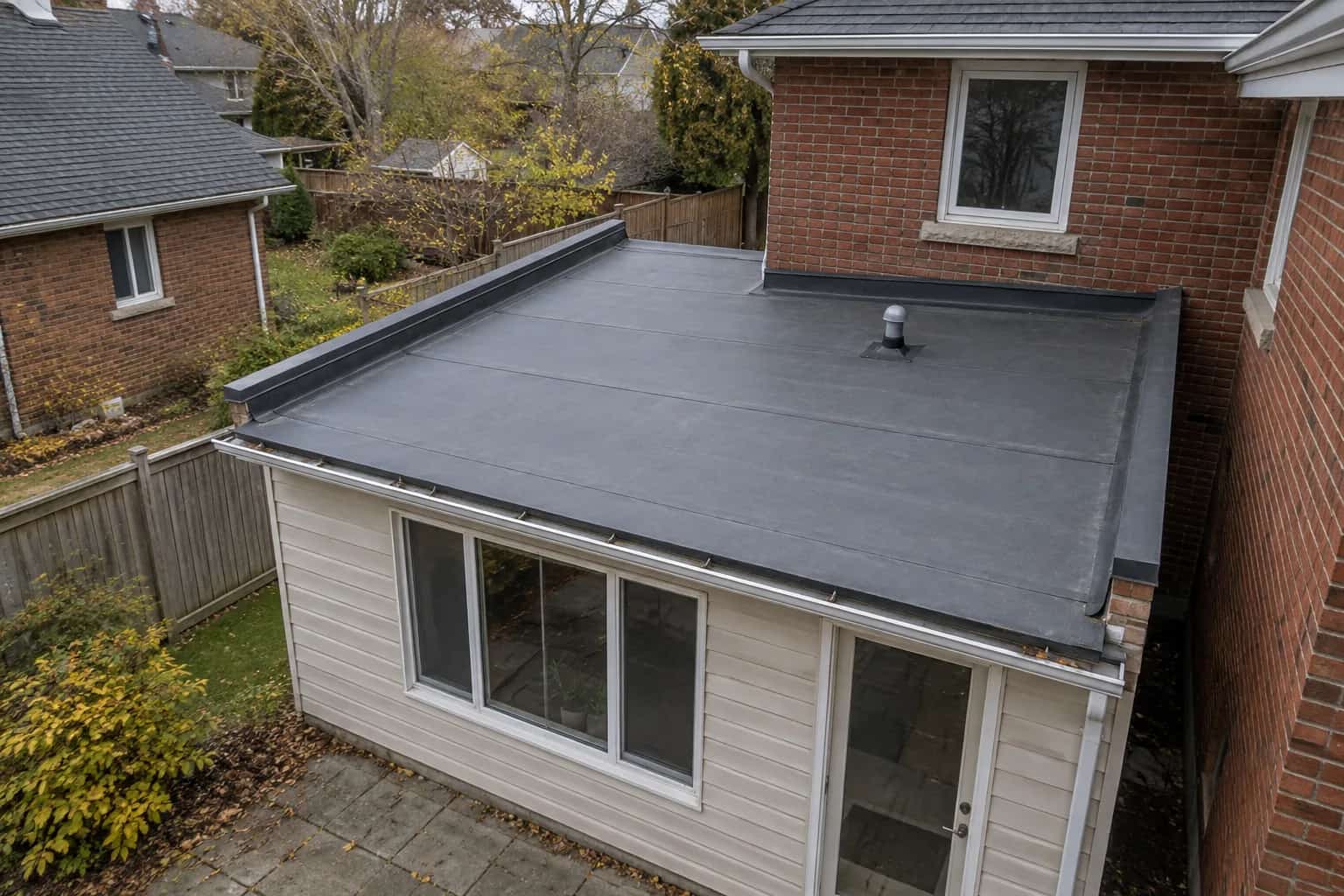
The thermal report has a bright patch large enough to make anyone nervous. Dave asks where it was checked physically. Mike asks which parts of the roof could not be surveyed. Before that image becomes a replacement quotation, it needs an explanation of what it actually establishes.
A thermal anomaly is a temperature pattern, not a photograph of water. A useful moisture survey interprets the pattern and confirms what it means for the particular assembly.
Different Methods See Different Things
Infrared equipment records surface temperature patterns. Under suitable conditions, those patterns can help identify areas with different thermal behaviour that may relate to retained moisture. The camera does not see water directly through every roof layer.
Other survey methods use different physical measurements. Their usefulness depends on the assembly, surface, depth and site conditions. Metal, ballast, multiple layers and varying insulation can complicate interpretation. The survey provider should explain why the selected method is appropriate for this roof.
GAF's coating manual describes several moisture-investigation methods and confirmation requirements within its restoration process. That is a practical example of why the method must serve a defined decision, rather than merely produce an impressive image.
Pat puts two labels on the sketch: suspect area and confirmed wet material. They may overlap, but they are not interchangeable. Keeping that distinction visible is how a useful survey avoids becoming an expensive colouring exercise. A physical check can establish whether an anomalous reading represents wet material; the report should show which findings are confirmed.
From Suspect Reading to Repair Boundary
Interpretation and confirmation turn an instrument image into a useful scope.
Choose the method
Match the survey technique to the roof assembly and conditions.
Map anomalies
Locate unusual readings without treating them as confirmed leaks.
Verify selected areas
Appropriate physical checks test the interpretation.
Define the work
Document confirmed wet material and limits of confidence.
A Suspect Area and a Wet Sample Are Different Evidence
Comparison locations matter too. If only the brightest area is sampled, there may be less evidence about what the surrounding readings mean. Inaccessible areas matter just as much: a terrace that could not be surveyed remains an exclusion, not a dry result.
Test openings belong to appropriate professionals and need compatible closure. A useful investigation leaves the roof protected rather than creating new penetrations for an owner to patch afterward.
Moisture Extent and Leak Source Are Different Questions
A survey can help locate wet material without identifying the exact entry point. Water may have moved laterally, and more than one source may exist. A wall, curb or drain detail could admit water well away from the largest mapped area.
That is why Dave may need detail inspection and interior observations next, rather than another scan. Keep rain timing, previous repairs and indoor stain photographs available to the assessor.
Our coating-or-replacement guide explains how moisture findings influence restoration decisions.
Dave follows the map toward the wall junction. The wettest-looking area does not automatically identify the entry point. The next useful step may be investigating a detail, not buying another scan of the same roof.
What the Survey Can Save You From
The repair scope should identify the intended removal area and how discoveries during opening will be handled. Some uncertainty is normal; an exact quantity without a defensible basis is not better information.
Keep the survey map with the removal and completion records. We want the next repair discussion to begin with what was established and replaced, rather than another person pointing at the brightest colour and starting again. Distinguish investigated-and-retained material from material actually replaced.