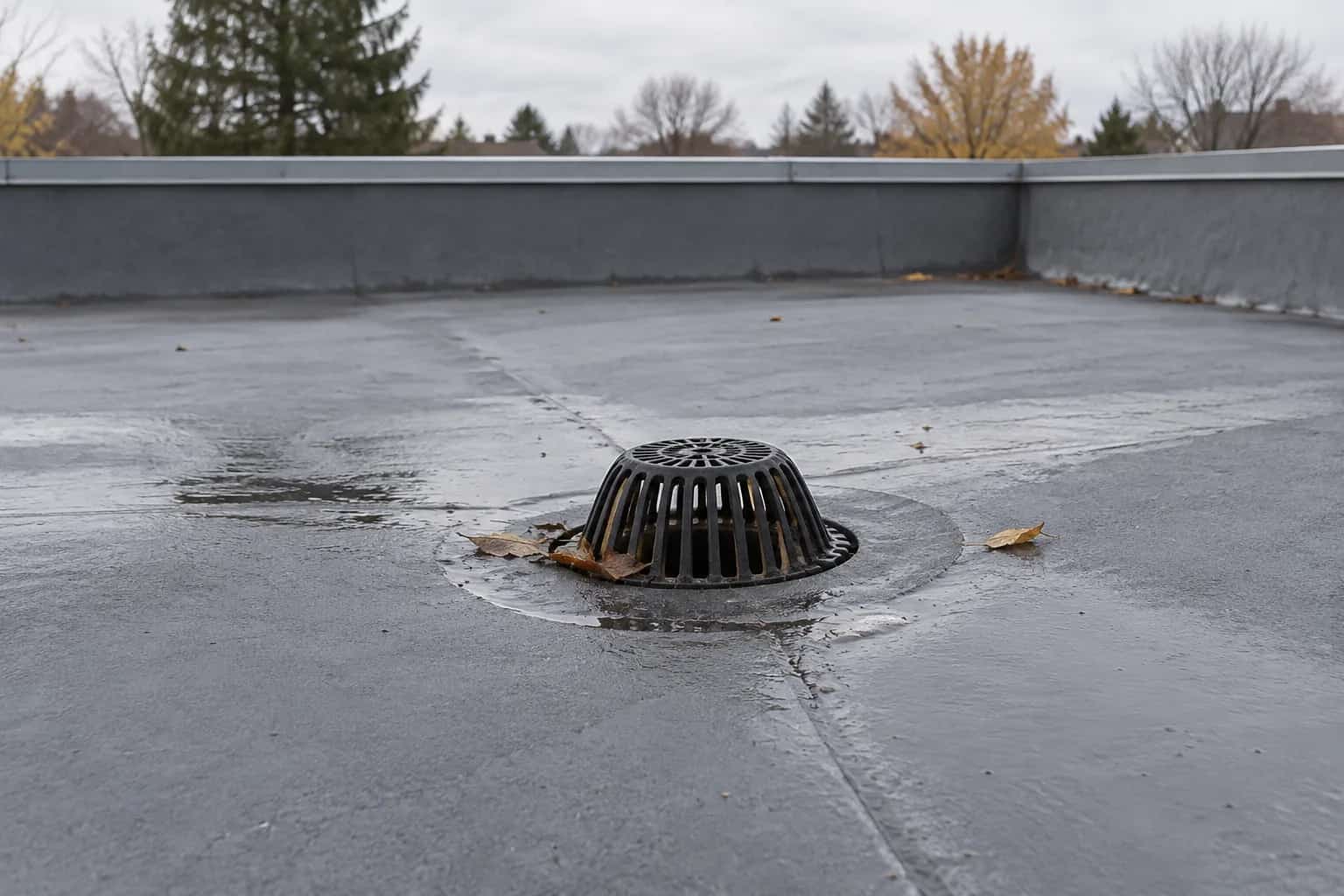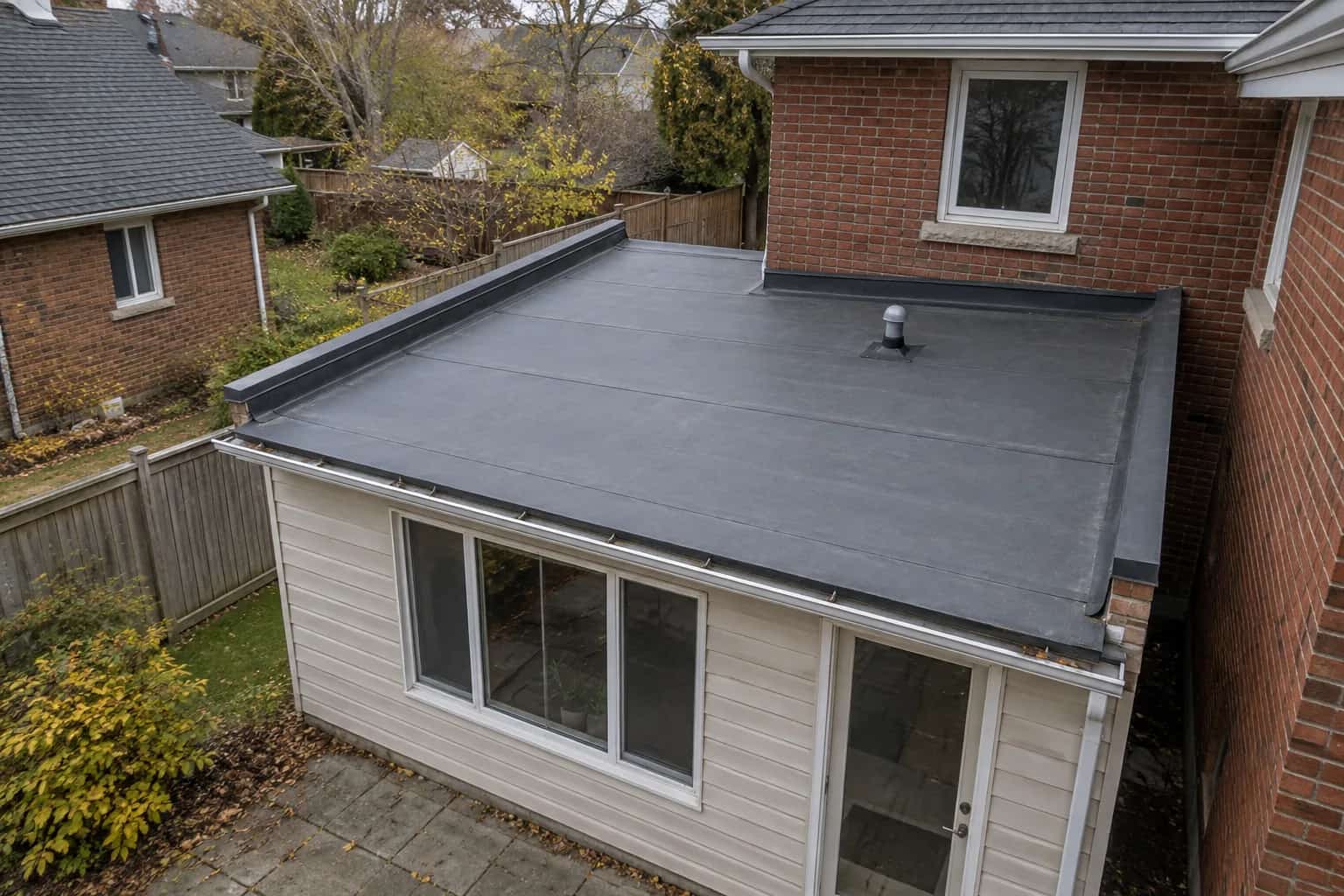
The rain has stopped, the driveway is drying and a reflection still sits on the extension roof. That puddle deserves attention, but it does not automatically mean replacement. A blocked outlet, a low spot and a newly sagging deck can all hold water for different reasons.
Watch from a safe window or ground position. The useful clue is how the water changes with time, not how dramatic one reflection looks. Do not walk onto a roof holding unusual water, especially if its shape has changed.
From the upstairs window, Lucy calls the puddle a lake. Dave asks when the rain stopped and whether she has an earlier photograph from the same window. The reflection makes the patch look deep; the picture cannot tell us its depth. We can still turn it into useful evidence without anyone walking out to investigate.
Take Two Useful Photographs
Start with the time rain stopped. Photograph the area from the same safe viewpoint later, making a note of any further shower. A wet roof photographed between two downpours has not had a fair drainage test.
Include fixed landmarks such as a parapet corner, skylight or drain. They help a roofer find the area and compare its outline. Describe what you can actually see: a broad reflection behind the skylight, a narrow strip along the wall, or a ring around the drain. Save depth measurement for the inspector. Reflections are poor rulers.
Leaves can stain a membrane after the water has gone. A dark patch is therefore not proof that the roof is still holding water. Equally, a small dry patch around a high drain can be useful evidence that water cannot reach the outlet.
The drain must meet the low point
A drain that sits above a local depression cannot empty it. The depression shown here remains wet even with an open drain because the inlet sits above the trapped water.
Schematic view. Shows relationships, not installation dimensions.
A Blockage and a Hollow Need Different Repairs
If Lucy's outlet were packed with leaves, clearing the restriction might restore a route out. But a dry ring around the inlet with water farther away raises a different possibility: the water may be below the inlet level. Cleaning cannot change that geometry.
A third possibility is a depression that was not there before. That puts deck and support condition into the investigation; adding material to disguise the hollow would not explain why it developed.
IKO's technical library supplies system-specific drainage details. The actual assembly matters when choosing the correction. A generic internet time limit cannot tell these three roofs apart.
Tapered insulation can create drainage falls during suitable reroofing work. It is a useful design tool after the cause is understood, not a replacement for clearing a pipe or assessing weakened framing.
Pat marks the outlet and low-looking area on Lucy's photograph for the assessor. The work order now asks why the water cannot drain, rather than simply asking someone to clear the outlet. That leaves room for the inspection to establish the right repair.
When Watching Becomes Waiting Too Long
Rising water while the main outlet stays quiet needs prompt attention. So does water approaching a door or low curb. New roof or ceiling sagging, movement or cracking requires urgent assessment and people kept clear of the affected area.
A stable shallow area without indoor leakage can usually be investigated as a planned condition assessment. The absence of a ceiling stain is good news, but does not prove every concealed layer is dry.
The decision should emerge from the cause: maintenance, a local level correction or a larger roof project. Otherwise a small puddle can become an expensive replacement without anyone establishing what prevented it draining.
Lucy keeps the same viewpoint for the next weather sequence. Mike wants the cause established before anybody sells her a new surface. A blockage, a high outlet and a changed roof shape may all leave water behind, but they do not belong on one interchangeable repair quote.