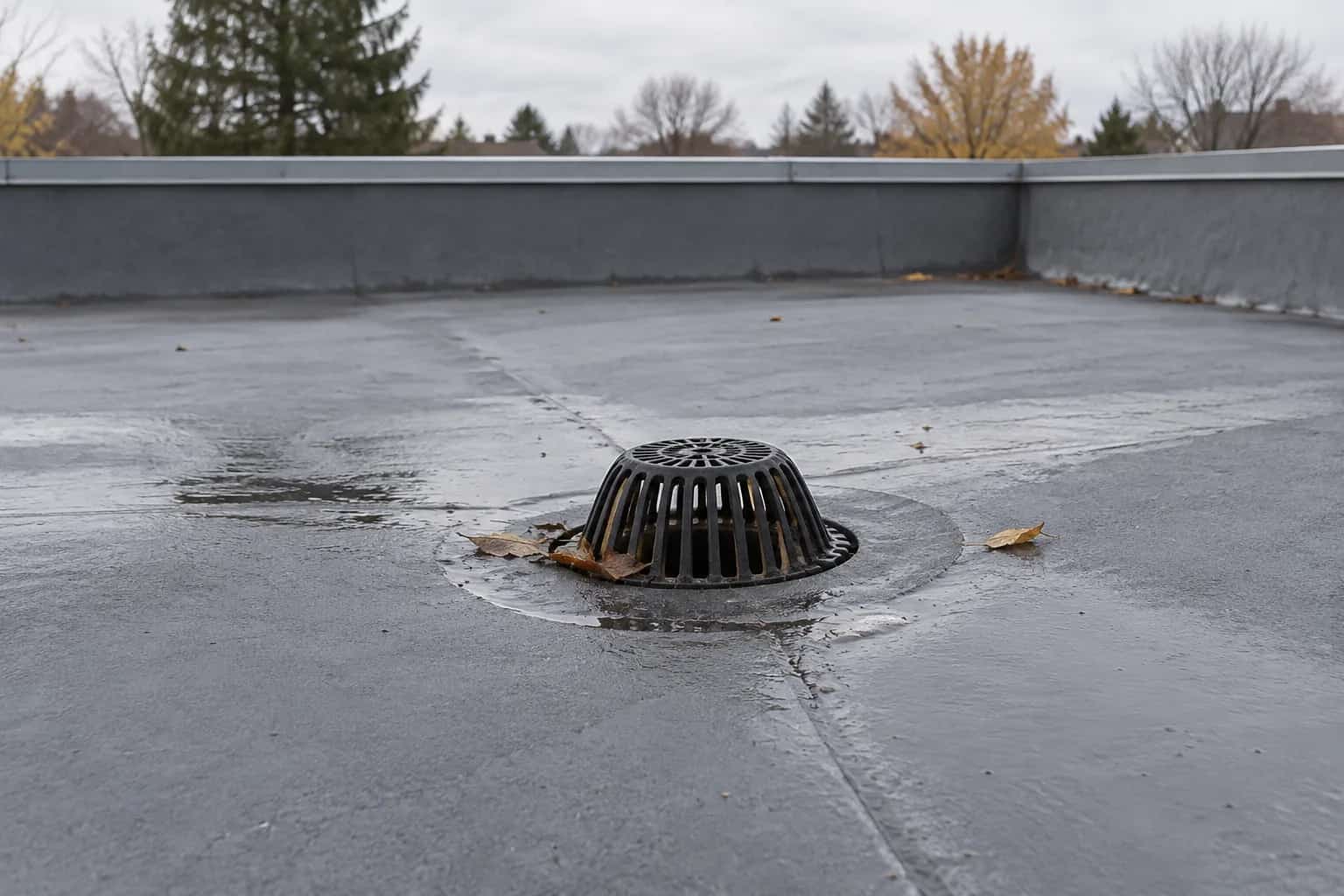
The owner reports a quiet outlet and a roof holding more water. "But the ceiling is dry." Mike is pleased about the ceiling and concerned about the water. An intact membrane can hold water while the load above it grows. Arrange prompt help; waiting for an indoor drip sets the wrong threshold.
Observe only from safe ground or an indoor window. Rising water, an unexpected overflow or visible roof movement calls for help, not a trip onto the roof to pull leaves out.
The Blockage May Be Out of Sight
A domed strainer catches larger debris before it enters the pipe. Leaves can clog that visible opening, but a clear strainer does not prove the connected piping is clear. The obstruction may be farther down, beyond anything a rooftop photograph can show.
Pat asks two different questions: is the waterproof drain connection sound, and can the connected pipe carry the water away? A roofer and a drainage contractor may both be needed. Pulling apart the drain to chase a pipe blockage without protecting its roofing connection can add a leak to the original problem. That is not the sort of two-for-one anyone wants.
IKO's system details treat the drain as part of the waterproofing assembly. It has two jobs: receive water and keep that water from escaping into the roof around it.
What to Tell the Person Taking the Call
Give the address, roof location and time the change was noticed. Explain whether rain is continuing, water appears to be rising, an overflow is active or an indoor leak has started. Mention any recent equipment work or falling branches.
Dave wants the wide view, not a heroic close-up from a window ledge. Show the affected roof section and, if present, damage indoors from a safe position. Timing and extent are usually more useful than seeing the individual leaf accused of causing it.
Visible sagging, unusual ceiling movement or cracking raises a structural concern. Keep people away from the affected area and seek urgent assistance. Do not enter the space beneath an obviously distressed roof to rescue belongings.
Primary drainage and overflow do different jobs
The low drain handles normal runoff. Water rising toward the higher overflow is a warning to investigate the primary route, rather than proof that normal drainage is working.
Schematic view. Shows relationships, not installation dimensions.
Clearing It Is the Start of Prevention
After clearance, Mike asks what came out and where it was found. Surface leaves suggest maintenance tied to the trees. A downstream obstruction needs attention to the pipe route. "Probably leaves" becomes less convincing on the third callback unless somebody can show where the blockage actually was.
Keep the strainer in place. Removing it because it catches debris merely allows larger material farther into the system. The outlet connection also needs to remain sound after the work.
Identify the overflow scupper, if there is one, and learn what its discharge means. A backup outlet is valuable; it is not evidence that a blocked main drain can wait through another storm.