
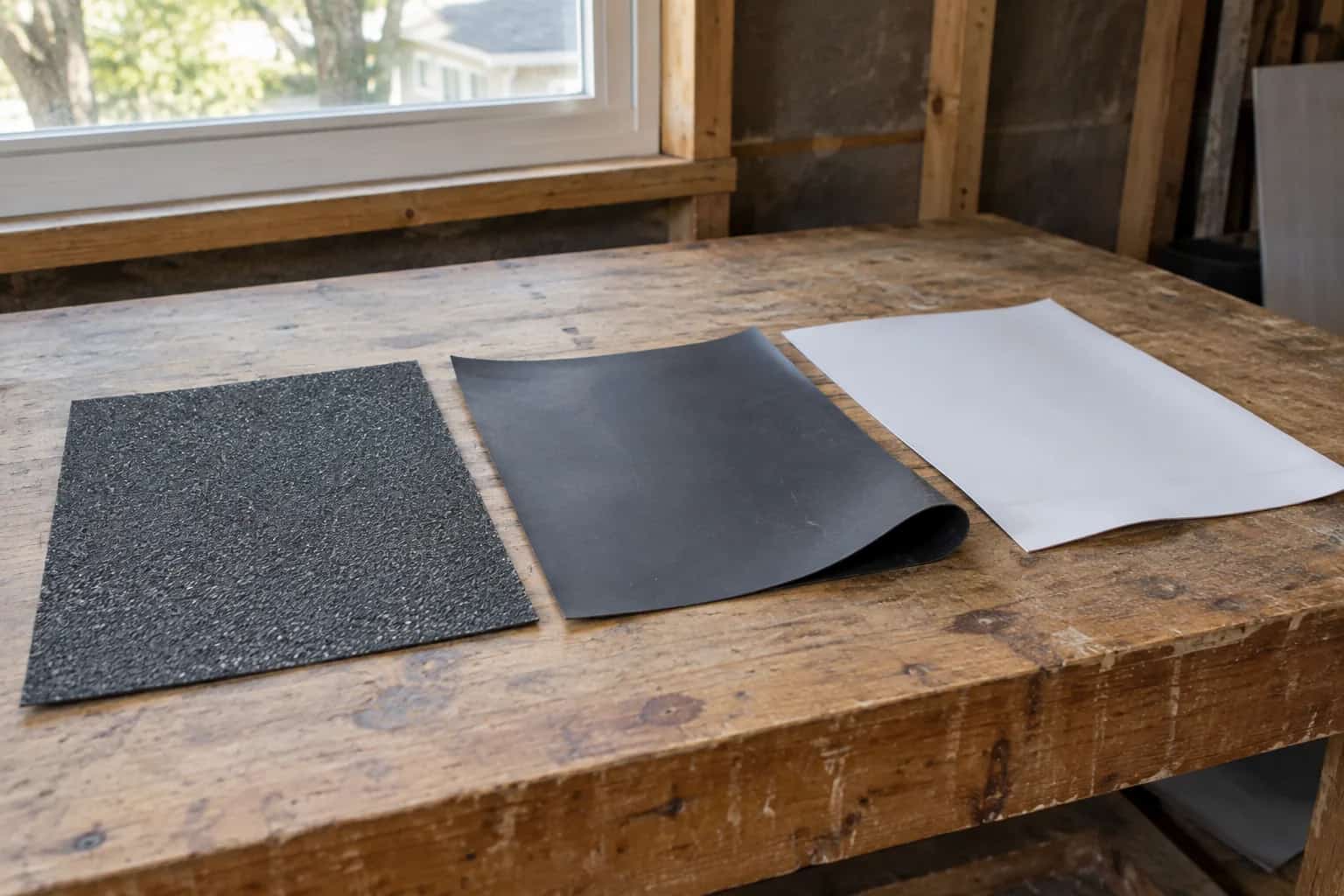
Mike lays an SBS sample beside an EPDM sample. Pat observes that the kitchen now has two black rectangles and no better drainage. That is the point: the decision gets useful when the discussion moves from material samples to the actual roof assembly.
SBS uses reinforced asphalt-based layers; EPDM is a synthetic-rubber membrane with its own seams and flashing system. Both can be sensible candidates for a residential addition when the complete assembly suits the roof.
Few Openings Favour a Different Conversation From Many
Dave's uncomplicated rectangle may suit a large EPDM sheet with relatively few field seams. Add two skylights, a pipe and several wall corners, and much of the installation becomes detail work whatever the sheet size. Fewer field seams do not remove the need for sound penetrations and edges.
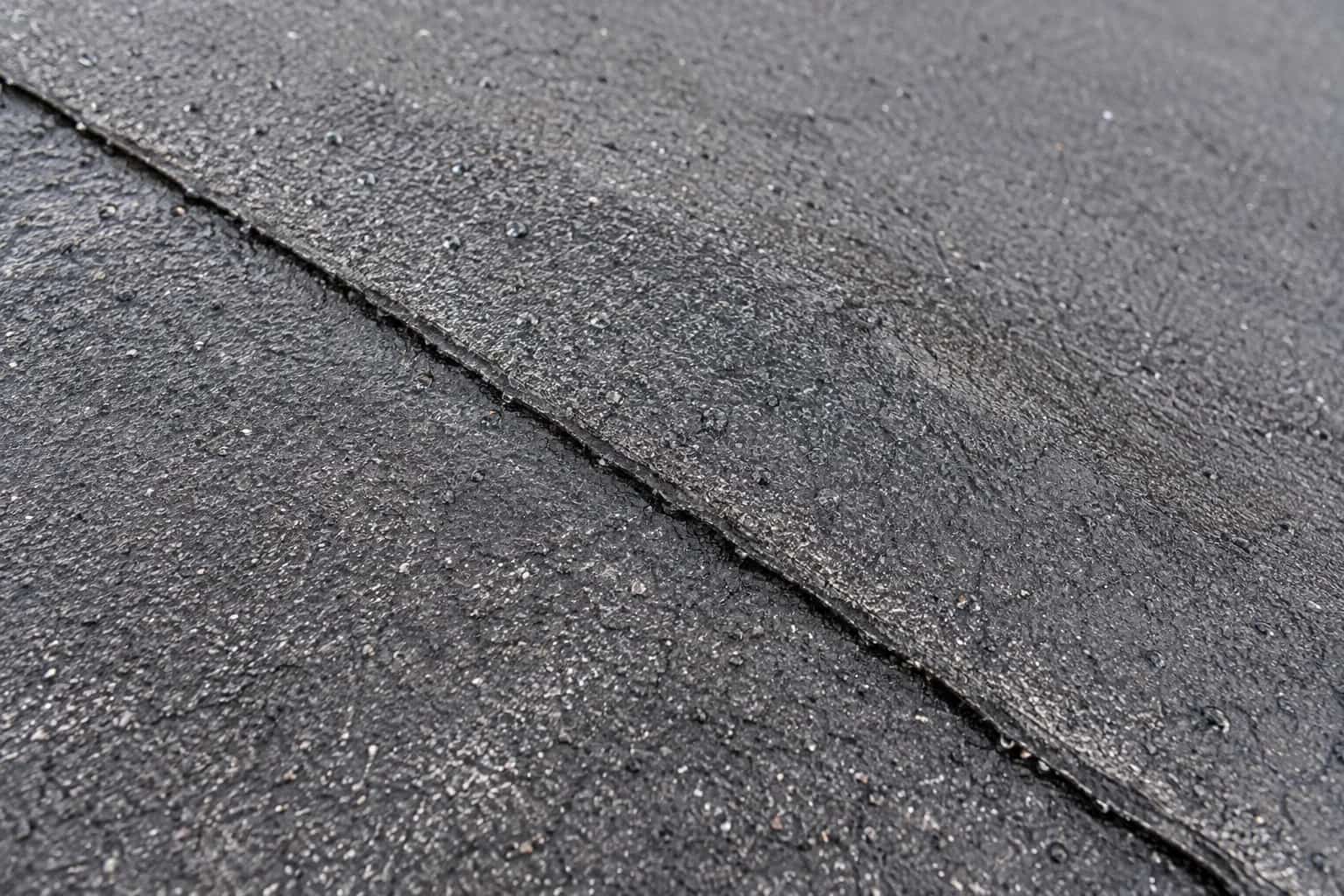
SBS proposals commonly describe a base and cap sheet. Their application can involve different methods, so SBS does not automatically mean a torch at every layer. IKO's system guide describes those approaches.
EPDM seams use the rubber system's compatible preparation and seaming products rather than the same heat-welded joint used by thermoplastics. Carlisle's EPDM range includes factory-applied seam-tape options. Factory preparation can simplify part of the work; it does not eliminate correct site joining.
Dave sketches the skylights, pipe and wall corners. The big open rectangle that looked simple in the quote is suddenly full of details. Fewer field seams can be useful, but every opening still needs the right connection.
Compare the Assembly, Then the Material
These are practical differences to resolve in competing proposals.
SBS modified bitumen
Reinforced asphalt-based sheets in a specified assembly, often with base and cap layers.
EPDM
A rubber membrane system with its specified attachment, seams and flashing products.
Either proposal
Needs drainage, sound support, compatible details and a workable service plan.
Compare What Is Underneath
One price may include removal of wet insulation, a new cover board and drainage correction. Another may cover only a membrane over retained material. Those are different projects, even if the quoted areas match.
The deck condition, insulation, air and vapour control where required, attachment and wind-resistance design belong in the comparison. Weight and structural suitability also need consideration when retaining or adding layers.
For either option, we want the hidden-deterioration process agreed before opening: how it will be documented and priced. Agreeing on that process beforehand is more useful than demanding an impossible promise that nothing unexpected exists under an old roof.
After choosing the membrane, compare adhered and mechanically attached systems with the deck, edges and wind design included.
Think About Life Around the Roof
Will a mechanical contractor walk across it every year? Is a future skylight planned? Does a neighbouring upper roof discharge onto it? These are practical conditions that should influence protection, details and drainage.
Neither material name excuses repeated unprotected traffic or blocked drains. Compatible service walkways may be appropriate, and future work should be coordinated with the roofing contractor.
A torch-applied versus self-adhered comparison helps if the SBS proposal raises concerns about application near a wood-framed addition. Do not assume a peel-and-stick label removes all preparation requirements.
Mike checks what each price assumes is staying underneath. If one proposal removes wet insulation and the other retains it, the price difference is not a verdict on rubber versus modified bitumen. First get the same work on both pages.
Which Would We Investigate First?
For an open, uncomplicated small roof, an EPDM proposal that minimises field joints is worth considering. Where an SBS crew offers a well-defined multi-layer assembly and suitable flame-free or controlled hot-work methods for the building, that deserves an equal hearing. These are reasons to compare real scopes, not universal winners.
For Steady, the winner is the system with an appropriate design, competent installation and a workable service plan for this roof. The samples can go back in the truck once they have helped answer that question.