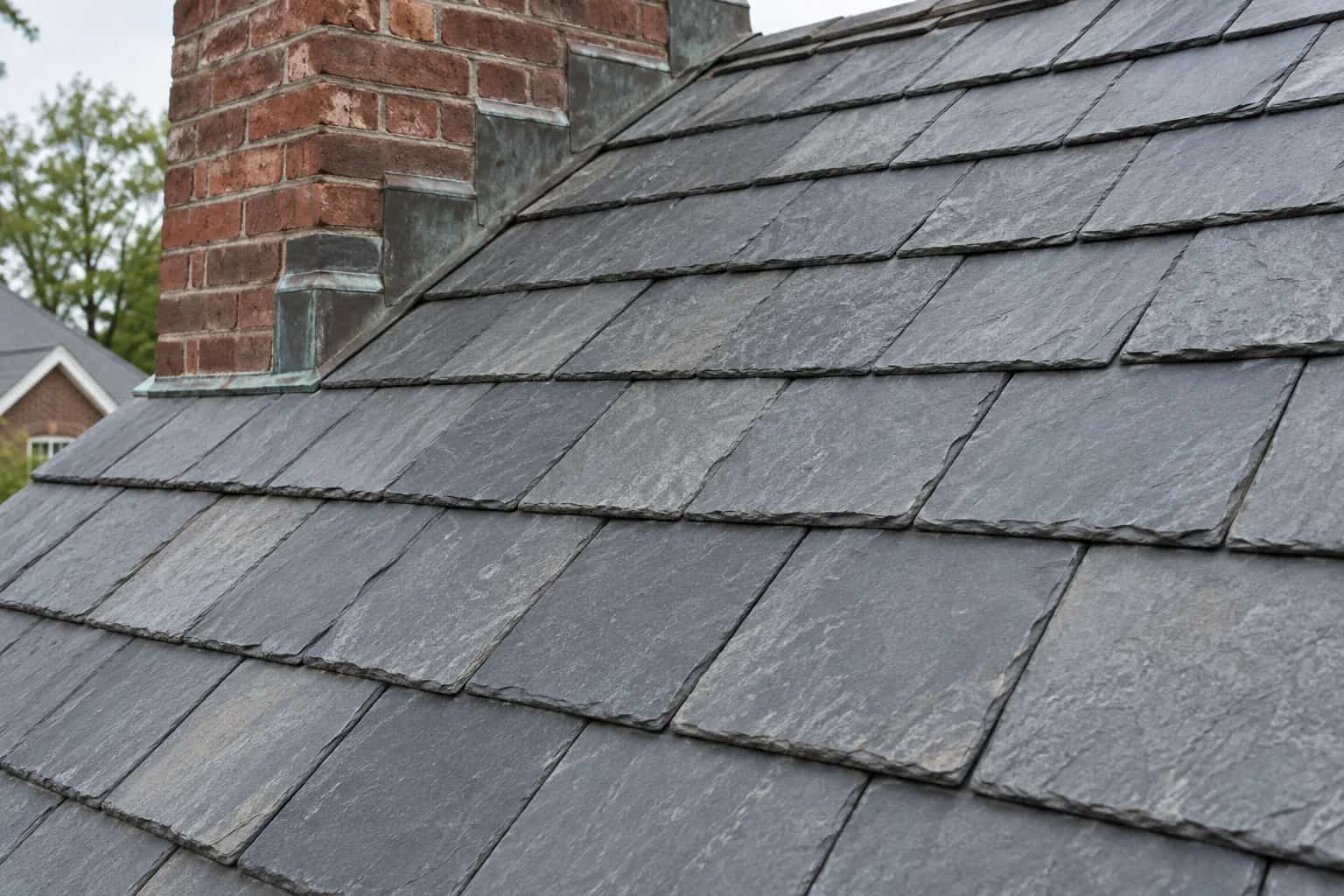
One quote says rubber roof. Another says rubber shingles. The samples do not look remotely alike, and everyone is still assuring you that rubber lasts well.
Moulded rubber units, EPDM sheet and polymer-modified asphalt shingles are different products and assemblies. Moulded units overlap on suitable sloped roofs; EPDM commonly serves low-slope systems; modified asphalt remains asphalt shingle roofing. Start with the exact model on each roof plane. The word rubber is doing too many jobs to make the decision for you.
What the Steep-Slope Products Offer
Canadian manufacturer Euroshield produces moulded roofing with shake-like and slate-like profiles using material derived largely from recycled tires. Its product FAQ describes the range and application limits. That is a specific manufacturer's product family, not a description of every item sold as rubber roofing.
The appeal is easy to understand: a different texture from ordinary asphalt, with a manufactured unit designed around its own performance characteristics. But compare a laid-out group of units, not just one attractive piece. The way shapes repeat across the roof, and the thickness of edges and ridge details, will influence the finished appearance.
A slate-look rubber product is not quarried slate. That distinction matters if authenticity is your priority or if the property has material restrictions. It also matters when arranging repairs: the replacement is a matching manufactured product, rather than a piece selected from a stone supply.
The Roof Shape Still Sets Limits
Euroshield's current FAQ says its products are unsuitable at slopes of 3:12 or less and generally better suited to slopes of 4:12 or greater. Those statements should send borderline applications to the manufacturer for a specific answer, not encourage interpolation between two numbers.
A house can have a steep main roof and a much shallower porch. One covering may not serve both. A proposal that uses rubber units on the main roof should identify what happens at the porch and at the transition between systems.
Confirm installed weight, deck requirements, underlayment, fastening and accessory details using the selected product's current instructions. A lightweight claim compared with natural slate is not structural approval for your house.
The owner puts two quotations beside the samples. Both say rubber. Dave reads the model lines and discovers they describe different systems. Pat taps the headings. "That word's working overtime."
Mike moves the discussion to the actual roof planes, slopes and named products. The moulded units can be compared with other sloped-roof coverings; the sheet system needs its own assembly discussion. Once the labels become specific, the appearance, weight, service plan and price can finally refer to the same decision.
Read Past the Hail Headline
Euroshield's written warranty distinguishes products, hail coverage, time periods, remedies and exclusions. It is more specific than a broad description of hail resistance. The document also includes prorating and limits on labour coverage.
Treat a test rating, a product warranty and home insurance as three separate matters. A headline using hail-proof does not mean every roof component is protected from every storm or that an insurer will pay less. Use the actual warranty attached to the purchase and obtain any insurance answer from the insurer.
Three Meanings of Rubber Roofing
The word rubber does not identify a roofing assembly.
Moulded units
Overlapping steep-slope products with named profiles and weight.
EPDM sheet
Membrane used in low-slope assemblies; a different roof system.
Modified asphalt
Asphalt shingles with polymer-modified binder, not moulded rubber units.
Purchase check
Compare exact slope, assembly, warranty and repair support.
Compare Profiles on the Same Units
Euroshield's technical specifications list Rundle Slate at 360 pounds per roofing square, Vermont Slate at 240 and Vermont Slate HP at 265. One square is 100 square feet, so those listed product weights correspond to 3.6, 2.4 and 2.65 pounds per square foot. Accessories and the rest of the roof assembly still need accounting; these numbers do not establish structural suitability.
Use three separate rows in your purchase notes:
- Profile and weight: exact named product and its installed coverage basis, not pallet shipping weight.
- Roof suitability: slope, deck and attachment details for each roof plane, including any low-slope porch requiring another system.
- Issued warranty: applicable product, hail terms, remedy, labour, prorating and ownership conditions.
A heavier slate-look rubber profile is not necessarily more durable than a lighter one, and a hail test category does not calculate the total replacement bill after a storm. The selection should follow the product documents and the house, not a ranking based on one attractive number.
The Practical Ownership Question
Find out who will service this product locally if a branch damages a section or future work requires opening the roof. A competent installer, available replacement units and clear repair methods are real benefits; they belong in the decision beside appearance.
Rubber units may suit someone who likes their profile and has a suitable roof and reliable local support. EPDM may suit the house's low-slope addition. There is no contradiction in choosing both, provided each is specified for the part of the roof it is intended to protect.
By this point, each use of rubber should have a model, a roof plane and a document behind it. You can choose the appearance without asking one word to explain three different systems.