
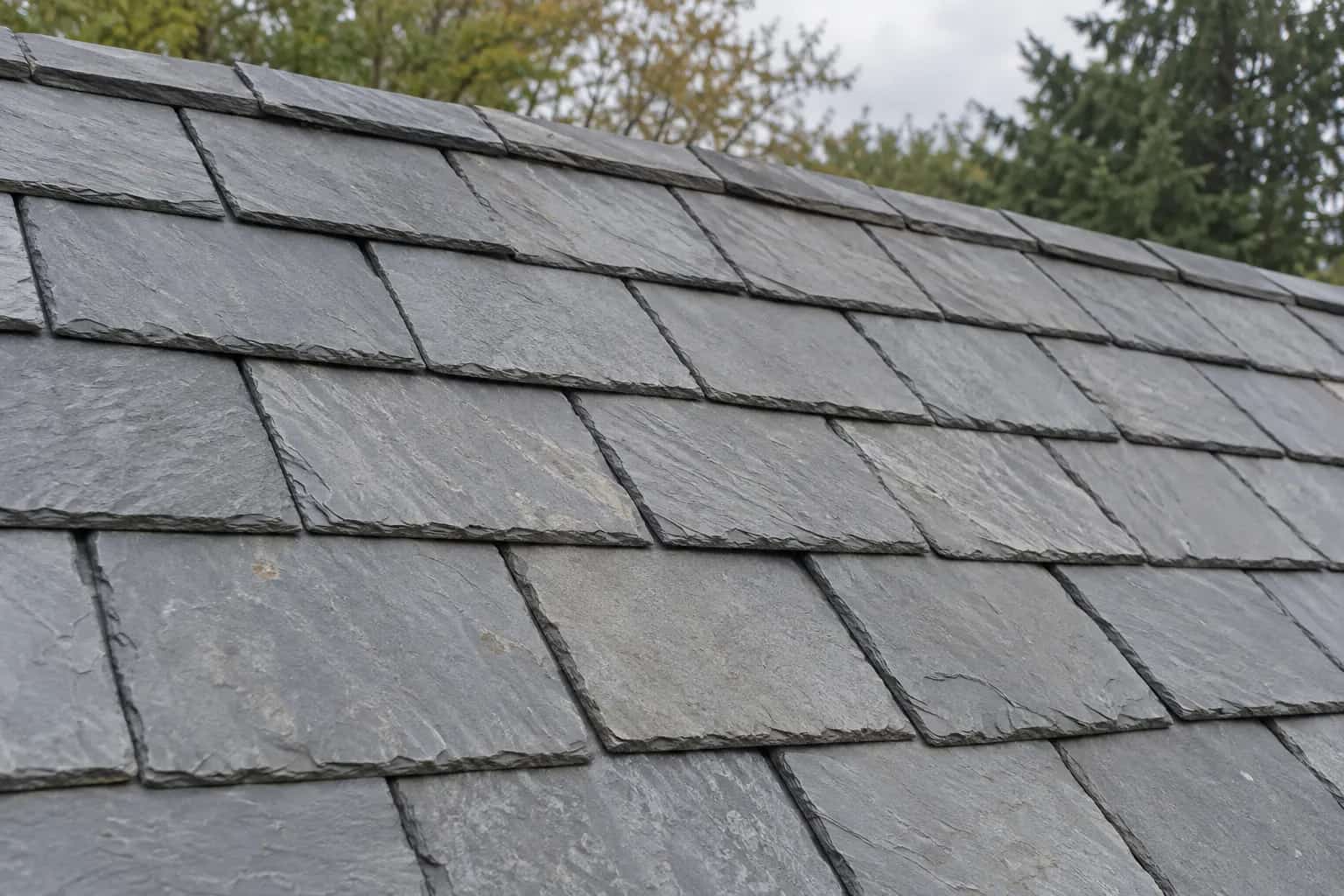
Maya lays two grey samples on the table and says she likes the slate one. Pat asks what she likes about it. After a moment, she points to the thin, irregular edge rather than the colour. That answer changes the comparison: a grey sample alone cannot show the roof character she wants.
The question often begins with a photograph: you like a slate roof, but not everything sold with slate in its name is stone. Natural slate is quarried rock split into roofing units. Synthetic slate is a broad shopping label for manufactured products that can have different ingredients, weights and installation rules.
Both deserve consideration on their own terms. A claim that synthetic looks identical or that natural slate always lasts longer skips the details you need to choose well.
Decide What You Like About Slate
Maya's answer is the thin edge. Yours might be colour variation, the small-unit pattern or simply a grey roof. Keep that preference explicit while comparing samples; it stops a salesperson from answering a different question.
Natural material can vary from piece to piece. A manufactured product may offer more controlled colouring and repeated moulded textures. Neither appearance is inherently wrong, but one sample is a poor preview of either finished roof. Look at several courses, the ridge and the eave, then step back to normal viewing distance.
On a steep visible roof, those details can be a major part of the house's character. On a roof barely visible from the street, a costly texture choice may deliver less visual benefit than you expect. Spend attention where you will actually see the result.
Compare Installed Weight, Not Hand Samples
A light piece in your hand does not give the load per square metre of a roof. Unit dimensions, thickness, overlap and the rest of the assembly affect the installed figure.
Get comparable installed weights for both options and have the building's suitability assessed where the change warrants it. A roof that previously carried asphalt is not automatically ready for stone. Conversely, an existing slate roof should not be declared structurally suitable for every replacement thickness simply because it already carries slate.
The National Park Service's slate preservation brief explains slate's material variation and construction. Its historical examples are useful technical context, not an Ontario approval or a service-life promise for a new product.
Dave takes the conversation from one piece to a whole slope. Repeated shapes, edges and courses become much easier to judge in a large installation photograph. Maya spots a repeating pattern she had missed on the sample. It is useful to have that reaction at a table instead of from the driveway after installation.
Compare the Material and the Installed Result
A shared slate appearance does not create a shared specification.
Natural slate
Identify the stone, thickness, dimensions and installation craft; assess the actual installed load.
Manufactured slate-look
Identify the manufacturer and formulation, approved assembly, matching accessories and repair supply.
Both proposals
Compare full roof appearance, junctions, structural suitability and long-term service support.
Manufactured Slate Needs Its Own Instructions
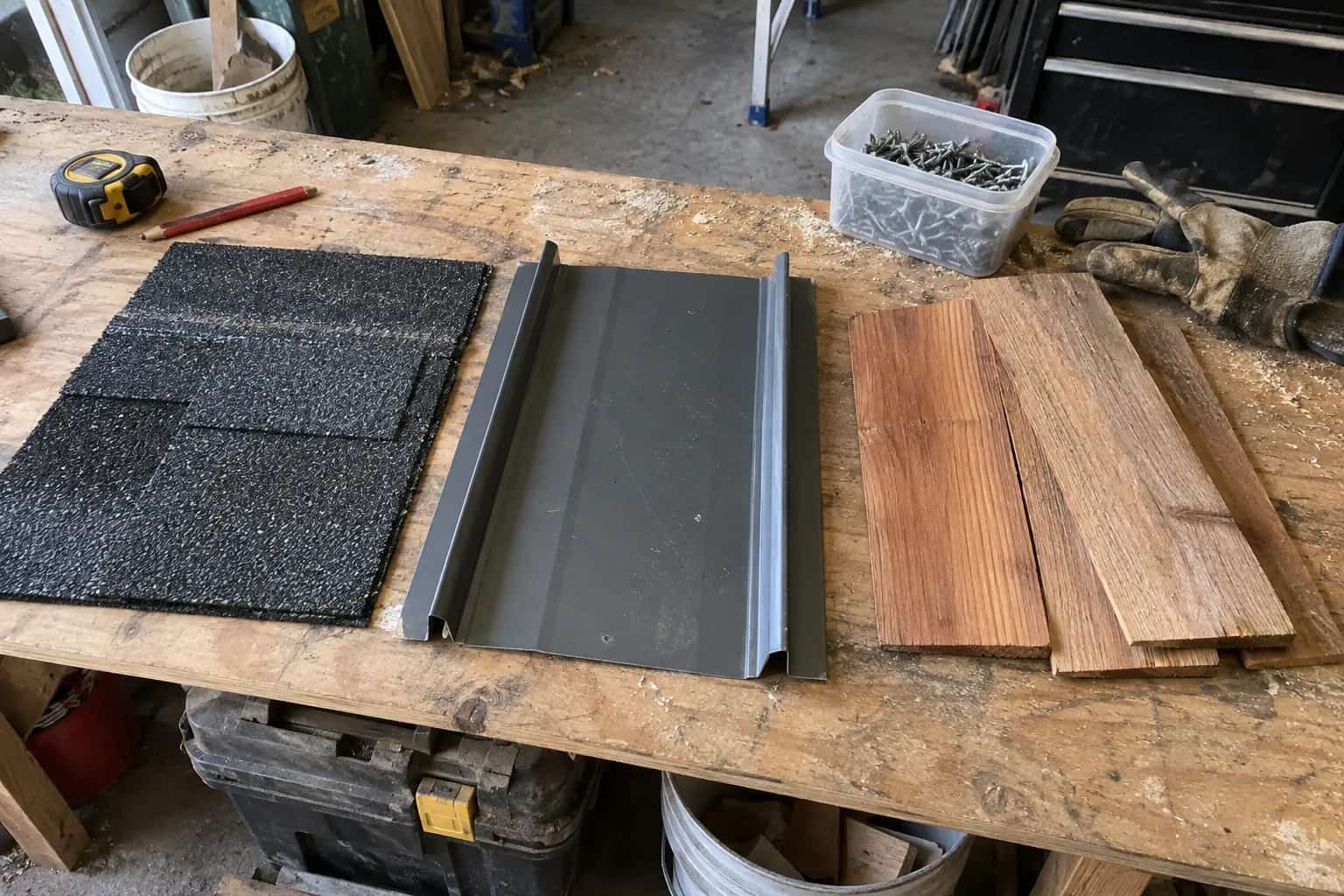
Pat keeps each product's information together. A weight from one brand, a warranty from another and an installation detail from a third cannot describe the roof Maya is considering. DaVinci's current resource library separates installation guides for its different slate-look product lines. That is a practical reminder that a similar appearance does not mean an interchangeable system.
Rubber products are another part of this market. Euroshield's FAQ describes its own moulded products and slope limitations. The rubber-roofing guide explains why those units should not be confused with EPDM membrane.
Compare the complete supplied system, including caps, starter details, fasteners and junctions. Availability in a manufacturer's catalogue does not establish local stock or an installer experienced with it.
Repairs Belong in the Purchase Decision
Natural slate repairs rely on suitable replacement stone and specialist handling. Manufactured units rely on matching products and their prescribed repair method. In either case, identify the local service route before the roof becomes an emergency repair.
If an existing slate roof has only a few defects, first consider repairing the slate roof. Replacing serviceable material is a different decision from choosing a roof for new construction.
For a heritage property, settle the permitted material and visible details before ordering. A substitute that looks close to you may not meet the property's particular requirements.
Choose natural slate because its material and craft matter to you and the house can support the proposed assembly. Choose a manufactured alternative because its documented characteristics and finished appearance fit your priorities. Neither choice needs an unsupported promise that it will perform exactly like the other.
The lighter sample still has appeal, but Mike wants the installed assembly weight and repair route written down. "We are buying a roof, not winning the lightest tile competition." Maya keeps appearance on the list and adds who can service it locally. Both questions will still matter after the samples go back in their box.