
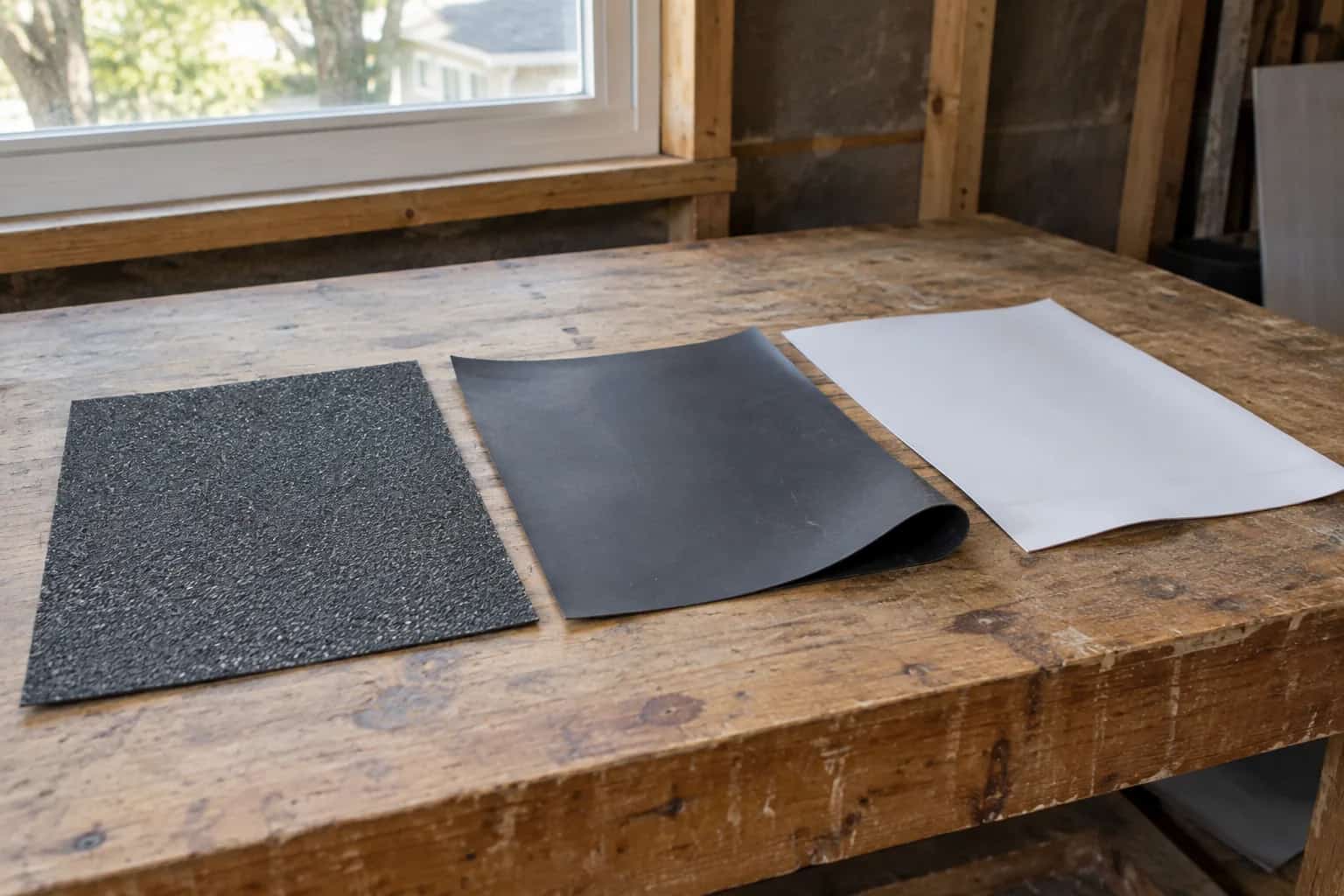
The porch quote says "torch roof". Under the porch are timber, stored cushions and an owner who would like that phrase explained. Fair question. Torch-applied versus self-adhered affects how work proceeds around combustible and concealed construction, not just the finished appearance.
A suitable self-adhered assembly avoids open flame for the layers installed that way. Torch work needs trained professionals and deliberate fire controls. Neither method makes wet decking, poor drainage or an awkward flashing connection acceptable.
Name Every Layer's Method
A quote that says torch roof may leave the base sheet attachment unclear. A quote that says self-adhered may not explain the cap sheet or difficult flashing details. Ask for the full assembly, including how each layer and transition is installed.
SOPREMA's bituminous guide distinguishes installation methods and substrate requirements. Follow the current selected product documents and project specification rather than assuming that two rolls with the same general material name can substitute for one another.
Mike asks whether a complete flame-free assembly suits the sensitive locations. The answer needs an approved system, not an assortment of rolls left in the truck. "We can stick this bit" is the beginning of a specification question, not the end of it.
Two Application Routes to Specify
Neither description removes the need for a compatible, prepared assembly.
Torch-applied
Requires an approved assembly and professional fire-risk assessment and controls.
Self-adhered
Requires suitable surfaces, primers where specified, application conditions and correct consolidation.
Complete system
The base sheet, cap sheet and flashings may have distinct specified methods.
Sticky Backing Does Not Bond to a Bad Surface
Dave brushes dust from the proposed working surface and stops the discussion of which roll looks easier. Self-adhered sheets need the specified clean, dry, suitable substrate and application conditions. Dust, dampness or an incompatible coating can prevent the bond. Removing the backing is the easy part; preparing somewhere suitable to stick it is the job.
Pressure, primers where required and installation sequence matter too. The word self-adhered describes the method; it does not remove workmanship from the job. Torch-applied systems likewise need their specified substrate and layers, not an attempt to heat a poor base into suitability.
The autumn forecast changes while the delivery date stays stubbornly in the calendar. That does not make an unsuitable surface suitable. Product limits can change the workable plan; a protected pause beats pretending the adhesive has read the schedule.
Discuss Fire Planning Before the Crew Arrives
For any proposed hot work, the contractor should assess combustible materials, openings and concealed spaces and establish appropriate controls, monitoring and emergency arrangements. Do not accept a casual assurance that the roof surface itself does not burn as the entire assessment.
Ask who is responsible for the plan and how occupants will be informed. Details around walls, penetrations and adjoining construction deserve particular attention. Avoid asking for shortcuts that reduce necessary protection to save a small amount of time.
Choose the Method for the Awkward Parts Too
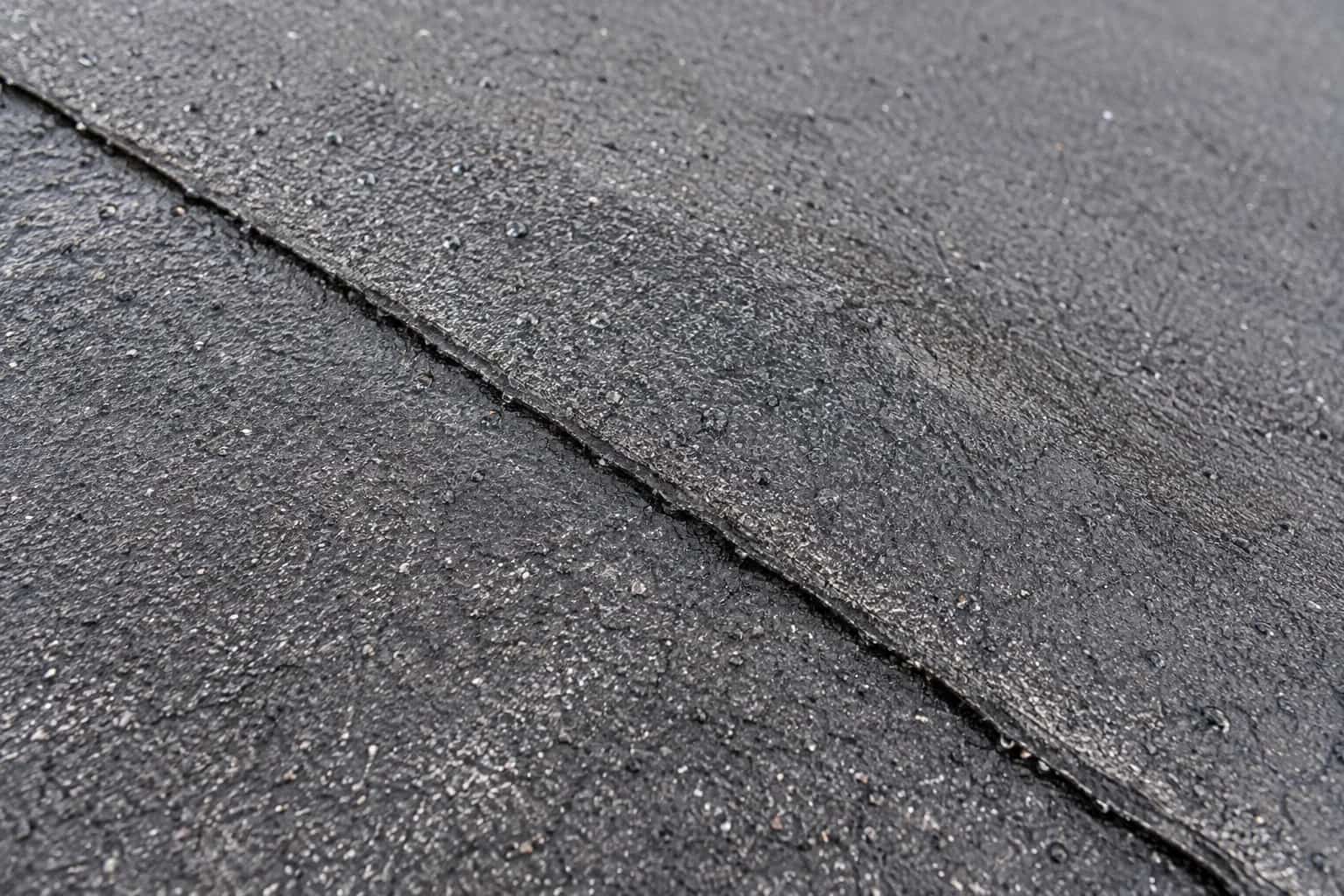
The broad porch surface is the easy part of the conversation. Pat brings it back to the narrow wall junction, where an approved different detail may be needed. Specify every layer and sensitive connection before the crew reaches it. Choosing an application method is useful only when the awkward parts belong to the same plan.
A flame-free option can be a strong practical choice where combustible construction complicates hot work, provided a suitable complete system is specified. If other membrane families are also being considered, SBS versus EPDM explains another part of the decision.
The finished roof still needs sound drainage, insulation, attachment and flashings. Application method is an important choice within that assembly, not a substitute for designing it.