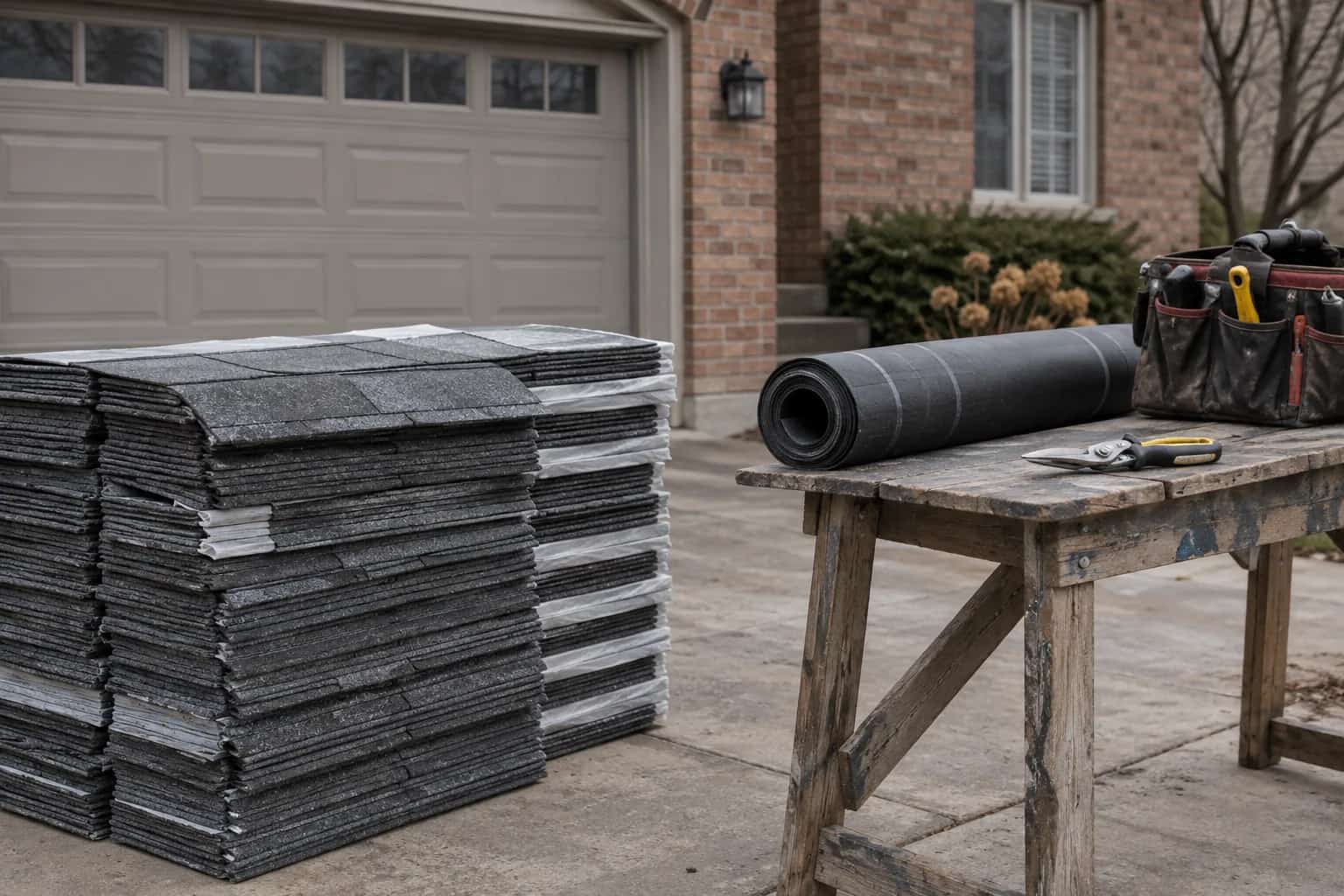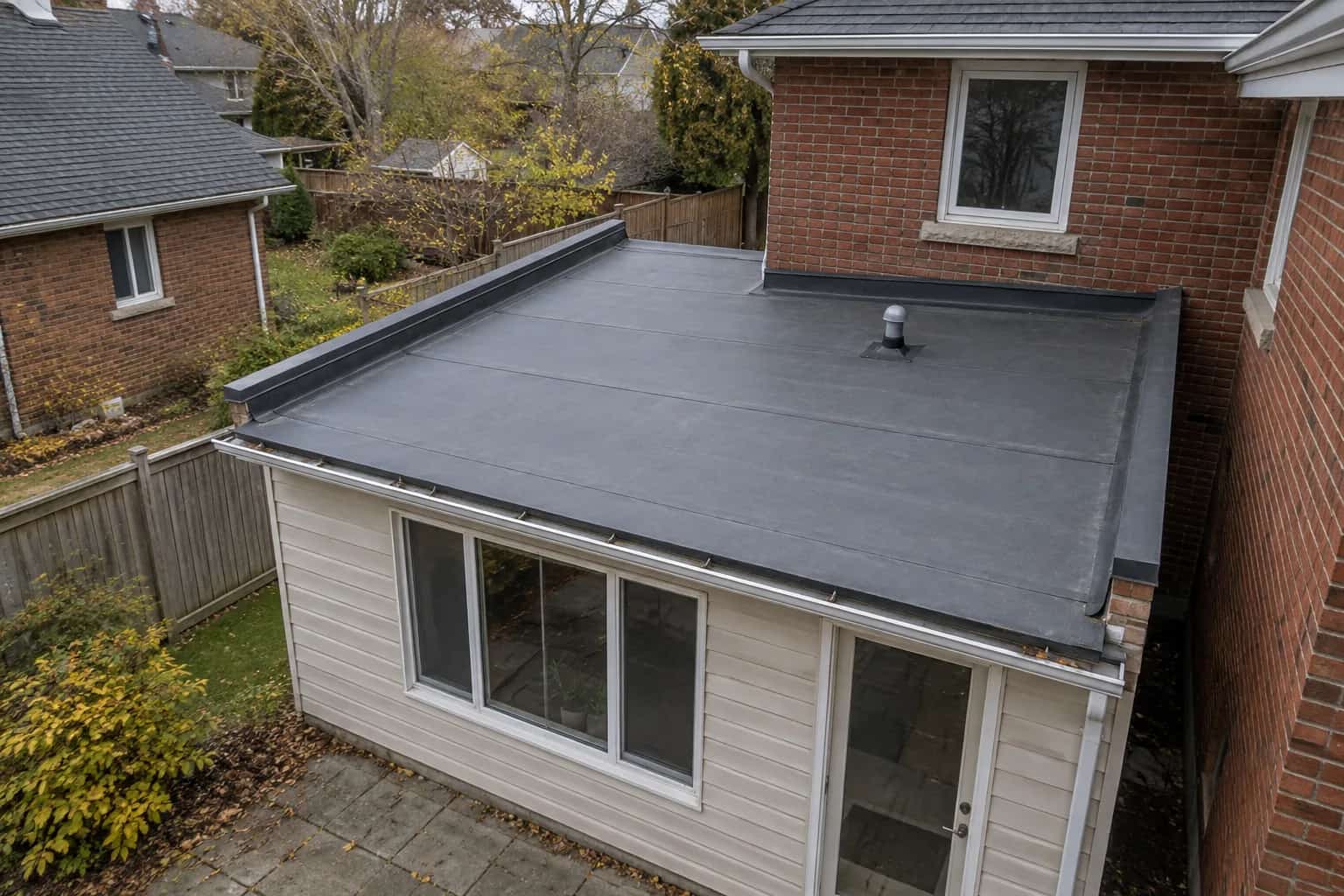
The owner holds the shingle sample against the main roof and gets the colour match exactly right. Mike is still looking at the shallow porch. Matching the house is a reasonable goal; choosing a covering that suits the pitch comes first. An excellent colour match cannot improve the slope.
Measure the pitch before choosing the covering. Shingles suit some low-slope roofs with the required assembly; below the approved minimum, more underlayment does not turn them into a suitable membrane roof.
Understand the Pitch Number
A pitch such as 3:12 means three units of vertical rise for twelve units of horizontal run. It is not measured along the sloping roof surface. Small visual differences can matter near a product limit, so leave measurement to the roofer rather than judging from the driveway.
IKO's minimum-slope guidance identifies 2:12 as the traditional absolute minimum for asphalt shingles and explains additional low-slope considerations. That does not make every shingle and underlayment combination acceptable at 2:12. The current selected product instructions and applicable requirements still govern.
Put the measured pitch and selected product on the estimate. Dave would rather have that small line of information than another conversation about whether the porch "looks steep enough." Near a product limit, the actual measurement matters.
Measure Before Matching the Shingles
Appearance comes after the slope and assembly decision.
Measure actual pitch
Use rise over horizontal run, checked by a professional.
Check product limits
Confirm the selected shingle's minimum slope and local requirements.
Specify the assembly
Use the required low-slope detail where shingles are permitted.
Choose another system if needed
Below the approved range, design an appropriate membrane roof.
Matching Shingles Do Not Make Matching Drainage
The main roof may shed water rapidly while the porch below has a much shallower fall. Shingle laps on that lower surface face different conditions, particularly with wind-driven rain or backed-up water. Within the approved low-slope range, the specified underlayment arrangement becomes important.
Watch where the upper roof sends its water. The little porch may receive runoff from a much larger area, especially beneath an upper valley. Pat follows that route before judging the job by its small footprint; small does not necessarily mean lightly exposed.
The owner points out that shingles have always been there. That tells us what was installed, not that it was suitable. Repeated porch leaks earn a fresh check of pitch and assembly rather than a faithful recreation of the old problem in a nicer colour.
Choose the Right Surface, Then Make It Meet the House
If the pitch calls for membrane, colour and edge appearance can still be considered within that suitable system. SBS and EPDM are two families to investigate, not interchangeable prescriptions.
Where upper shingles meet the lower covering, enough of the upper roof may need opening to build a sound transition. Walls, edge drainage and any deck repair belong in that same scope. A suitable membrane with a poorly connected uphill edge is not a complete solution.
Once the measured slope sets the suitable systems, bring the samples back. Colour and edge appearance still matter. Mike is not banning the design conversation; he is putting it after the decision that keeps the porch dry.