
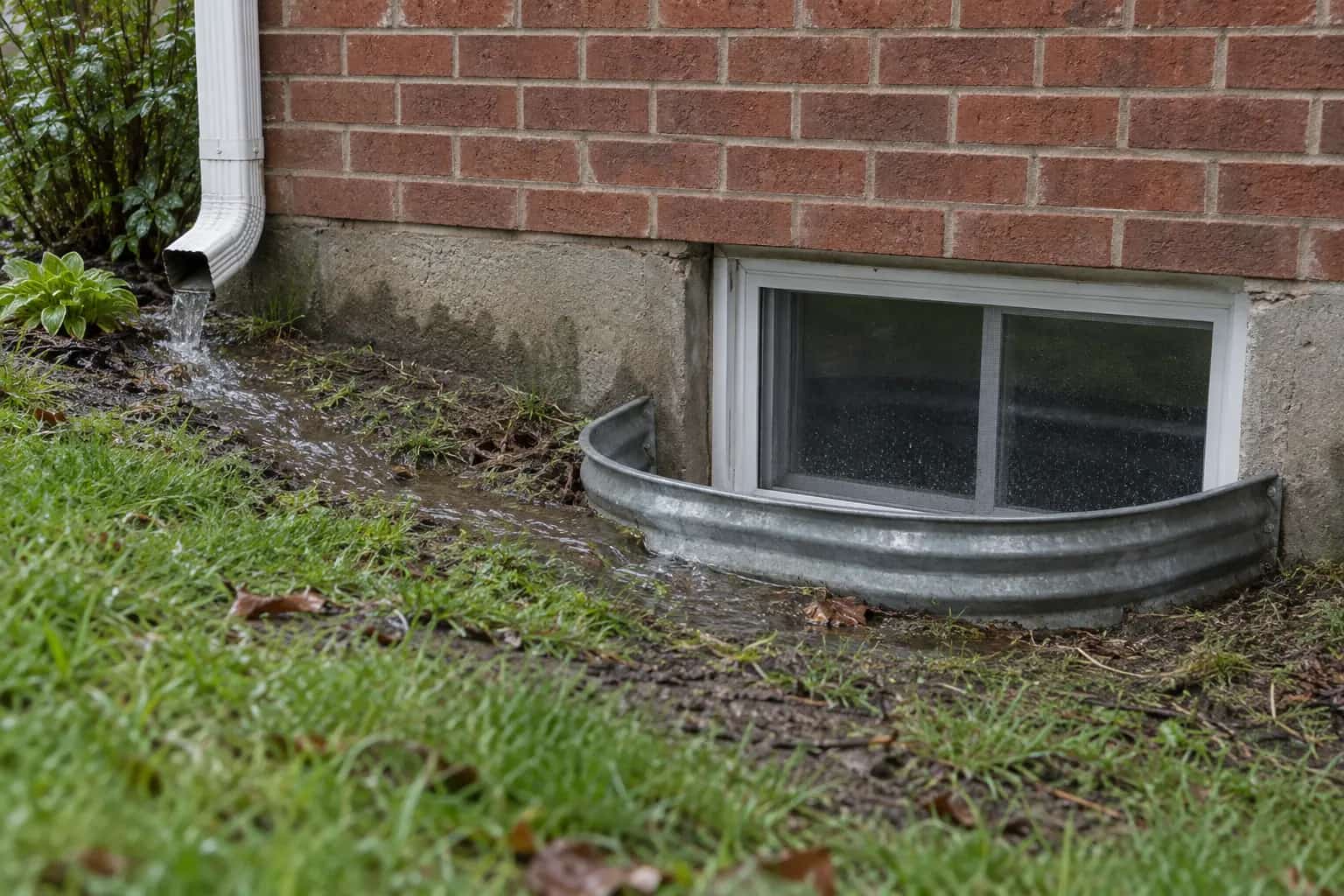
A valve in a drainage pipe cannot stop water travelling across the yard and through a building opening. It may be doing its job while a separate roof-water or grading problem remains. The repair decision depends on the route, not the presence of expensive equipment somewhere downstairs.
The valve invoice was on the washing machine. Dave read it while Pat looked at the wet line beneath the basement window.
"There is flood protection," Pat said.
"For which route?"
The question changed the visit. The equipment deserved an inspection, but the first visible wetness was not a verdict against it. We needed the floor-drain story and the window story kept separate before anyone paid to repeat last year's work.
Two Flooding Routes Can Share the Same Room
Public Safety Canada describes backwater valves as devices that protect against reverse flow through the drainage system. Their location and type determine which plumbing is protected. That protection differs from keeping roof runoff away from a low window or foundation opening.
Picture a basement laundry room. In one event, water rises through a floor drain. In another, a wet line appears beneath the window after the nearby downspout runs. Both happen during rain and both wet the same floor. They call for different investigations.
The comparison is a starting clue, not a diagnosis. Water can spread across a floor before it is noticed, and more than one source can be present. Record the first observed wet location and timing from a safe position. Do not enter floodwater to investigate, especially near electrical equipment; ESA's flood guidance explains the shock risk.
What the Valve Record Should Tell You
Find the installation drawing or invoice, model information and maintenance instructions. Ask the plumber which fixtures and lines are protected, how to recognise a closure or alarm, and what maintenance applies to that model. A valve somewhere under the floor is not a complete description of the home's protection.
Keep access available. A cabinet, stored flooring or a finished wall built over the service point can turn routine attention into a disruptive job. If you cannot identify the access, ask the installer to locate it while the basement is dry.
A failed or obstructed valve remains a possibility when the evidence points to sewer backup. Have it assessed appropriately; do not dismiss a drain-related event merely because surface drainage also looks poor.
Closing the Valve Changes Household Water Use
When the valve is closed against backflow, wastewater from the house may not be able to leave through that route. Halton advises avoiding plumbing-fixture use while the valve is closed. Follow the instructions for your actual installation and alarm.
Make that advice understandable to everyone at home. Running the washing machine while a closure alarm sounds is not a useful way to check the valve. Include visiting family and anyone using a basement bathroom in the plan.
This is separate from roof runoff outside. A household can correctly stop using fixtures and still need to deal with a downspout pouring toward a window well.
Outside, the downspout and the window well belonged in the same photograph. Downstairs, the valve access belonged in a different one. We kept both records together and refused to turn them into one convenient diagnosis. A house can have more than one water problem. It is inconsiderate, but it is not unusual enough to ignore.
Different Routes, Different Protection
Protecting one route does not close the other routes into the room.
Reverse flow in pipes
A suitable backwater valve protects the drainage routes covered by its installation.
Surface water at an opening
Roof discharge and grading corrections keep runoff away from vulnerable entries.
Wet building materials
Source control is followed by appropriate assessment and drying.
Walk the Outside Route When Conditions Are Safe
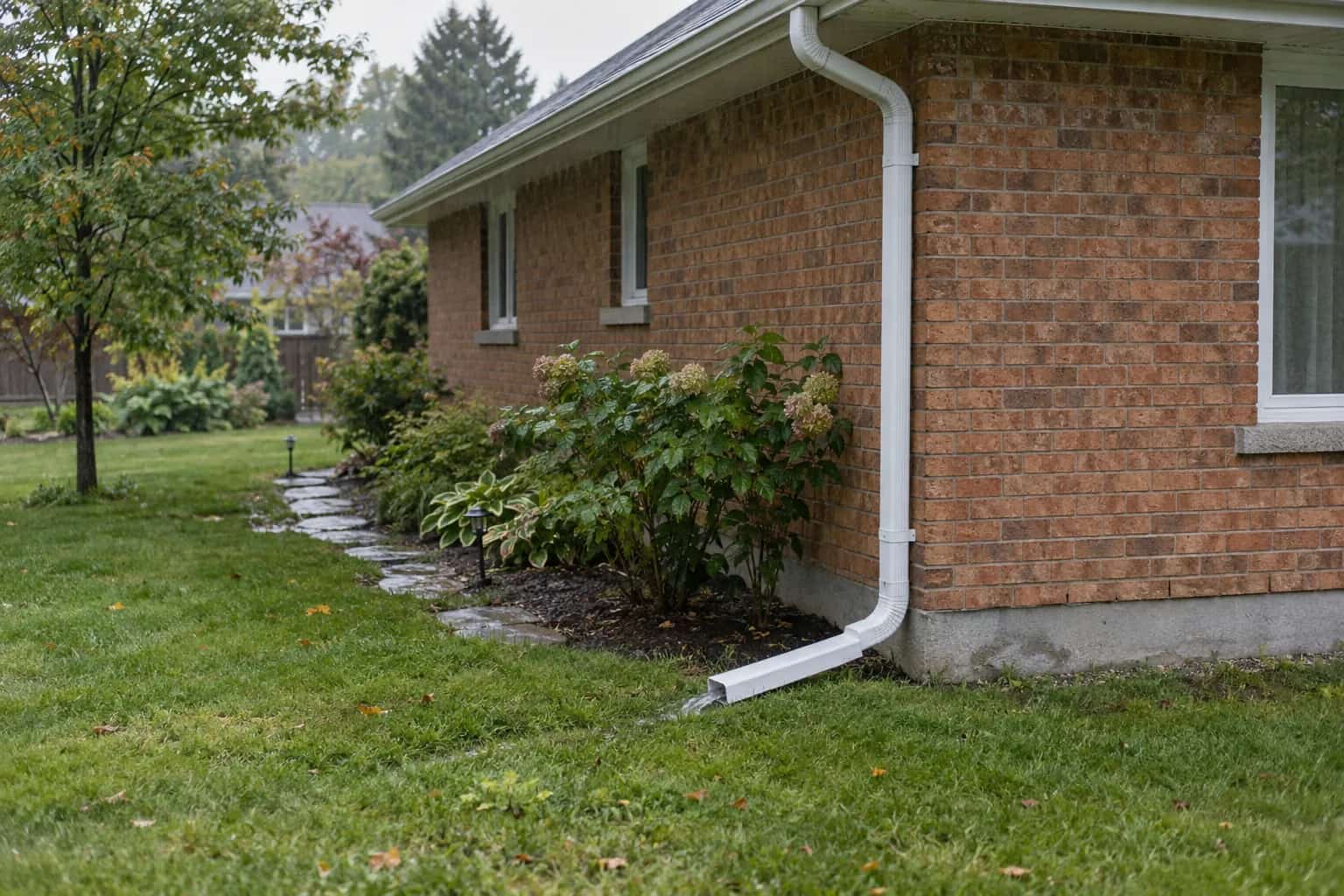
Start at each downspout and follow the ground beyond the outlet. Look for a route toward a door, window well or depressed strip along the house. Record whether the gutter overflowed or whether water left normally but went to an unsuitable place.
A window-well drainage problem deserves its own scope. So does a blocked side-yard swale. Neither becomes a valve repair because the water eventually reaches a room containing drains.
Ask the attending trades to identify what their findings cover. "The valve operates" is useful, but it does not assess the exterior wall. "The downspout was extended" does not prove the sanitary drainage is protected. Keep the observations together without blending the conclusions.
Build a Plan Around the Actual Entry
After an event, a short record should name the first wet location, likely or confirmed route, work completed and remaining uncertainty. Include restoration of wet materials separately from the source correction. An insurer or later contractor will find that more useful than the broad phrase "basement flooded again".
The goal is not to accumulate every available flood-protection product. It is to give each identified route the measure that addresses it. Keep the backwater valve maintained for the job it performs, and keep the roof water outside through a drainage route that can be explained from gutter to ground.