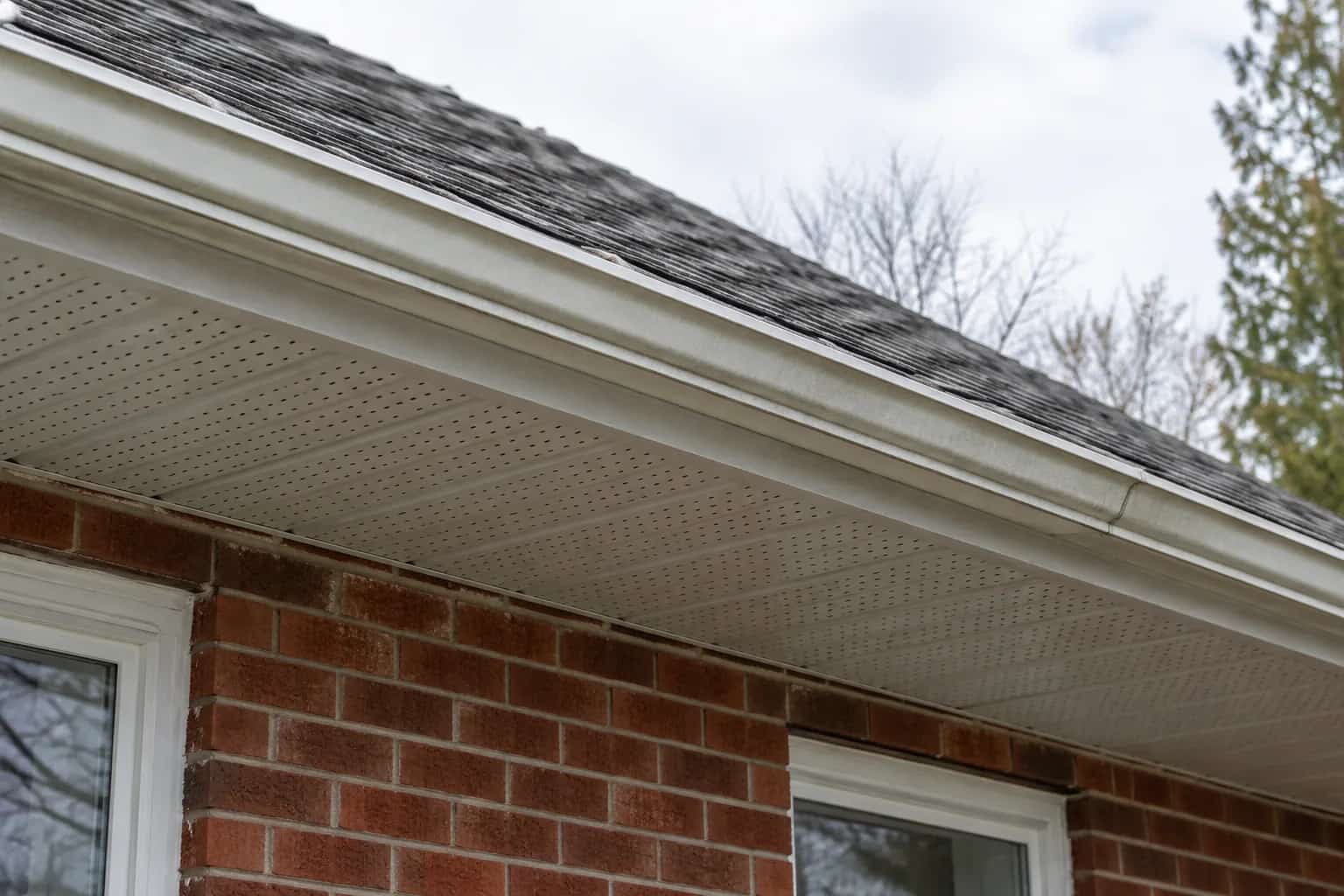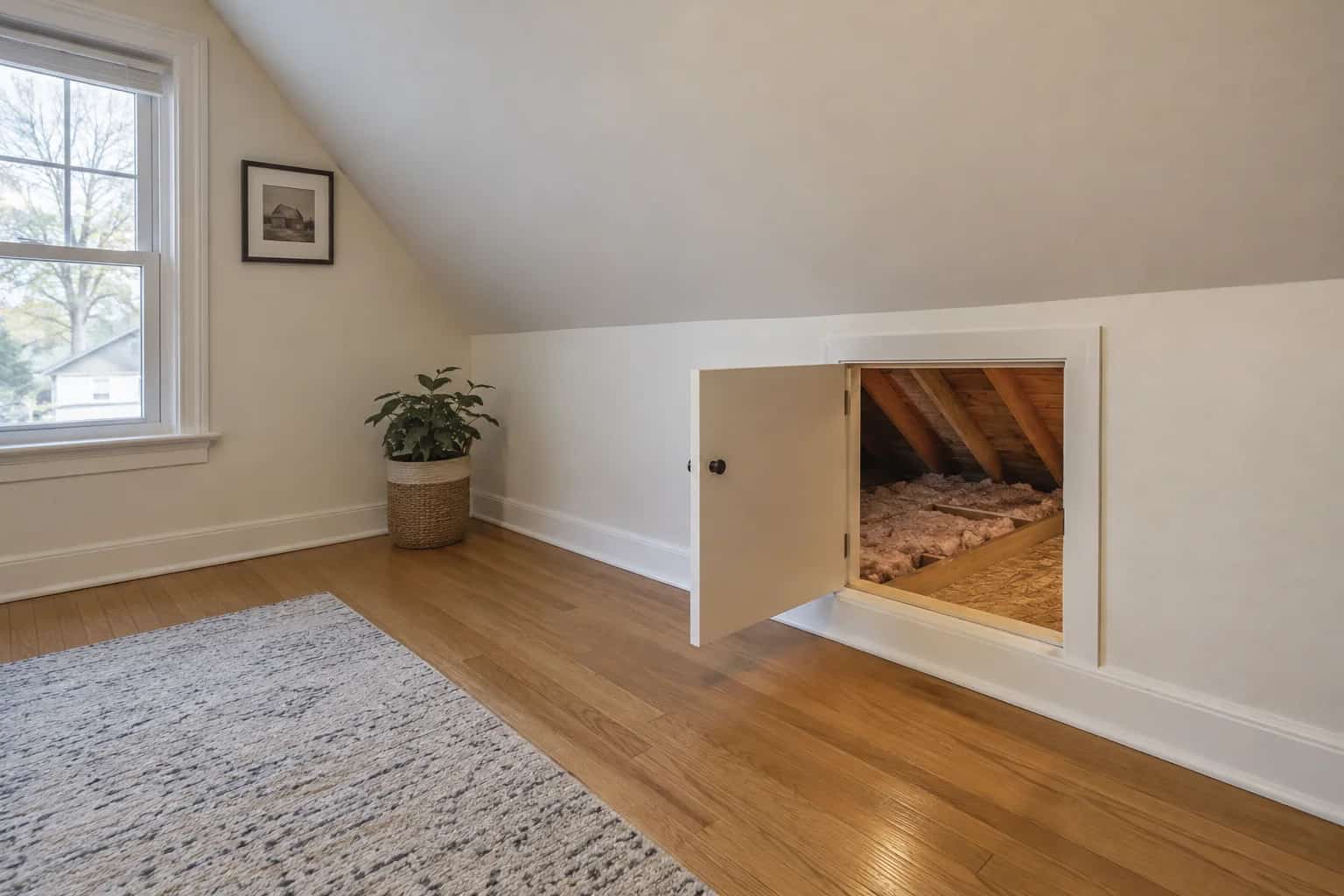
In the upstairs bedroom, the rug stops where the cold floor seems to start. Emma has already added insulation to the short wall. Pat asks what happens underneath that wall. The visible work looks tidy, but the room boundary does not stop where the photograph does.
In a one-and-a-half-storey bedroom, the coldest part of the room may be the floor several feet from the outside wall. The short knee wall can have insulation between its studs while the floor cavities underneath remain open to the cold side attic. Another batt on the wall will not close that route.
Draw a Line Around the Room
The ENERGY STAR attic air-sealing guide identifies open floor cavities beneath knee walls as a leakage route. Insulation stuffed into a gap does not necessarily stop air moving through it.
A contractor should assess the ends of those cavities and the transition at the wall base. This is different from simply coating the visible face of the wall. The hidden junction often explains why the floor feels cold well away from the outside wall.
A cold wall beside a dormer window has its own small-wall and roof-junction investigation.
Choose a Coherent Boundary
Walk through the room in your mind: floor to short wall, short wall to sloped ceiling, slope to the flat ceiling above. At every turn, the air seal and insulation need to continue. A beautifully insulated wall that stops short of the floor connection is unfinished enclosure work, even if the visible wall itself looks excellent.
Some renovations keep the low side attic outside the conditioned space and improve the knee wall and floor boundary. Others move the thermal boundary to the roof slope. Either approach requires a complete assembly design; combining parts of both can leave unexpected cold or poorly drying areas.
Mike follows the proposed air-control line from floor to knee wall to ceiling. At the floor junction, the drawing needs another detail. Emma had been offered another layer on the wall; now the question is whether air can still travel through the cavities below it.
Follow the Boundary Around the Room
In this vented arrangement, the cold eave cavity stays outside the conditioned space. The insulation and air barrier connect across its floor, up the knee wall and along the sloped ceiling. The floor-joist route beneath the wall also needs closure; insulating the wall alone leaves that connection unresolved.
Conceptual drawing. Product details, dimensions and attachment requirements are not shown.
The little door matters too
The final air barrier, insulation and moisture-control arrangement need to be clear on the drawing, including the access door. A thin, loose cupboard-style door opening into the cold space can undermine careful work on the surrounding wall.
Roof ventilation must also remain coherent. A roof-slope retrofit cannot casually block a passage serving the upper attic. See our cathedral ceiling discussion when narrow rafter spaces are involved.
Cold floor, cold wall or cold slope?
Emma marks the cold floor on the room sketch, then adds whether wind makes it worse. Do the same for a knee wall, dormer or sloped ceiling that feels uncomfortable. A thermal survey under suitable conditions can help locate patterns; Pat still needs the construction understood rather than treating a cold stripe as a label for every material behind it.
Ask for photographs of the inaccessible connections before they are enclosed. Where finishes must be opened, agree on who restores them. Old wiring, suspect insulation and tight access can change the work sequence and should be assessed before disturbance.
A useful completion record follows the boundary all the way around the room, including the awkward corners. That is more valuable than one impressive photograph of a newly insulated wall. The homeowner's final check is straightforward: the access still works, the promised details are documented and the original comfort pattern is reviewed in comparable weather.
The little access door gets its turn at the end. Dave closes it and points out that it belongs to the same boundary, even if it looks like a cupboard. Emma can keep the rug because she likes it. It should not have to take responsibility for an unfinished enclosure.