
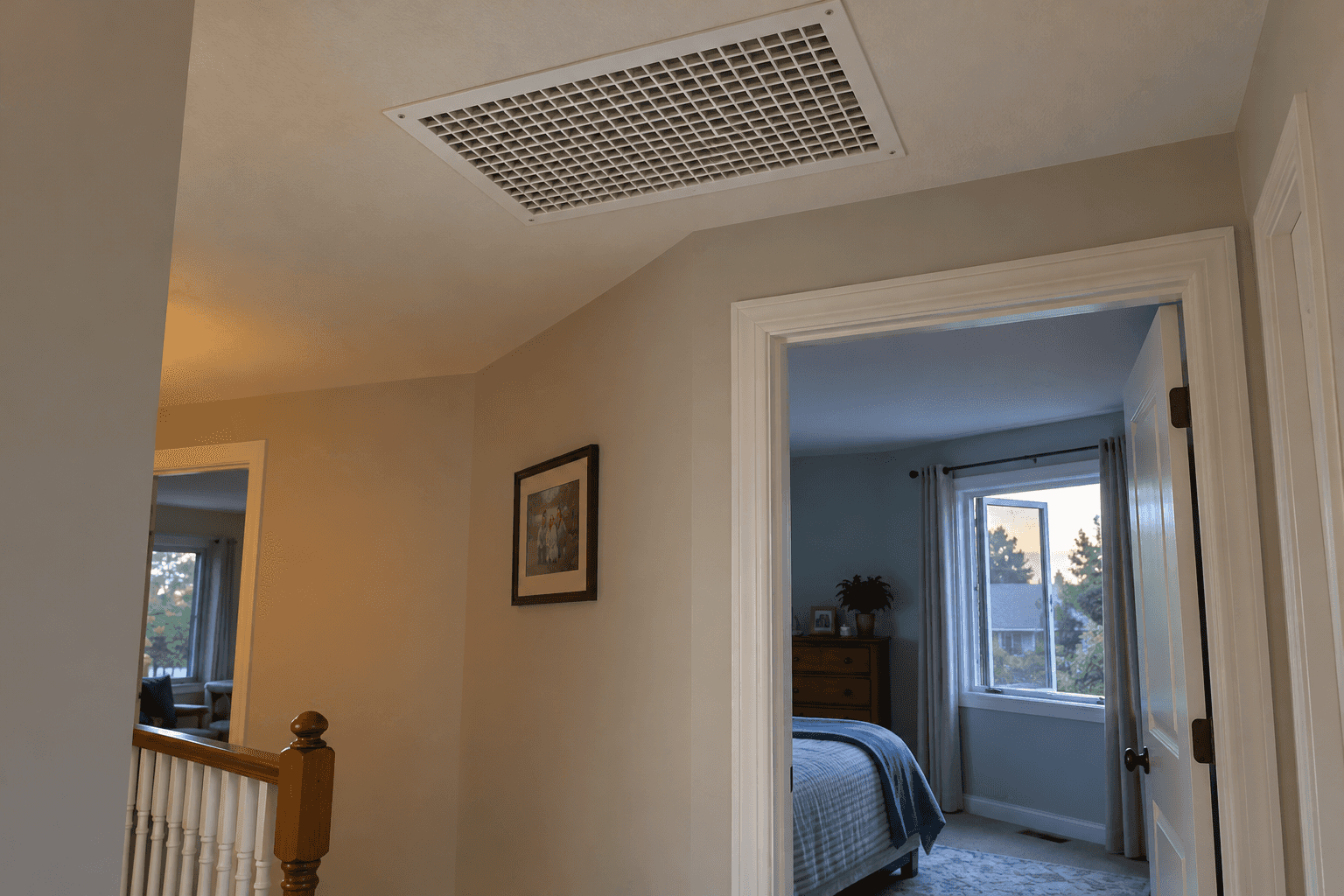
At nine in the evening, the garden feels pleasant and the upstairs rooms still feel like the afternoon. That is the sort of situation a whole-house fan is intended to help with. An equally hot, humid night is a different proposition.
A whole-house fan moves outdoor air through open windows, across the living space and out of the house. Many models discharge into a vented attic, which must then release that air outdoors. The equipment does not refrigerate the incoming air or provide the same service as an air conditioner.
First, settle which fan is being proposed
An attic-only ventilator moves air out of the roof space. A whole-house fan intentionally draws air from occupied rooms. Our powered attic-fan article addresses the first arrangement; adding a motor above the ceiling does not make the two interchangeable.
Have the installer sketch the complete route for the proposed model: which windows supply air, which interior doors must be open, where the intake grille sits, and where the discharge leaves the building. A brochure showing a pleasant breeze does not answer those house-specific questions.
Some units have a fan at the ceiling; others connect the ceiling grille to a remote fan through a large duct. That affects the space needed above the ceiling, access and sound. Ask to see the actual arrangement and hear the intended operating speed before choosing it for a hallway outside bedrooms.
Follow air through the house
Every part of the route affects the proposal.
Outdoor air
Conditions must suit cooling the rooms, including air quality.
Windows and rooms
Provide the required openings and interior route for the selected fan.
Fan and attic
Check the equipment layout, combustion safety and available attic outlet area.
Closed for winter
Use the specified closure and insulation arrangement when the fan is idle.
Consider the evenings you actually have
Keep a few notes during the weather that prompts the purchase. Is outdoor air cooler when you would use the fan? Are you willing to open the necessary windows? Do traffic noise, security, pollen or a sleeping child's room limit which openings are practical?
The U.S. Department of Energy's ventilation-cooling guide explains why climate and operating conditions matter. Its research is not a prediction of savings for an Ontario address. Request any proposed savings estimate with its local weather, usage and existing cooling assumptions, rather than carrying a percentage from a different climate into the household budget.
Outdoor air quality matters as well. During wildfire smoke, follow Health Canada's current advice, which includes limiting smoke entry while prioritizing protection from dangerous indoor heat. A system that depends on drawing outdoor air through windows cannot be your only plan for every summer night.
Have combustion safety assessed before purchase
The fan changes indoor pressure. The DOE guide identifies the risk of drawing combustion gases into the house, particularly with equipment using indoor air for combustion. Furnaces, water heaters, fireplaces and wood stoves belong in the assessment, including appliances in connected spaces.
Do not settle this by promising to open one window or by relying on a carbon-monoxide alarm as the design check. Have an appropriately qualified professional evaluate the actual appliances, pressure relationships and any required controls before installation. If the house and equipment are unsuitable, choose another cooling approach.
The QuietCool owner's guide also warns about backdrafting when adequate supply openings are not provided. Its instructions apply to the listed models; the requirements for another fan must come from that product and the applicable local rules.
The attic needs a real outlet route
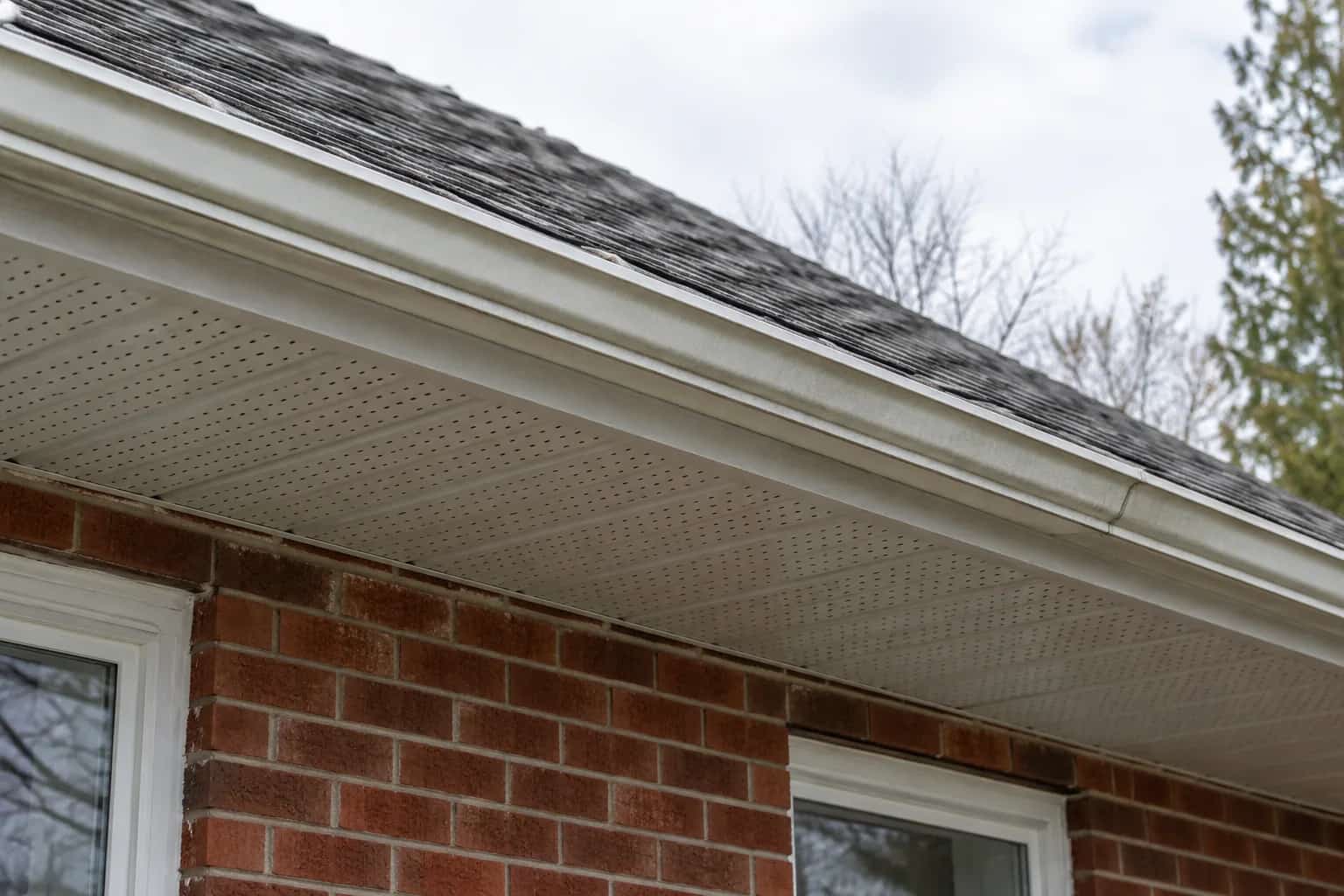
For a model discharging into the attic, the installer needs to compare its required outlet area with the available unobstructed ventilation. Counting visible grilles from the driveway is not the same as establishing usable opening area.
QuietCool's guide sets ventilation requirements for its system. Have the installer document the calculation and any proposed roof-vent changes for the selected unit. A bigger fan can require more work than a bigger ceiling grille.
Review existing intake and exhaust paths at the same time. Shared roof spaces, blocked passages or an unvented roof assembly need specific assessment. Do not cut an opening into whichever cavity is easiest to reach.
Plan for October as well as July
The ceiling connection needs the product's appropriate closure and insulation arrangement when the fan is idle. Ask how it is checked, how the grille is serviced, and what seasonal steps the owner must take. A winter cover that is awkward to reach is likely to become an unfinished task.
Before accepting the installation, get an operating demonstration using the intended windows and doors, with the relevant safety checks complete. Keep the model instructions beside that house-specific plan. The useful purchase is a cooling option that fits your evenings and your building, not simply the most powerful fan that fits between two joists.