
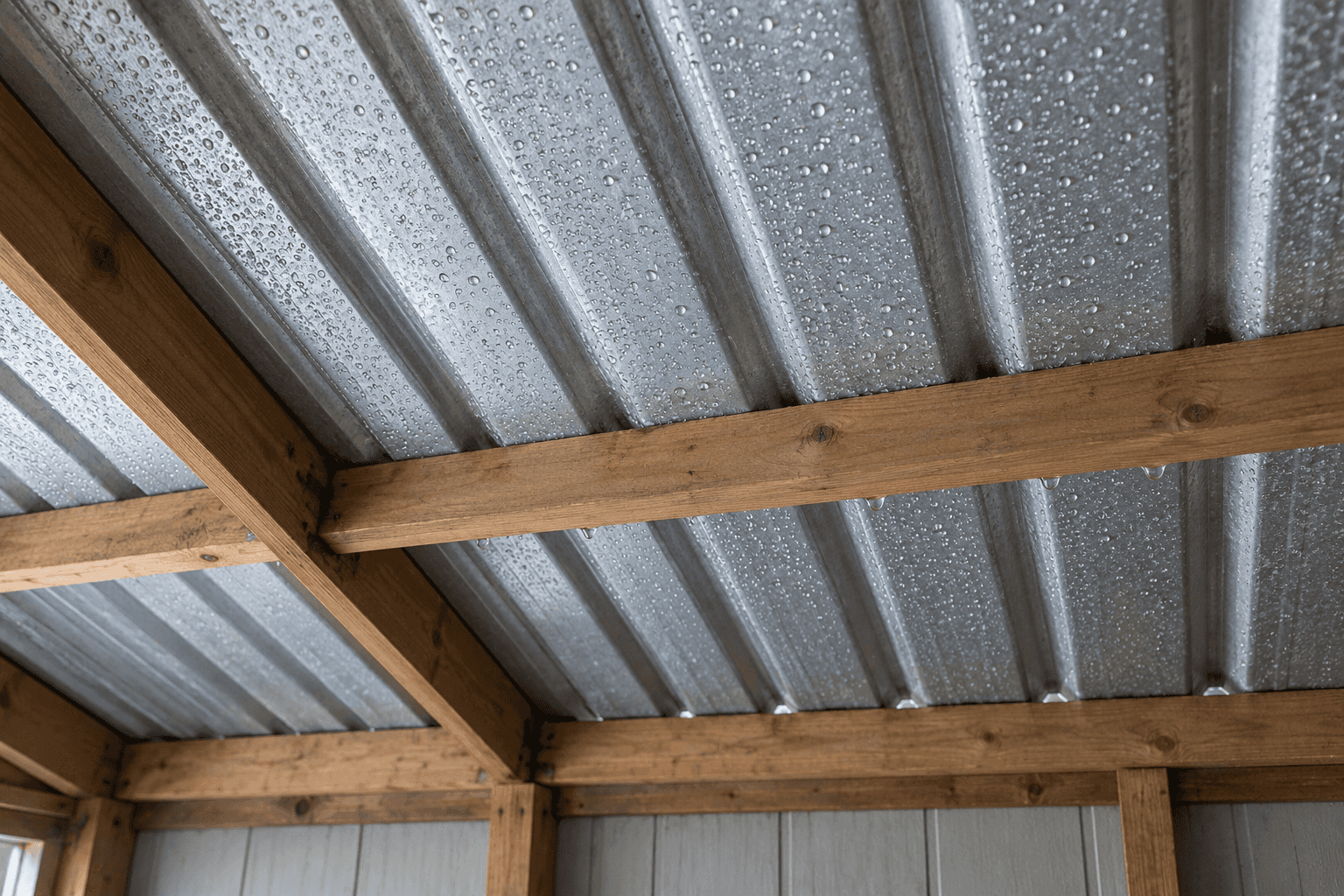
The garage roof drips onto the stored chairs on a morning when it has not rained. From inside, the metal is covered with fine beads. Buying another tube of roof sealant is understandable, but first establish where that water formed.
An unheated garage can have condensation beneath a cold metal roof. It can also have a rain leak, and the two may coexist. Look at the spread, weather and use of the building before choosing between a local roof repair and a wider moisture-control project.
Compare a wet surface with a wet route
Fine beads across several panel bays suggest a different investigation from one recurring stream below a lap or fastener during rain. Neither observation is a complete diagnosis. Water can travel along a panel or timber before falling somewhere else.
From the garage floor, photograph the pattern and note the time, recent precipitation and whether the roof had been dry earlier. Include frost or snowmelt if present. Do not climb onto wet metal to search for a hole.
For visible defects at exposed screws, see the metal-fastener leak guide. For an insulated house attic, our winter condensation guide follows a different assembly and moisture route. A bare garage panel is not the same as a house roof over a sealed ceiling.
Three questions before buying a repair
The answers shape the scope.
Where is it wet?
Compare broad beading with a localized route during rain.
When does it happen?
Record weather, building use and conditions before the inspection.
What will the space be?
Plan around unheated storage, occasional heat or a heated workshop.
Unheated does not mean moisture-free
McElroy Metal's technical guide explains condensation as moisture forming when humid air meets a sufficiently cool surface. The air and panel conditions matter together; the absence of a furnace does not settle the question.
Tell the assessor how the garage is used. Does a wet or snow-covered car park inside? Are damp garden materials stored there? Is the floor persistently wet? Does the dripping follow a change in weather or use? These are observations to investigate, not a reason to blame one item without checking the building.
A basic temperature and relative-humidity log can support the discussion if readings include the time and location. Avoid choosing a universal garage humidity target from a living-room article. A single reading taken after the door has been open does not describe the closed building overnight.
Decide what the garage will become
Before comparing remedies, settle whether the space will remain unheated storage or become a regularly heated workshop. Mention occasional heating too. Those uses can require different roof and ventilation arrangements.
For example, suppose a quote proposes only replacing the roof panels, while the owner intends to add ceiling insulation and heat the garage next winter. Ask the designer to consider the eventual assembly now. Paying twice to open the roof is worth avoiding; installing a mismatched layer to save one visit is not.
Have the proposal identify the route for moisture to leave, the insulation and air-control layers where needed, and how the roof can dry. McElroy advises getting location-specific professional input on insulation and ventilation. Its product guidance is not an Ontario construction detail to copy without checking the actual building.
Understand what an anti-condensation liner does
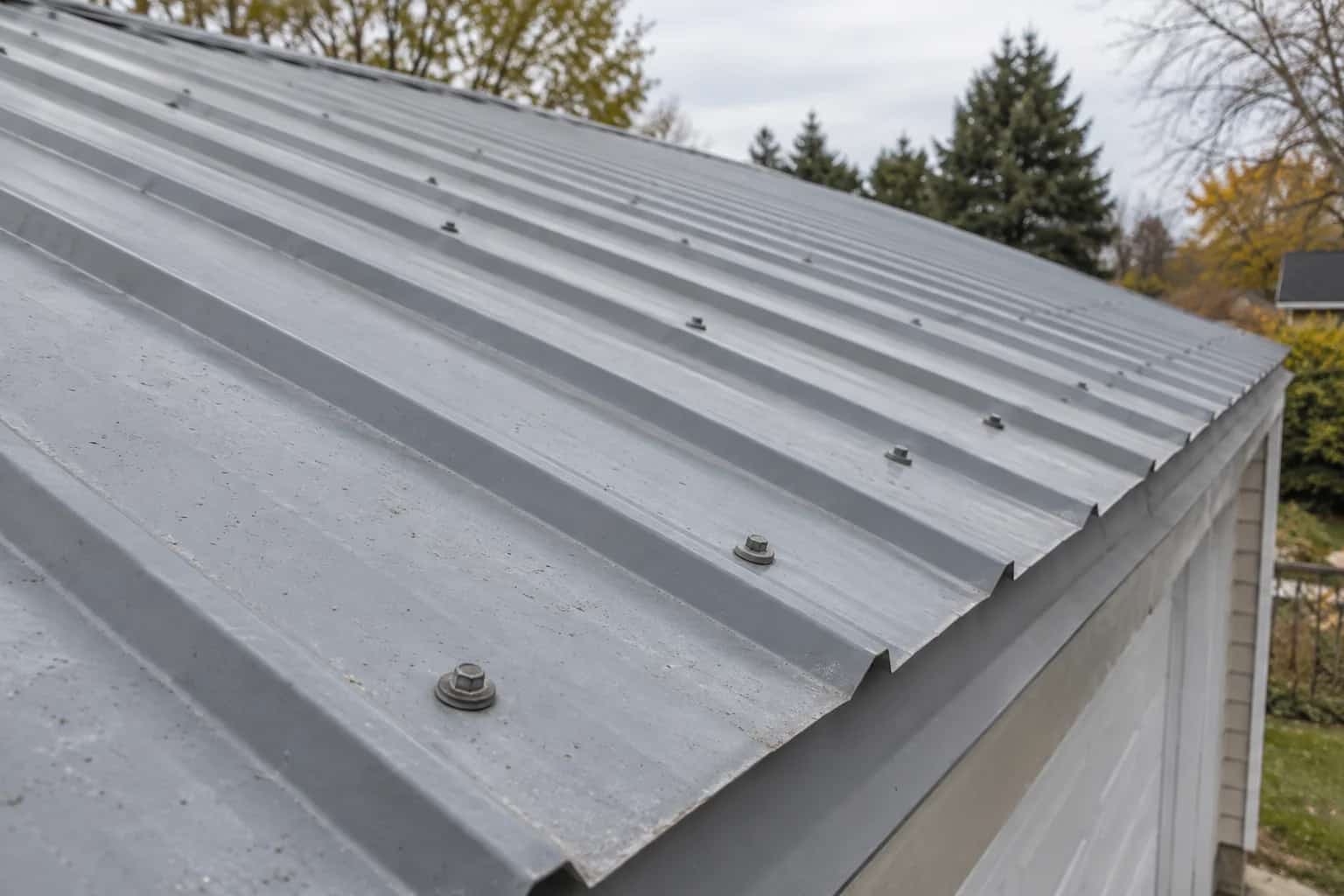
Some metal panels are supplied with a factory-applied absorbent backing. McElroy's MoistureLok description explains that its membrane holds condensation and later releases moisture to the air as conditions change.
That is a particular product approach. It does not make a leaking lap watertight or establish that every proposed roof assembly can dry adequately. Ask the supplier about the selected panel, drying conditions, edges and laps, and whether the product suits the existing building and intended use.
Compare the full scope with other proposals. Does a price include new panels with the backing, or only a coating applied to the old underside? Are existing wet materials assessed first? A common phrase such as "condensation treatment" can describe very different work.
Avoid covering the evidence before it is understood
Do not hide recurring wetting behind a new ceiling without a diagnosis and drying plan. Ask for the condition of the timber and any existing insulation to be recorded before it becomes inaccessible.
If the garage is attached to the house, preserve the garage-to-house separation. Cutting openings into the house attic is not a casual ventilation fix. Any proposed mechanical or heating changes need their own assessment.
After the agreed work, compare the roof during the conditions that previously produced dripping. Keep the photographs and findings with the repair record. A dry afternoon immediately after installation is welcome; the useful follow-up is whether the original problem has stopped under comparable conditions.