
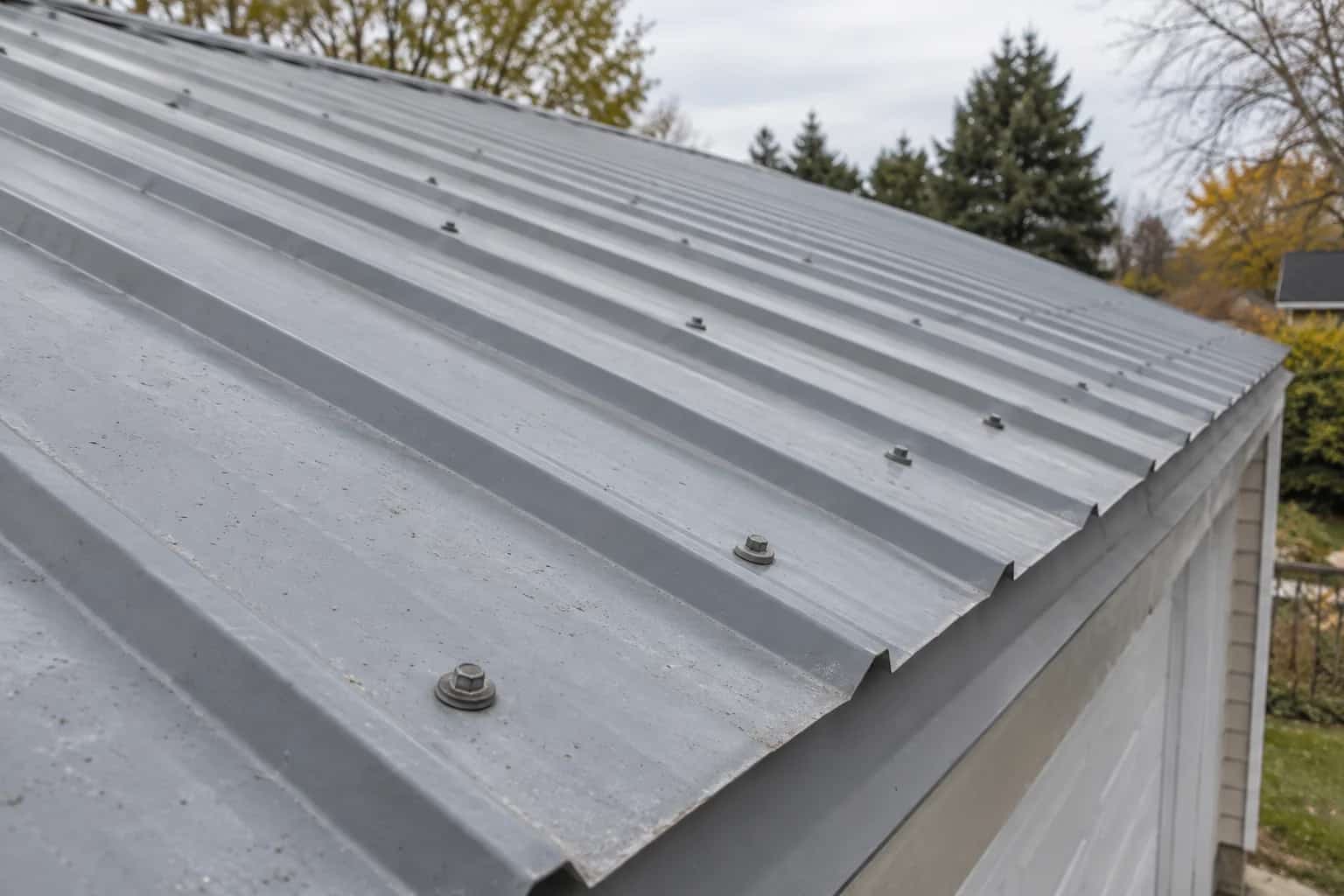
The metal roof quote arrives with a long panel warranty and no maintenance page. Mike turns back to the rows of visible screws in the photograph. The metal may last a long time; the connections still deserve an owner. Before signing, put a name beside that future inspection.
Rows of bright screw heads can look reassuringly thorough on a new metal roof. Each is also a connection that needs to keep doing its job. Buy an exposed-fastener roof with an inspection plan for the screws, washers, laps and support, not a promise to forget about it.
What Exposed Fastening Means
In an exposed-fastener system, fasteners pass through the panel and remain visible at the surface. Sealing washers help protect those penetrations. Concealed-fastener systems arrange attachment differently, often using clips beneath the seams.
McElroy Metal's comparison describes this distinction and the effects of thermal cycling. It is a useful starting point, but panel profile and manufacturer instructions still determine the actual detail.
Do not assume every visible screw roof uses the same placement, substrate or fastener. A diagram for an agricultural panel is not automatically an approved detail for a residential roof.
Keep a Record That Identifies the Screw, Not Just the Visit
A useful service entry might read: "West garage slope, lower two panel bays; washer cracking visible at three located fasteners; support condition and manufacturer repair detail to be checked before replacement." That is the level of detail worth asking for. "Roof checked" leaves the next person starting over.
Record the panel manufacturer and profile, fastener specification, date, location photographs, observed washer condition, corrosion and any leak history. Then record the repair method and the next review trigger from the manufacturer or inspector. Use the product's maintenance schedule rather than inventing a universal five-year tightening appointment.
A washer should be seated to the manufacturer's detail. An underdriven screw may leave inadequate contact; an overdriven one can distort the washer or panel. ABC's SL-16 installation demonstration identifies the sealing washer as part of the fastening detail. The purpose of a close inspection is to establish the actual condition, not to make every screw head look equally low.
If several nearby screws need attention, ask whether the pattern follows a support line, panel end or repeatedly wet area. The answer can change the repair from replacing isolated fasteners to addressing support, movement or another connection. The inspection record should show why the chosen remedy fits.
Maintenance Is More Than Screws
Roof laps, closures, flashings, penetrations and coating damage also need attention. Debris collecting at a junction can create a persistent wet area even where the main panels remain sound.
Arrange qualified access. Metal can be extremely slippery; this is not a reason to start walking it with a cordless driver.
If a leak occurs, record its timing and location indoors and photograph exterior details from the ground. Water may travel before becoming visible, so the nearest screw is not automatically the culprit.
Two Different Attachment Details
An exposed fastener penetrates the panel, so its sealing washer is part of the weather seal. In the clip-based standing-seam example, the panel covers the clip attachment. These are enlarged concepts, not screw-location or tightening instructions. Some concealed-fastener systems use other attachment methods.
Conceptual drawing. Product details, dimensions and attachment requirements are not shown.
Compare the Full Ownership Cost
When comparing exposed-fastener and standing-seam proposals, hold the roof geometry, removal, deck work and flashing scope constant. Then compare the system, installer experience, warranty and maintenance needs.
Compare the maintenance plan with that for standing seam. A clear account of future work is more useful than describing either system as maintenance-free.