
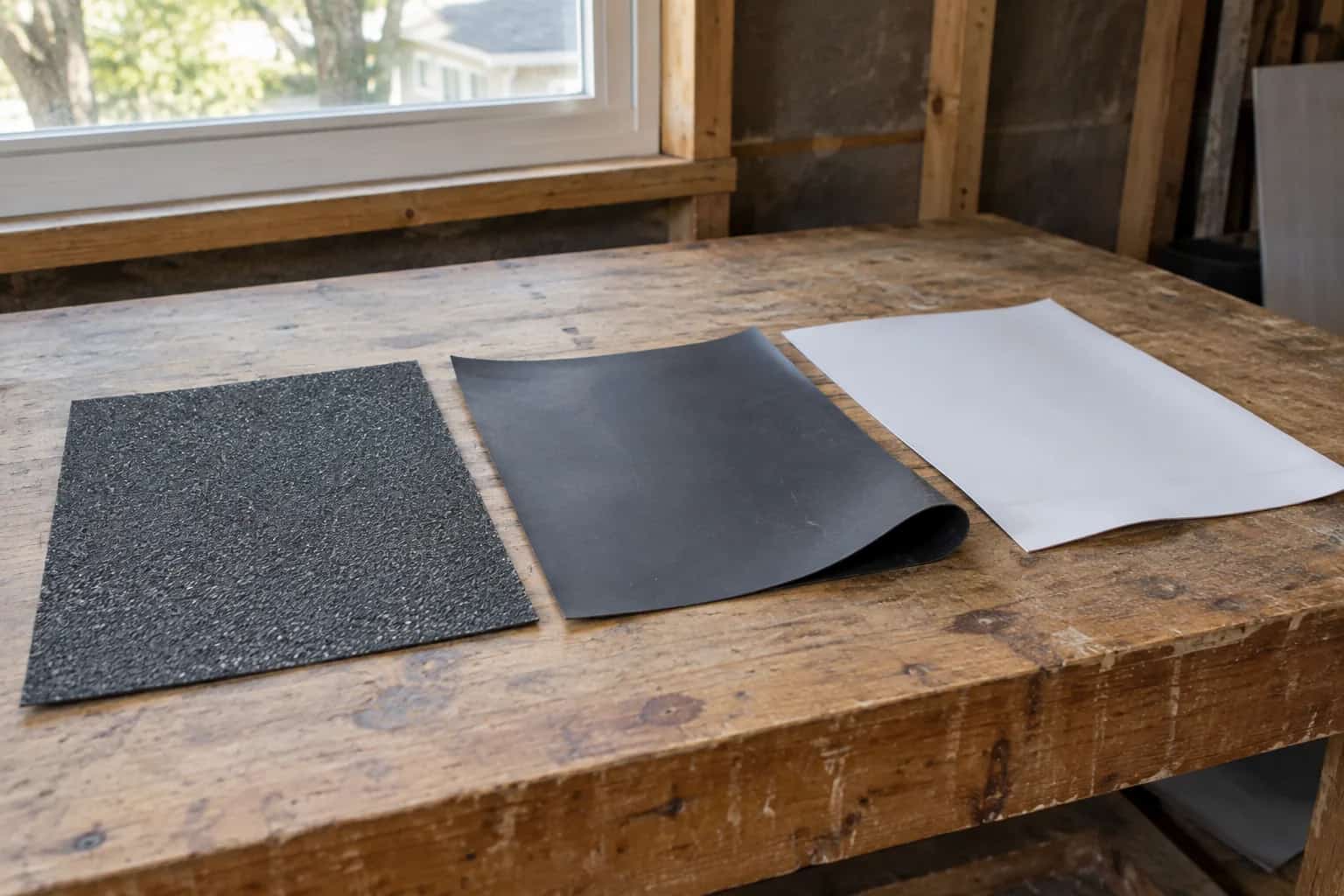
Two quotes sit on the table. One says "premium synthetic" in bold; the other names a felt product and explains the end-of-day protection. Dave reads the second one first. The roll matters, but so does the part of the roof still open when the crew packs up.
One quote says synthetic. Another says felt. Neither tells you what happens if the crew leaves the roof partly covered overnight. Compare the named products and the installation plan before ranking the material families. A roll label cannot protect an unfinished junction by itself.
The Layer You Will Not See Afterwards
Underlayment is secondary water-shedding protection between the deck and shingles. It does not replace the covering or flashing, and ordinary mechanically attached sheets do not automatically serve as self-adhering ice-and-water protection. IKO explains the role of felt within that assembly.
Dave wants each proposed layer named, including the transitions at eaves and valleys. Once that is clear, the two product sheets make a useful comparison.
Two Actual Products Make the Difference Clearer
Compare IKO RoofGard-Cool Grey synthetic underlayment with GAF Shingle-Mate, a fibreglass-reinforced felt product. These examples show why the word felt is not a complete composition specification and why one product's fastening instructions should not migrate to another.
RoofGard-Cool Grey's instructions call for a clean, smooth, dry deck and capped nails or capped staples. They specify minimum four-inch side laps and six-inch end laps, with fastening adjusted for conditions. The sheet is identified as a vapour retarder, so the roof assembly's moisture design matters too.
Shingle-Mate's instructions call for dry storage and a clean, dry deck without wrinkles. For slopes of 4:12 and greater, the stated side lap is two inches, with six-inch end laps; lower permitted slopes have a different arrangement. The instructions expressly say not to leave it exposed to precipitation as an unprotected weathering surface. These are product comparisons, not a DIY installation specification.
GAF's wet-underlayment bulletin explains that its fibreglass reinforcement reduces moisture-related wrinkles compared with standard felt, and says shingles should not cover wet underlayments. A wet or folded sheet needs assessment before it disappears beneath the covering.
If the installed sheet becomes wet or buckled, settle the drying and wrinkle assessment before shingles cover it.
Ask What Happens at Five O'Clock
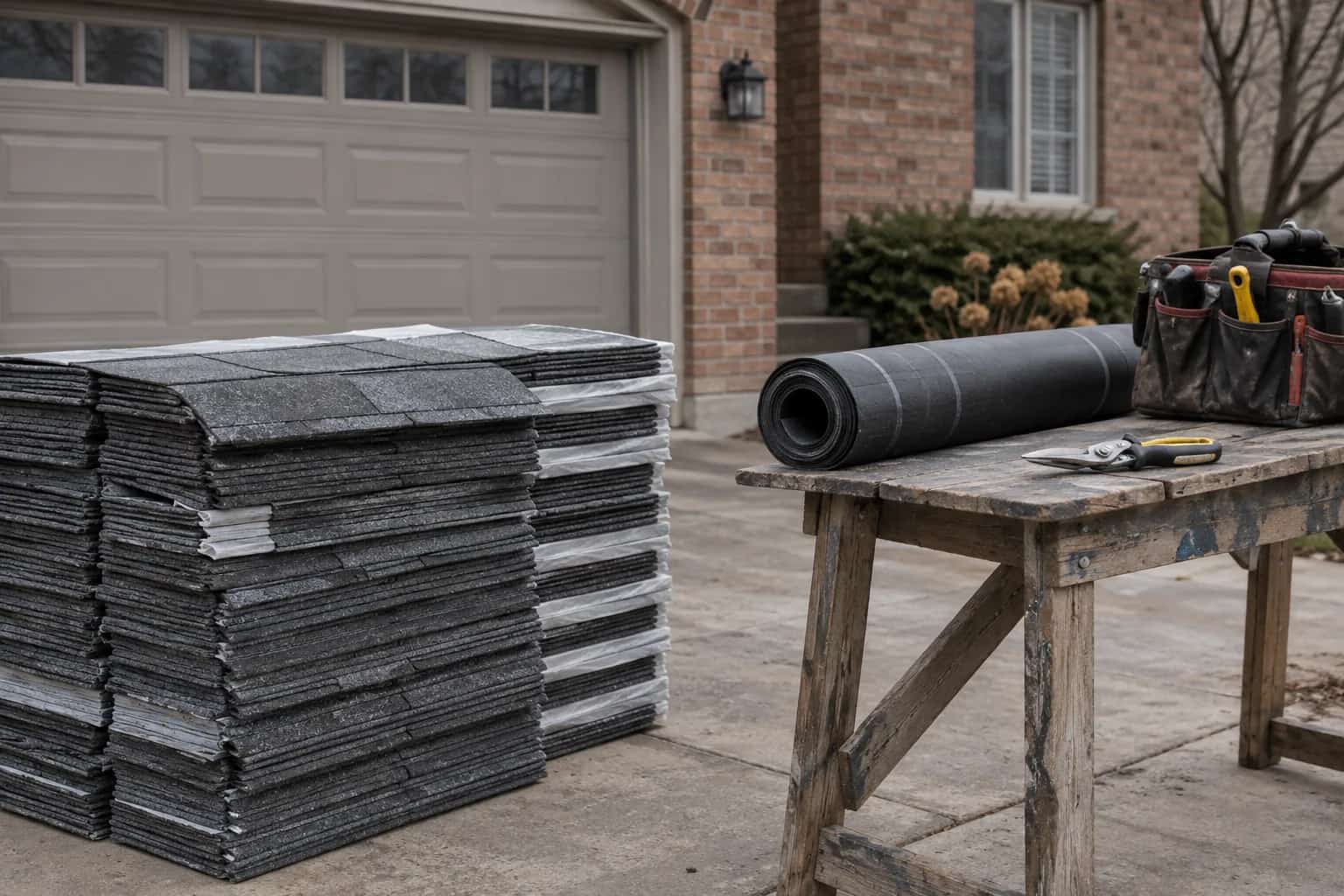
Now a thunderstorm moves into the forecast while the rear slope is open. The useful difference is not which roll has the more impressive label; it is which assembly is complete at the end of the shift and how unfinished edges and penetrations are protected. Ask the contractor to name the exposure allowance from the current product document and separately describe temporary weather protection. No generic number of exposed days guarantees a dry house.
Keep damaged, folded or wet material in the handover discussion before shingles conceal it. Traction claims also do not make the surface safe for a homeowner to walk; leave access and material assessment to the equipped crew. If the quote proposes adhesive membrane everywhere, compare the separate whole-roof membrane question.
Underlayment has its own place in the roof
Both felt and synthetic products occupy the layer between the deck and shingles. Product choice does not remove the need for sound decking or correctly lapped shingles.
Schematic view. Shows relationships, not installation dimensions.