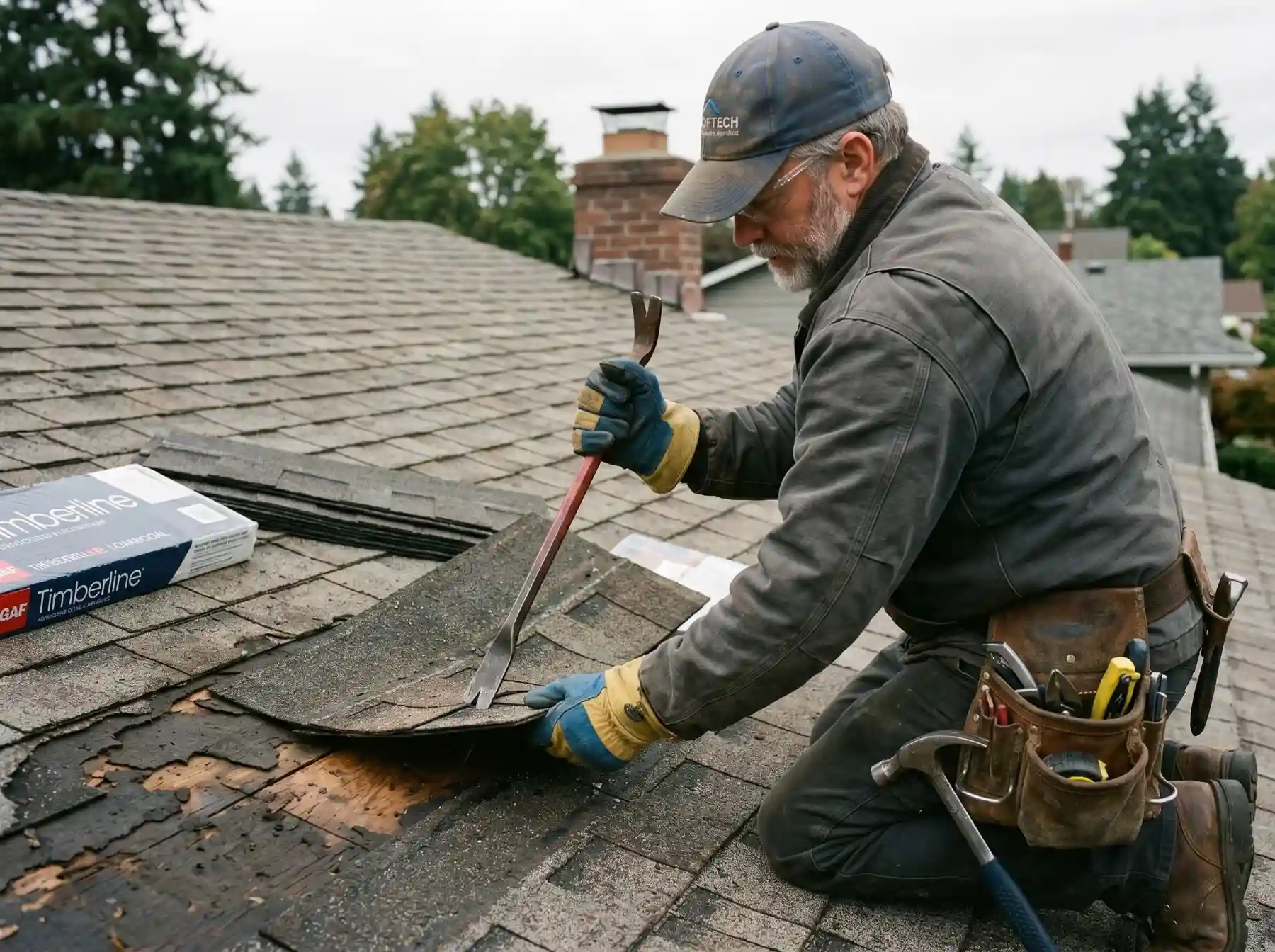
The shingles come off and the old deck looks like a scrapbook of felt scraps, adhesive and repairs. The new peel-and-stick roll is ready. The surface beneath it may not be.
Separate cleaning, structural repair and product-specific preparation before deciding the membrane will bond. Sound wood with residue needs a different answer from clean wood that is soft or unsupported. A sticky roll can cover either very neatly. Neatness is not the question we need answered before it goes down.
Inspect Before Covering
Ask the roofer to inspect the exposed deck before membrane installation and photograph areas needing correction. Old staining alone does not prove the wood is currently wet or rotten, but it should prompt a closer look where there is other evidence of moisture.
Read the Instructions for This Roll
Products differ in acceptable substrates, application temperatures, preparation and primer requirements. Use the exact manufacturer's instructions, such as the IKO StormShield application document, rather than transferring details from another brand.
Ask how the crew will confirm the deck is dry enough and the surface suitable. Air temperature alone may not describe a shaded, cold deck. A sunny delivery area and a north-facing roof can be quite different places to work.
Primer, where specified, is part of a defined system. It is not a universal cure for dust, moisture or damaged wood. Confirm the named product and required preparation rather than approving whatever liquid happens to be on the truck.
The deck has been swept and the new roll is ready. Dave presses the inspection back a step: the surface can be clean and still be unsound. Pat moves the roll away from the work area. "Sticky isn't structural," he says.
Mike separates the approvals: repair the support, prepare the surface, then check the membrane's current application requirements. That sequence prevents a neat new layer from concealing a problem which cleaning could never fix. The prepared-deck photograph belongs in the record before the adhesive hides it.
Old Adhesive Layers Need Their Own Plan
Previously installed membrane may resist removal. The contractor should explain whether it will be removed, left under an approved overlay arrangement or addressed with deck replacement in affected areas. The decision depends on its condition and the new system's requirements.
Ask how uneven remnants will be prevented from creating raised areas under the new covering. A neat-looking membrane can still follow lumps in the surface below it.
On an old plank deck, suitability for adhesive coverage is only one question. Board gaps and movement may also affect the shingle installation. See old plank decking before treating good adhesion as approval of the entire assembly.
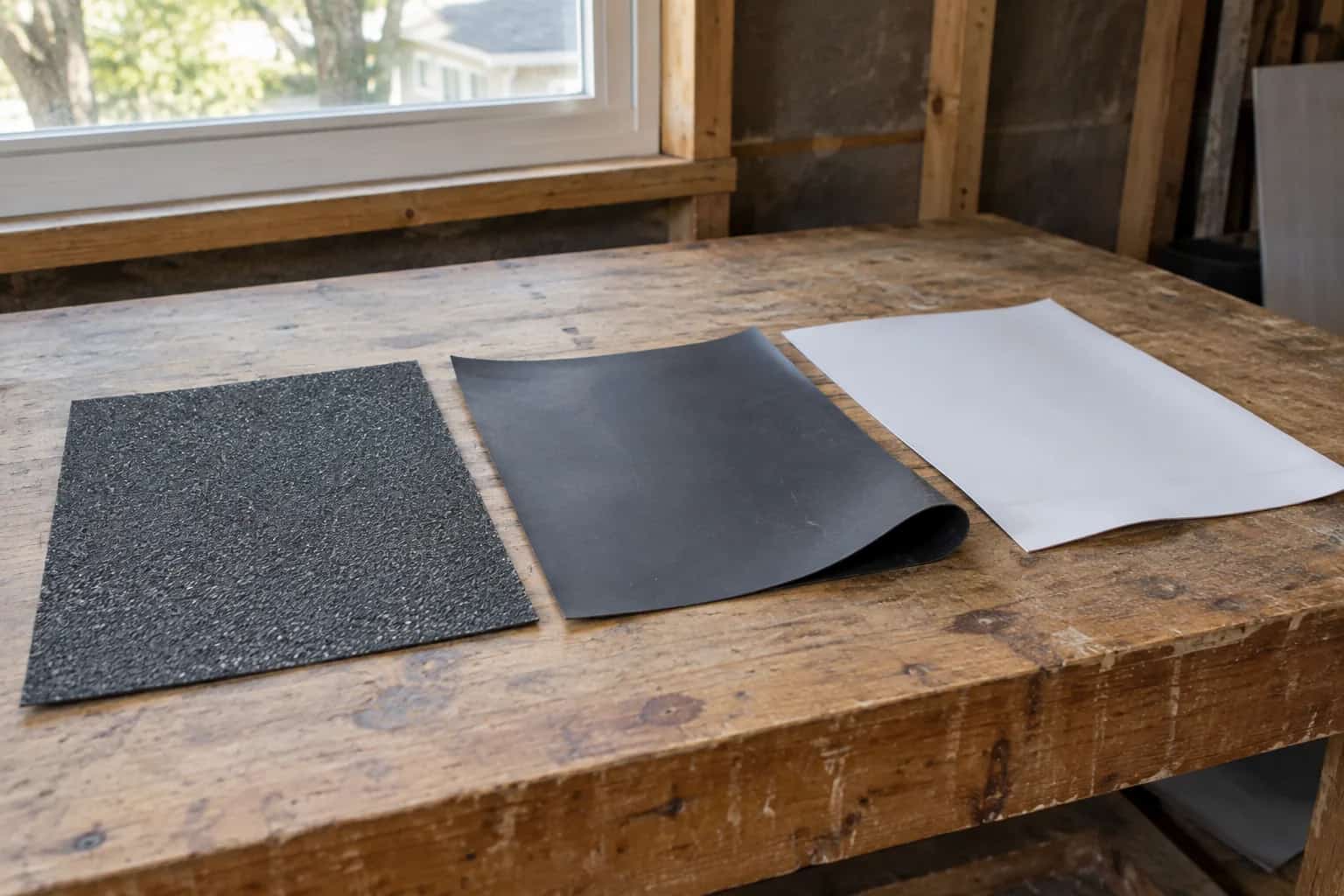
The bond depends on the surface below
A self-adhered layer needs the deck condition required by its manufacturer. Loose fibres, contamination or damaged boards affect the surface it must adhere to.
Schematic view. Shows relationships, not installation dimensions.
Three Decks That Need Different Answers
- Sound wood carrying loose felt fragments: the first question is preparation. Remove or treat residue only by a method accepted for the new system, then assess the exposed surface.
- Clean-looking wood that is soft, split or unsupported: adhesion is not the main problem. The deck repair must be defined before the membrane hides it.
- Sound, suitably prepared deck: confirm product, substrate conditions, laps and permitted application method. A ready-looking surface still needs to meet the selected membrane's instructions.
The manufacturer-hosted ArmourGard/StormShield application sheet calls for a smooth, firm, clean, dry and securely nailed deck. It also does not recommend direct installation on dimensional lumber, including board decks. Use the instructions supplied for the actual product and roof assembly; successful adhesion alone does not establish an approved substrate.
Make the Hidden Work Reviewable
Request photographs after preparation and after membrane placement, with a few wider views showing locations. Ask the crew to resolve lifted edges, wrinkles or contaminated laps before covering them.
You do not need to conduct your own adhesion test from a ladder. You need a clear account of preparation, the applicable instructions and any departures that required manufacturer guidance. Once the shingles are on, the bond is largely hidden. Settling these questions while the deck is exposed is far easier than discussing them through a finished roof.
Once the shingles cover the membrane, most of this decision disappears from view. Keep the prepared-deck photograph; it records the less glamorous part that made the new layer possible.